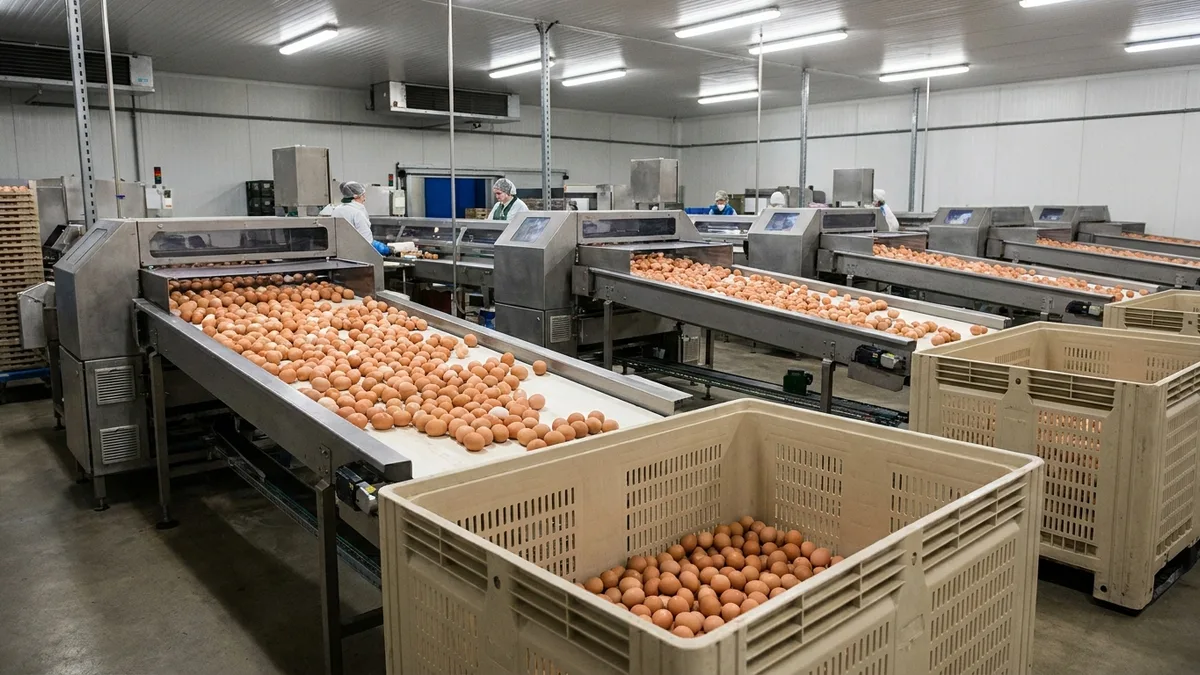
Avian influenza has reached commercial laying hens in Europe for the first time this autumn. Two layer farms in Groningen were culled within three days, and on 28 October the Netherlands ordered all poultry indoors nationwide. Germany, Denmark and the UK reported their first poultry outbreaks of the season, and in the US a large table-egg layer farm in Illinois was hit.
So far the losses are small against total supply, and egg prices have not reacted. Europe’s seasonal autumn rise is running late. Retail shell eggs were flat to slightly lower over the fortnight, and processors say they are well covered. In Germany, sellers of eggs for breaking were still offering concessions at the end of October, which is unusual for the season.
The shortage sits only at the top of the market. Organic egg supply stays scarce across Western Europe, brown free-range eggs are being allocated in the Netherlands and extra-large eggs are tight in Germany. In France, the organic flock has shrunk by almost a fifth since 2021. At the other end of the market, EU egg imports ran more than 80% above a year earlier in the first half, with Ukraine supplying more than half, and that flow keeps a lid on caged and processing eggs.
The US market is heavier still. The table-egg flock was about 4% larger than a year earlier on 1 October, inventories are rising and demand has softened, so white egg prices stay low. Bird flu is now the main swing factor on both sides of the Atlantic.
Read the full egg market analysis here.