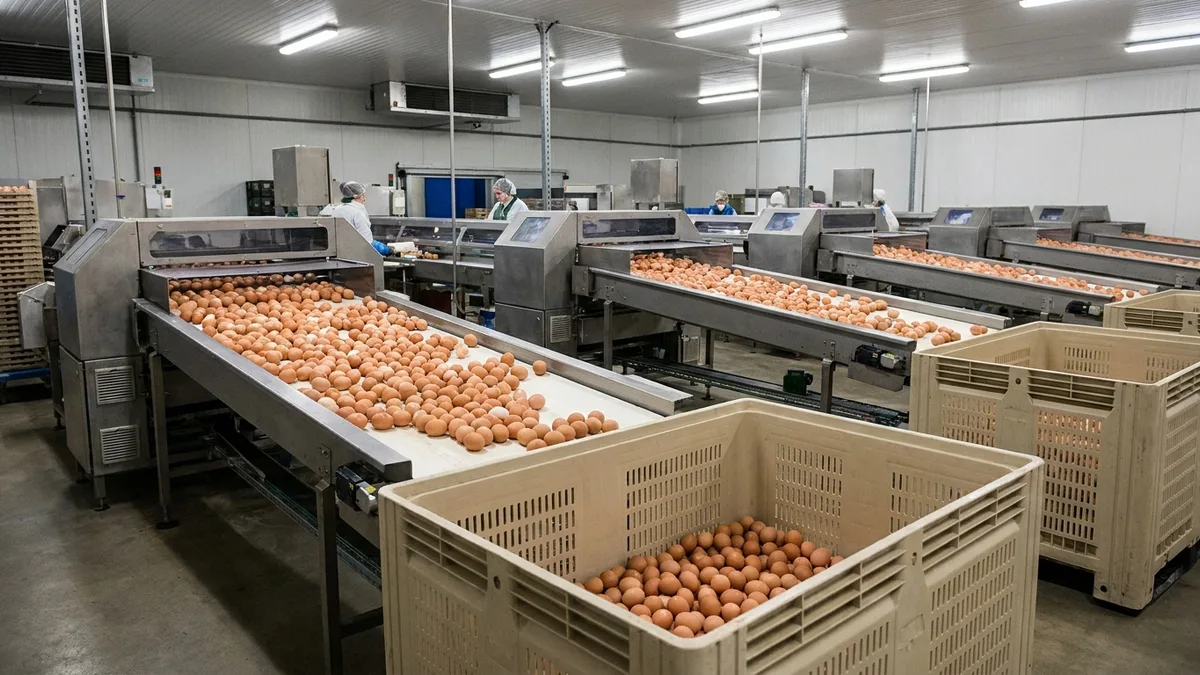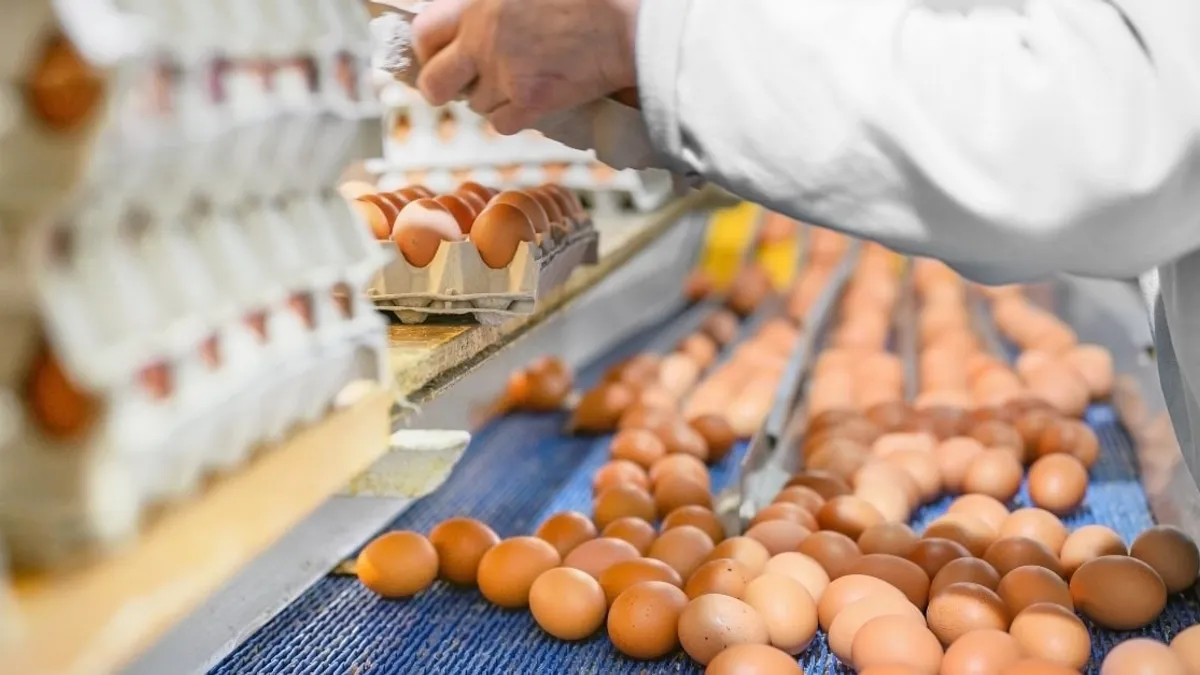


Europe’s egg market is on a plateau. Prices have barely moved over the past two weeks, and the usual October rise has not arrived yet. In most years prices start to climb in early October, when colder weather brings consumers back to home baking and processors begin buying for Christmas. Neither has happened so far. Dutch quotations were unchanged for a sixth week in a row, which is rare for the time of year, and German buyers are waiting to see what comes next.
Eggs for industry eased over the fortnight, with caged eggs for processing down 4.5% and free-range eggs for processing down 5.1% on the Vesper Price Index. Processors across Western Europe are well covered, demand for processed foods is disappointing, and Dutch processors say they are being offered enough eggs from abroad. Extra-EU egg imports were more than 80% higher year on year in the first half, led by Ukraine and Turkey, and that supply keeps a ceiling on caged and processing eggs whenever Western European prices rise.
The premium end stays short
Organic egg supply remains short across Western Europe, free-range eggs are hard to source in France, and extra-large eggs are scarce in Germany, while caged and barn eggs are fully available. Vesper’s analysis points to one reason for the organic shortfall: EU organic rules no longer allow a small share of conventional protein in organic poultry feed. Organic feed alone struggles to give hens the right protein balance, so they lay less, and French producers say this is putting farmers off organic production.
Avian influenza is the wildcard. Europe has seen only scattered non-commercial cases so far, including a Belgian hobby flock near the Dutch border and a small holding in Scotland that ended the UK’s disease-free status. Germany’s animal health institute expects detections to rise through October as birds migrate.
In the US, the September rebound has faded. USDA wholesale white egg prices for large caged eggs fell 23.5% over the fortnight as supply strengthened, while the brown egg market firmed on retail promotions. The full analysis covers what should trigger Europe’s seasonal rise and the outlook for feed costs on both sides of the Atlantic.