

Europe is going to be short of sugar this season, and the arithmetic on filling that gap does not work at today’s prices. On paper the EU has about 2.41 million tonnes of eligible import volume across CXL quotas, the Balkans, other tariff rate quotas and EBA and EPA arrangements. Measured against current EU values and New York number 11, the volume likely to actually show up is around 766,000 tonnes. Inward processing relief raw sugar imports are suspended, which removes another route, and Central America is being hit by drought of its own, so availability from there is unlikely to be high. EU internal prices will have to move considerably higher to attract the rest.
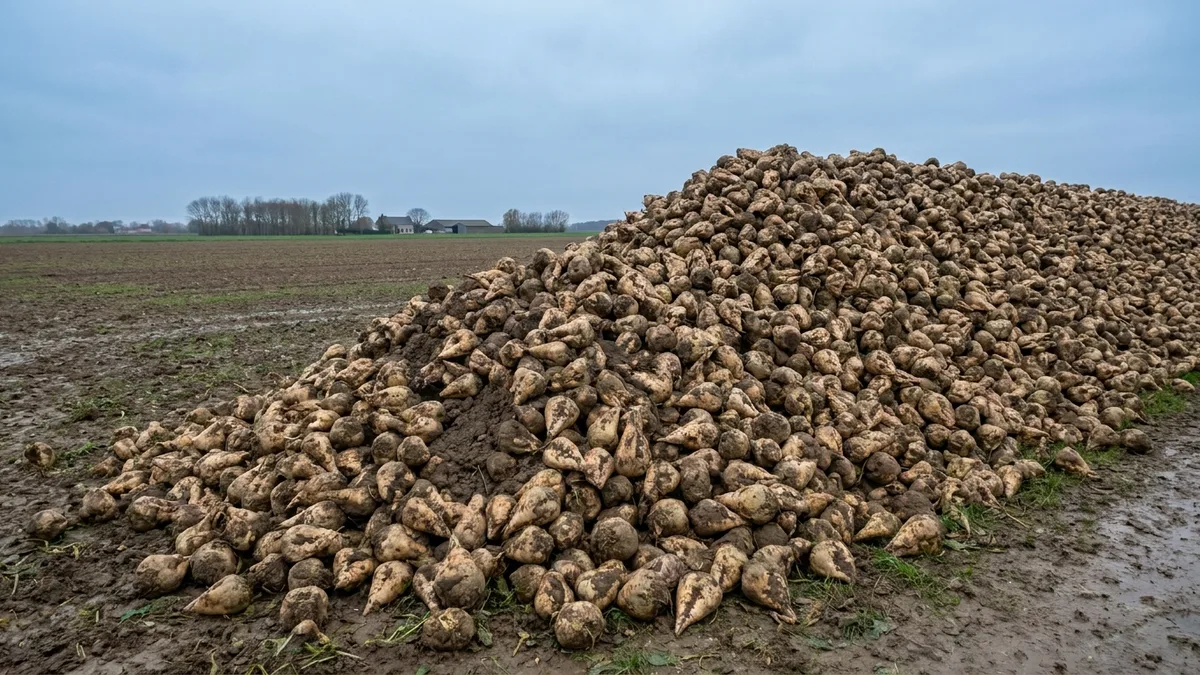
The crop behind that gap is smaller for two separate reasons, and only one of them is weather. Yields are genuinely poor in parts of Western Europe: from the Paris region south they look catastrophic, and growers have already been told not to harvest a minimum of 20,000 hectares. France, the UK and southern Germany are reporting losses of up to 30%, though that is measured against an exceptionally good 2025 and most countries will land close to their five year average. Cosun’s Anklam plant in the northeast corner of Germany expects 87 to 88 tonnes per hectare. The bigger factor is the decision taken before any of this, to cut plantings by 15% to 25% for the season. Poland avoided that planting cut, though its output still falls, to an estimated 2.2 million tonnes of sugar from 2.6 million last year.
Cost is climbing underneath the crop. The November 2026 TTF gas contract, on the Dutch hub that prices most northwest European gas, is up just short of 140% on the same point last year, which carries straight into ammonia based fertilizers. Diesel is doing the same: combined exports from Russia and the Persian Gulf states have fallen from 2.2 million barrels a day a year ago to 520,000, and 3-2-1 refining crack spreads have reached an all-time high of $65 a barrel while refineries face hard physical limits on raising diesel yields. Barge and rail aside, that lands on the rest of the transport network.
Next season is already being negotiated on that basis. Cosun will return to 100% of contracted farmer areas after a 10% cut in 2026. Nordic Sugar has agreed 2027 Swedish contracts worth 250,000 tonnes of white sugar at a fixed beet price of €29.7 a tonne, and take-up was oversubscribed. In the UK, British Sugar and the National Farmers Union failed to agree a 2027 beet price and the matter has gone to an independent tribunal. Vesper’s European sugar analysis sets out where that leaves the balance sheet.