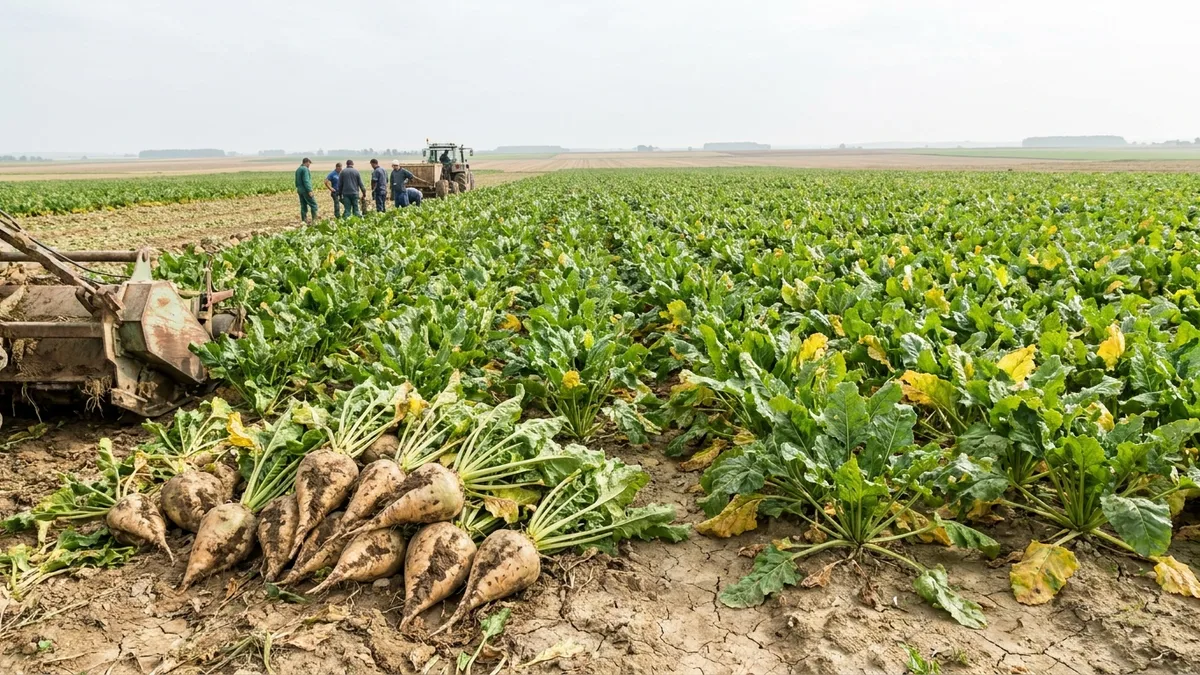


France’s sugar beet campaign is now estimated to run just 97 days, against an average of 122 over the last six seasons. Yields vary widely by area. Cristal Union expects yields in the Somme to land around the long-term average, while toward Paris and further south they are expected near 63 tonnes per hectare in many places. The CEO of Tereos has pointed to some fields yielding as little as 20 or 30 tonnes, and beet infested with weevils and Rhizopus fungus might not be processed at all, for fear of damaging factory machinery.
The rest of the beet belt is off to a patchy start too. In the Netherlands harvesting is going smoothly, but average sugar content in the first week of the campaign was 15.7° against 17.1° last year, with beet yields expected at 87.5 tonnes per hectare. In the UK, Wissington started on 29 September and Newark and Bury St Edmunds on 6 October, while Cantley will not start until November. Last year three factories were already running in September. Iscal in Belgium is cautiously optimistic about recovery rates, which look less bad than it had expected.
Why prices have not reacted
Despite the state of the EU and UK crop and higher world market prices, EU new crop values have stayed relatively sticky, to the point where exports are starting to look more attractive than internal sales. Vesper’s European sugar analysis suggests several possible reasons. Old crop inventories are still running about one million tonnes above historic levels. Sales early in the summer, before the heatwaves hit, may have been higher than estimated, and some buyers may have signed multi-year contracts at last year’s low prices. Demand has also been lost to the cost of living and to GLP-1 use, and some buyers may simply be resisting higher prices. Replacement costs in the EU beet belt now sit above where new crop is valued.
Pressure is also building for 2027. KGS has offered Polish growers the equivalent of €26 a tonne for 2027 beet, or about €31 with coupled income support, which still falls short of what farmers need to cover higher costs and compete with other crops. In France, the latest budget proposal would extend the sugar tax to processed and ultra-processed foods containing 10% sugar per 100 grams. German beet growers are calling on their government to scrap a proposed sugar tax on soft drinks, a sector they say takes almost 513,000 tonnes a year, about 20% of German sugar use.
The full analysis has the country-by-country field and trade detail, including the latest corporate results from Südzucker and Agrana.