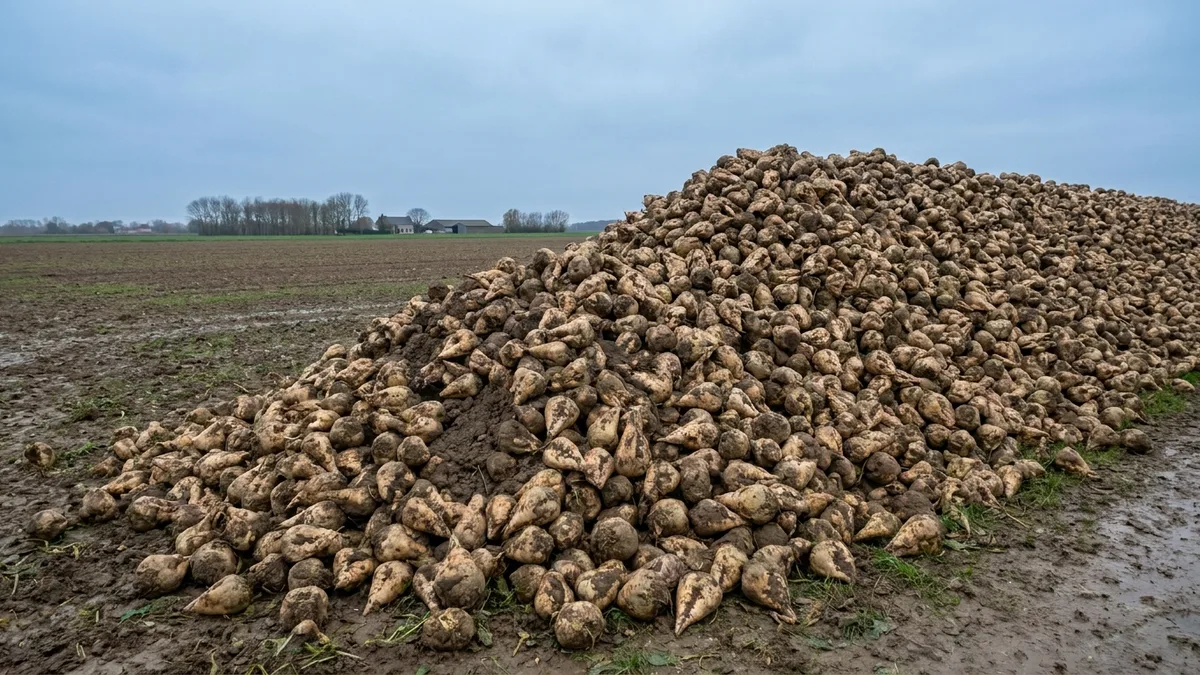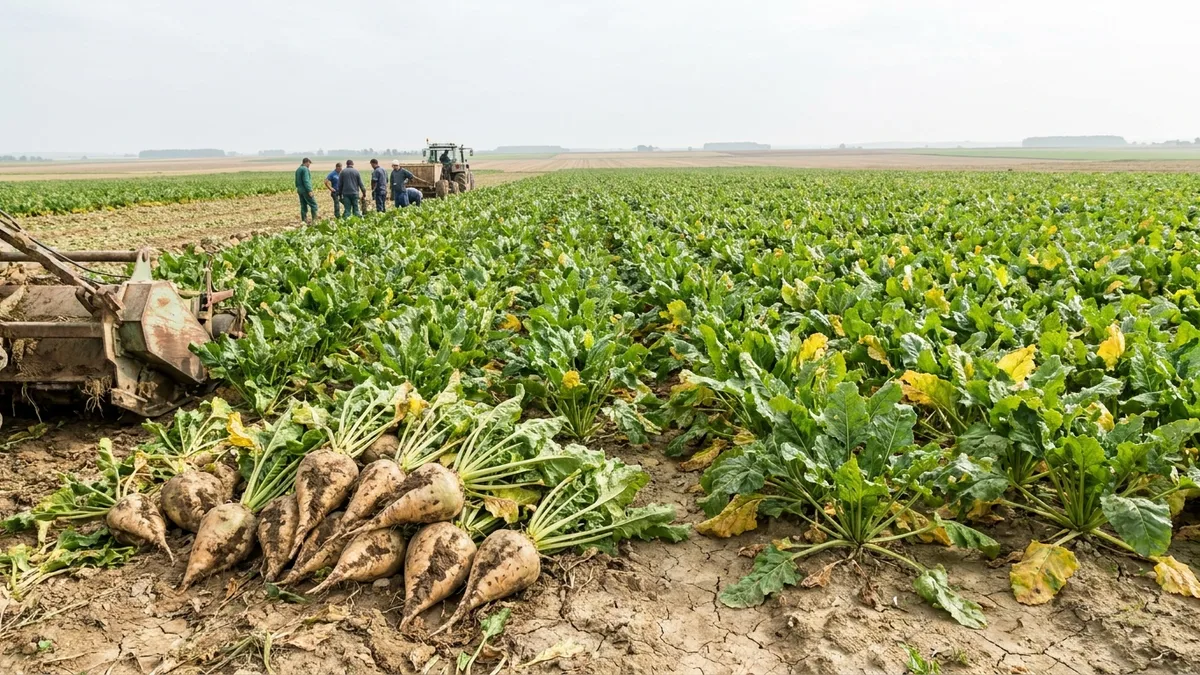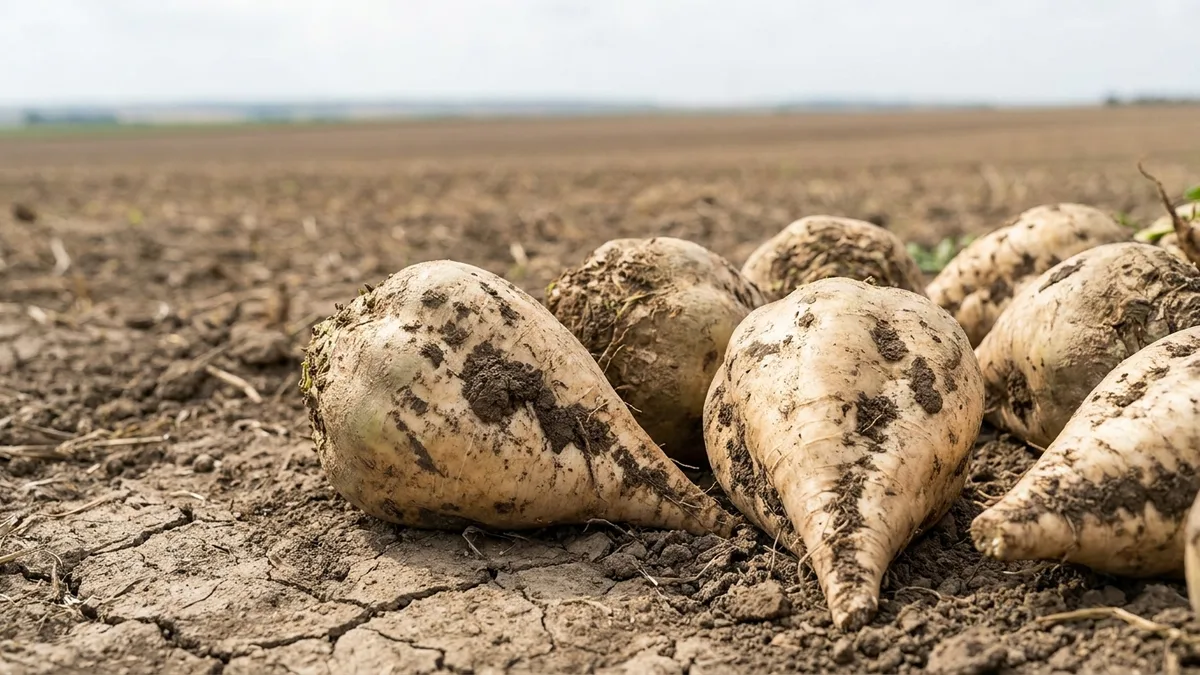


Western Europe’s sugar beet is sitting through a prolonged heatwave, and the crop’s fate now hangs on rain that may or may not arrive. Moisture is short across the low countries, France and the UK, with meaningful rainfall not forecast until late July, and even then the question is whether it will be enough. Eastern Germany and Poland, by contrast, have largely escaped the stress.
Growers stay calm, buyers stay quiet
Growers are relatively calm. Südzucker and Nordzucker have both described the crop as in good condition, and while France’s tone is normally more cautious, the beet institute notes the plant’s resilience: beets can sit dormant until rain returns, then recover. The main threats flagged are water stress and the beet weevil, with virus yellows infection running low.
The more telling development is on the trade side. Buying for the 2026-27 sugar crop has been happening quietly, especially among large-volume buyers, at levels that have disappointed processors who had pictured prices closer to EUR 600 a tonne. A lot is being contracted on a delivered basis, which loads extra risk onto sellers: with the on-off Iran conflict lifting diesel, delivered deals could work back to an even weaker ex-works return.
That matters beyond this season. If prices hold at these levels, factory closures look likely to return to focus in 2027, and this time the beet belt itself is exposed, since production in eastern and southern EU countries has already been hollowed out.
Results and policy pull in different directions
Company results underline the split. Südzucker reported Q1 EBITDA of EUR 135 million against EUR 96 million a year earlier, almost entirely on stronger ethanol margins after the Iran war, while its sugar division stayed in the red at minus EUR 21 million, a larger loss than most analysts expected.
Policy is pulling in different directions too. Brussels wants more EU-grown vegetable protein to cut import reliance, which could nudge farmers away from beet, even as it widens import access through trade deals like Mercosur. Member states have also begun discussing a possible bloc-wide tax on ultra-processed foods and sugar, and the UK will ban energy drink sales to under-16s from April 2027.