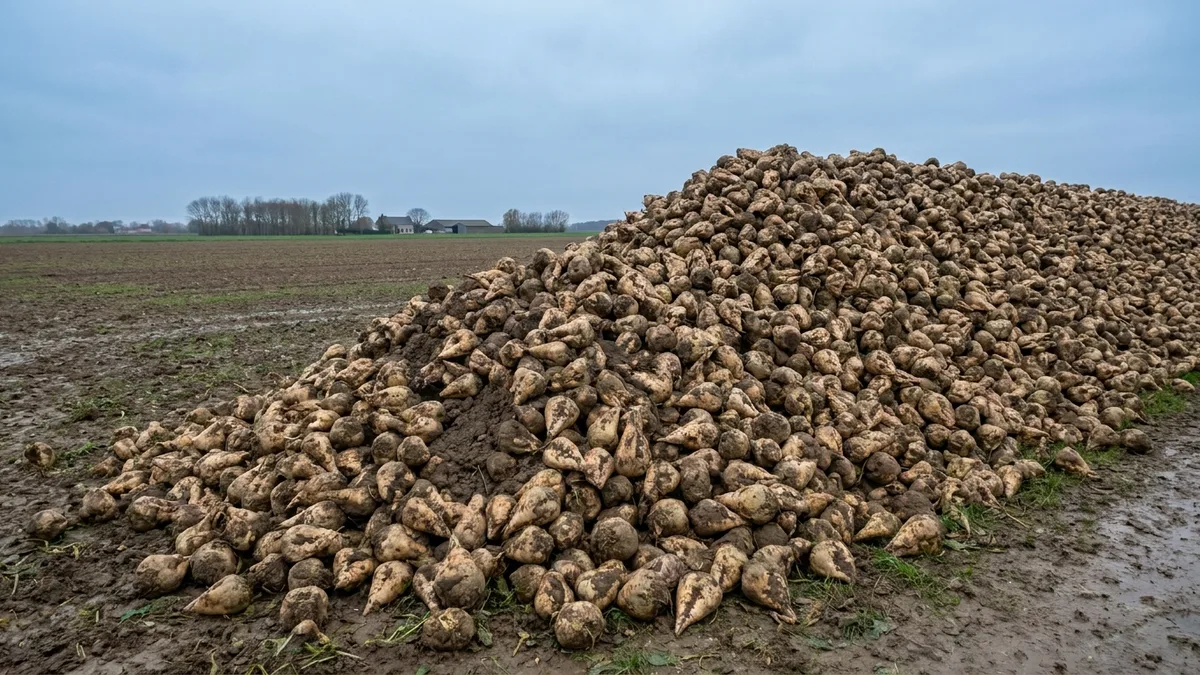


Europe’s beet crop is usually discussed as a single number. That stops working this season, because the harvest in the west of the belt and the harvest further east are not the same crop.
In France, some growers are now looking at 65 to 70 tonnes a hectare against 90 tonnes last season. The farmers’ association FNSEA has asked the government for a support payment of €430 to cover crop losses, with beet estimated to be down at least 20%, maize down 45%, potatoes down 20% and hay down 11%. In the UK, estimates put the crop down by as much as 26% in places, with Cambridgeshire, Norfolk and Suffolk worst affected and Lincolnshire further north reporting better yields.
Move east and the picture changes. ISCAL in Belgium is reporting beet yields of up to 90 tonnes a hectare. Royal Cosun in the Netherlands puts sugar at 13.6 tonnes a hectare, in line with its five-year average, and conditions in northern Germany and Poland look more satisfactory. The campaign starts over the coming weeks, which is when the quality of the beet going through the factories becomes clear.
The recovery in the fields is mostly on the surface
Rain over the past fortnight has left the worst-hit fields looking greener and healthier than they did a fortnight ago, but the improvement is largely cosmetic. Energy has transferred from the roots to the leaves, so the plants are not creating much more sucrose, and a low plant population cannot be reversed this late in the season.
The heavier rain forecast for the week ahead matters for a different reason. Below the top layer of soil the ground is close to solid, and lifting beet out of it unsoftened adds difficulty, time and cost to the harvest. On top of that, cercospora has broken out in the wet conditions, beet weevils are spreading in France, and UK growers are dealing with army worms in beet for the first time.
Where that leaves a buyer
The practical consequence sits in how sugar is being offered. Several producers have withdrawn offers while they wait for a firmer read on their own production, which makes a sensible value hard to pin down at present.
Pricing is turning asymmetric as a result. Producers sitting on a decent crop can welcome the chance to lock in prices above budget, particularly with stocks still close to a million tonnes above average, while those facing a short campaign simply dare not. End users are gravitating toward the producers whose overall production outlook looks better.
The structural note underneath all of this came from Nordzucker, which will close Naksov, one of its two remaining Danish factories, after this campaign. In May the company said it would look to lift non-EU cane production to around half of its total output.