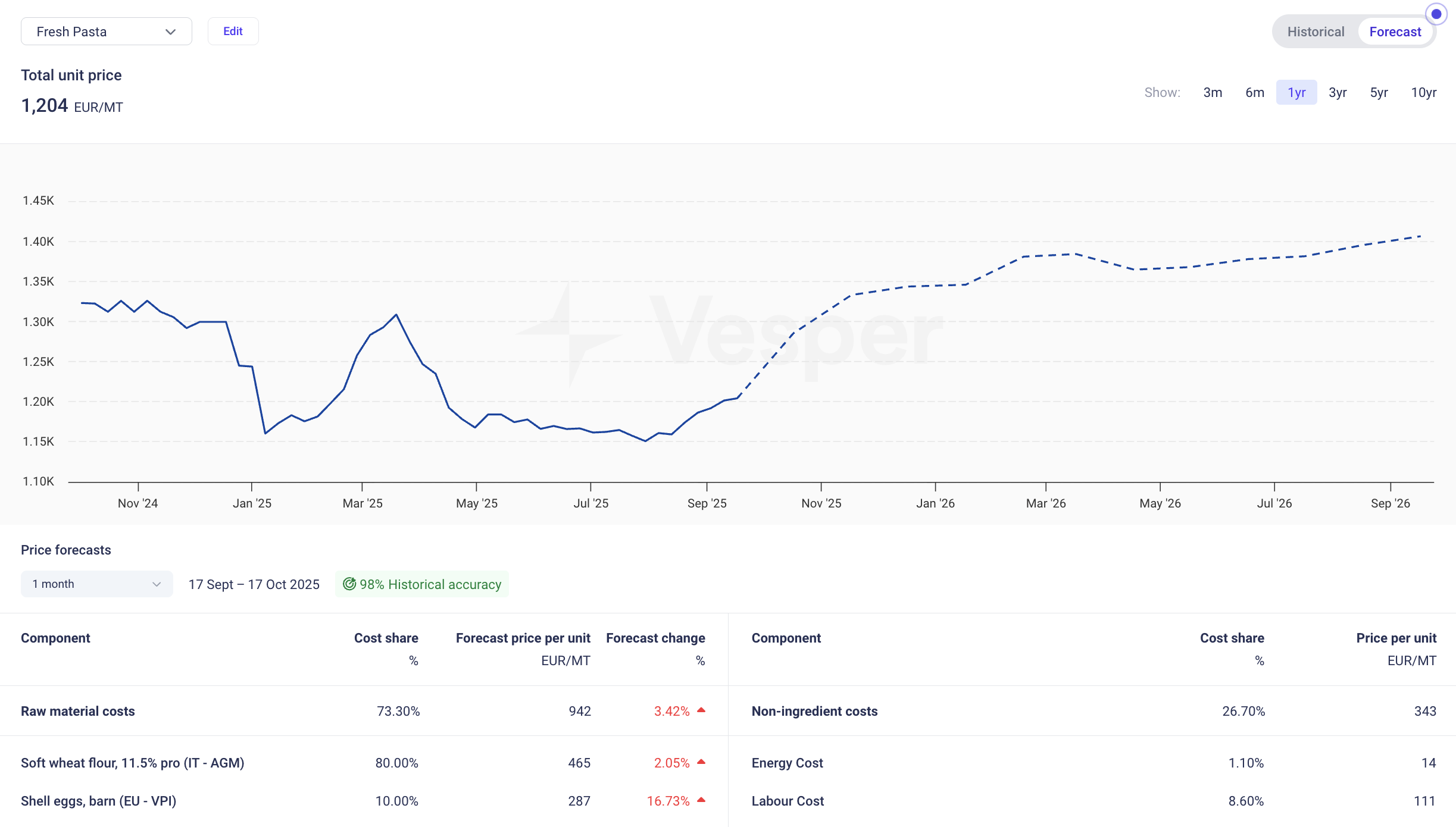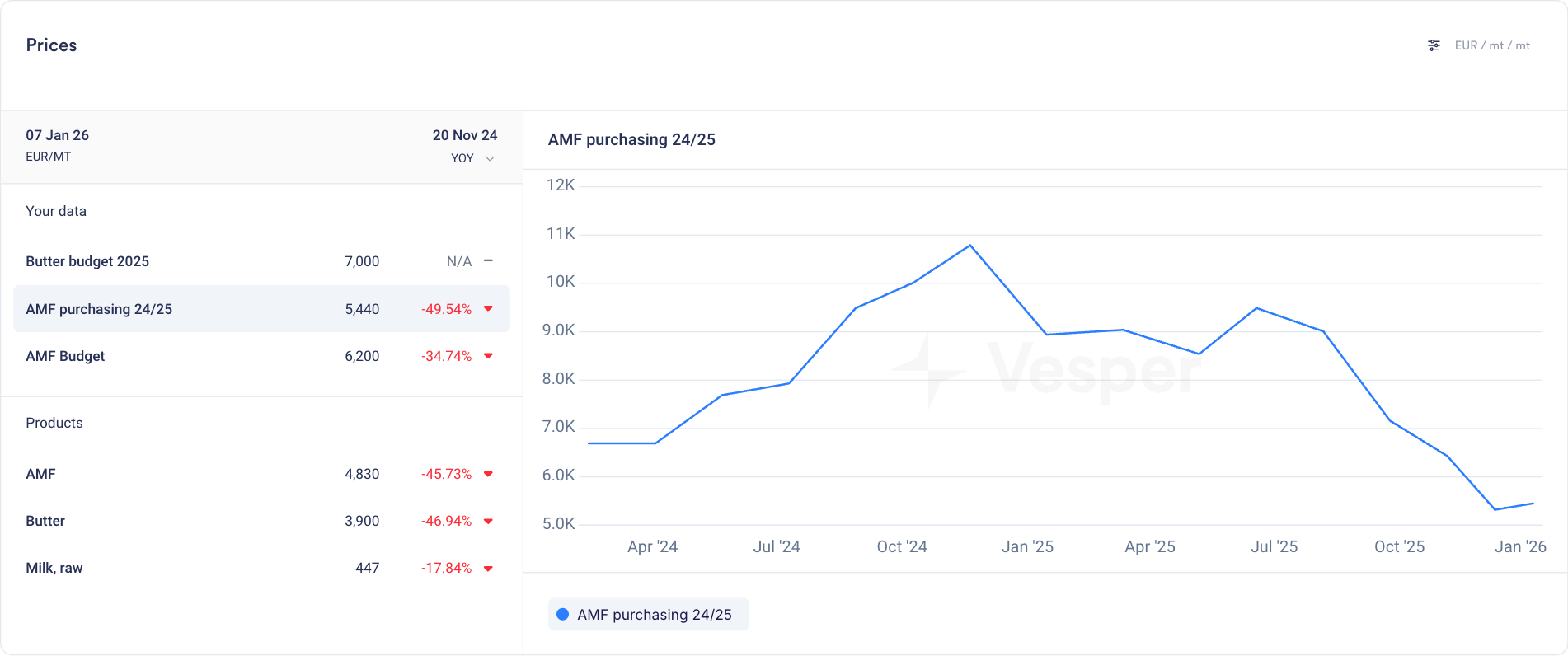

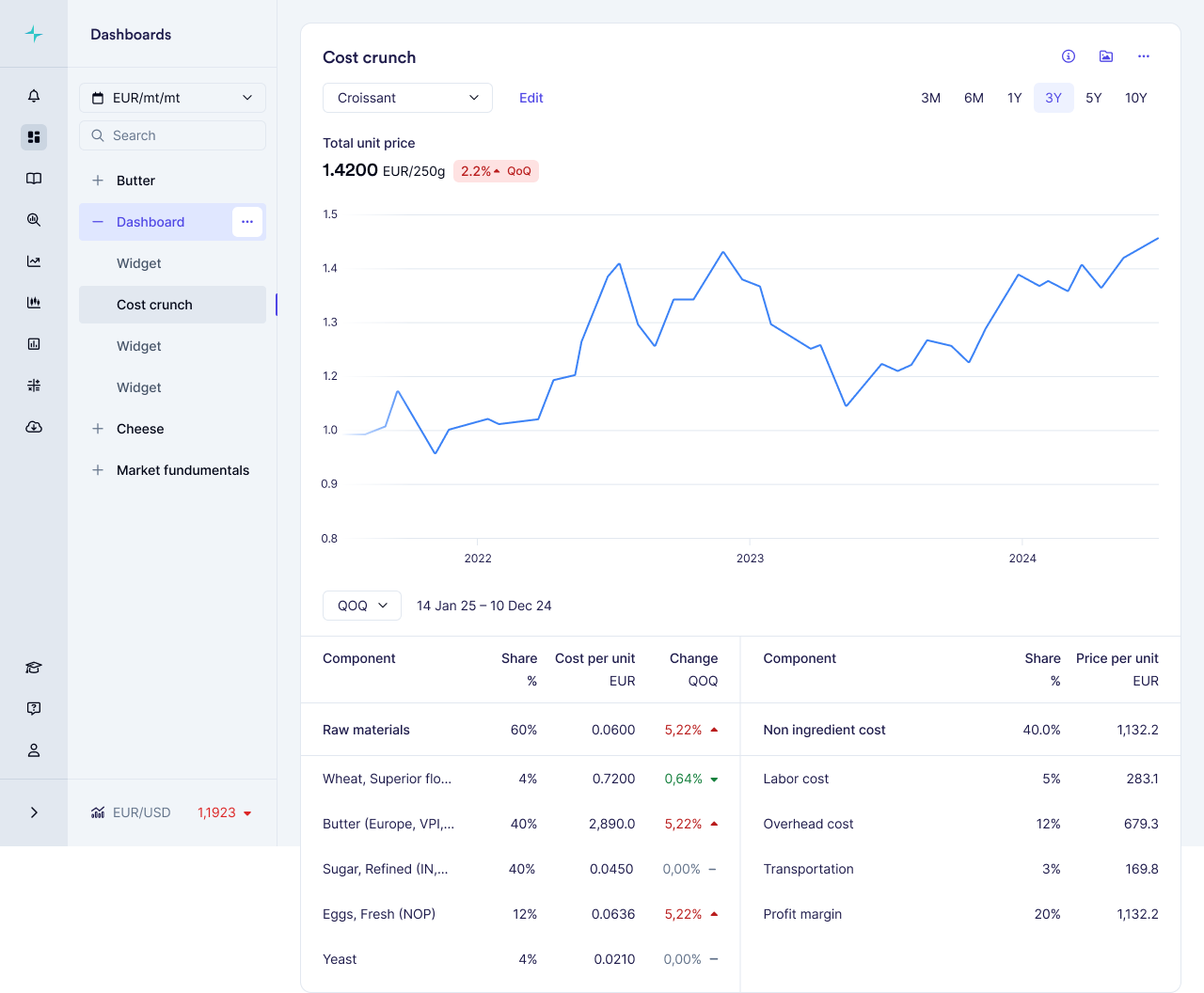
Summary: Vesper has launched Cost Models, a powerful new feature that transforms individual commodity benchmarks into complete product cost insights. This capability allows food manufacturers to combine weighted commodity benchmarks with standardized non-ingredient costs to build accurate product pricing models, delivering unprecedented visibility into true product economics.
What’s New:
-
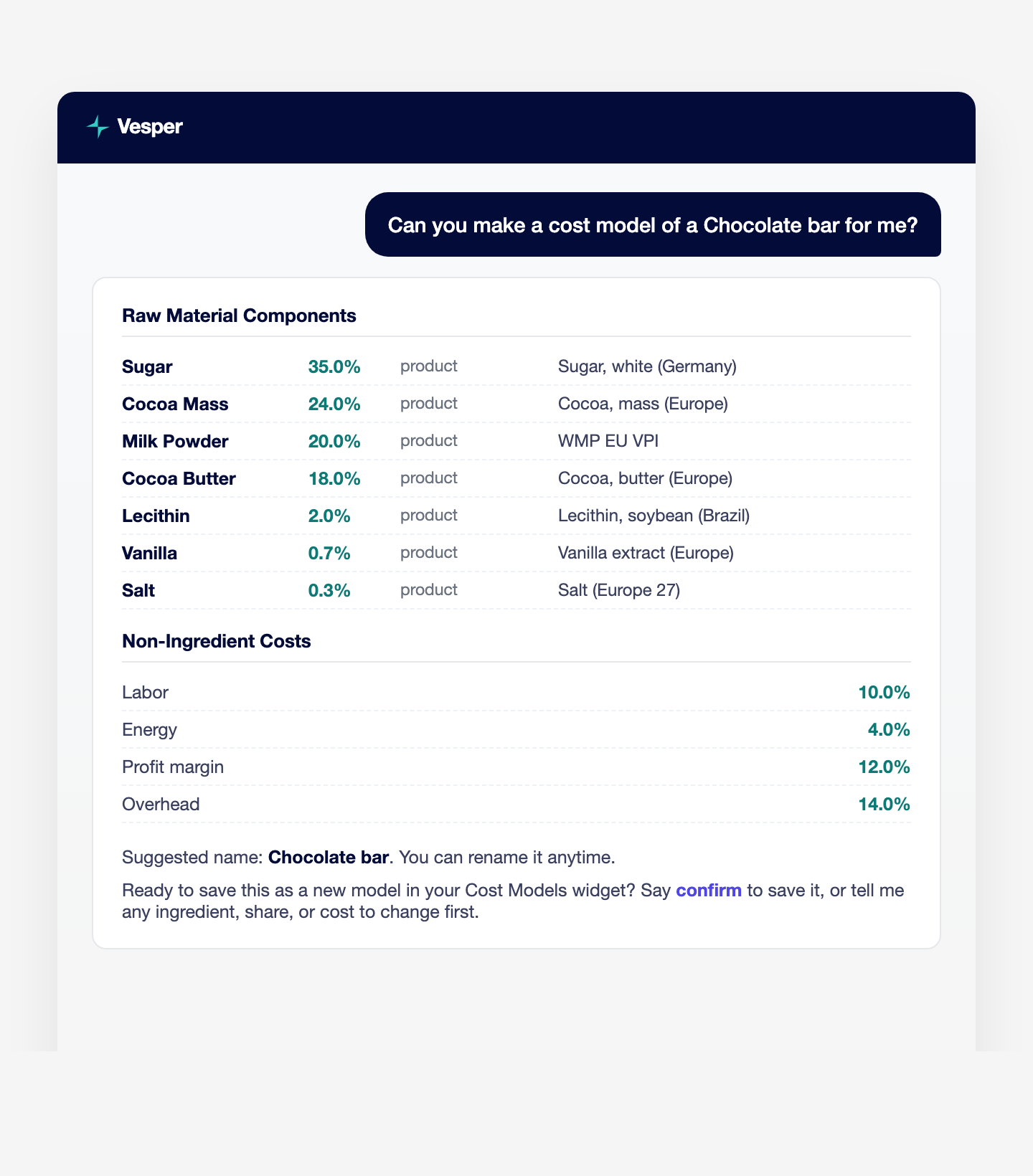
Build complete product cost models by combining multiple commodity benchmarks with precise weightings
-
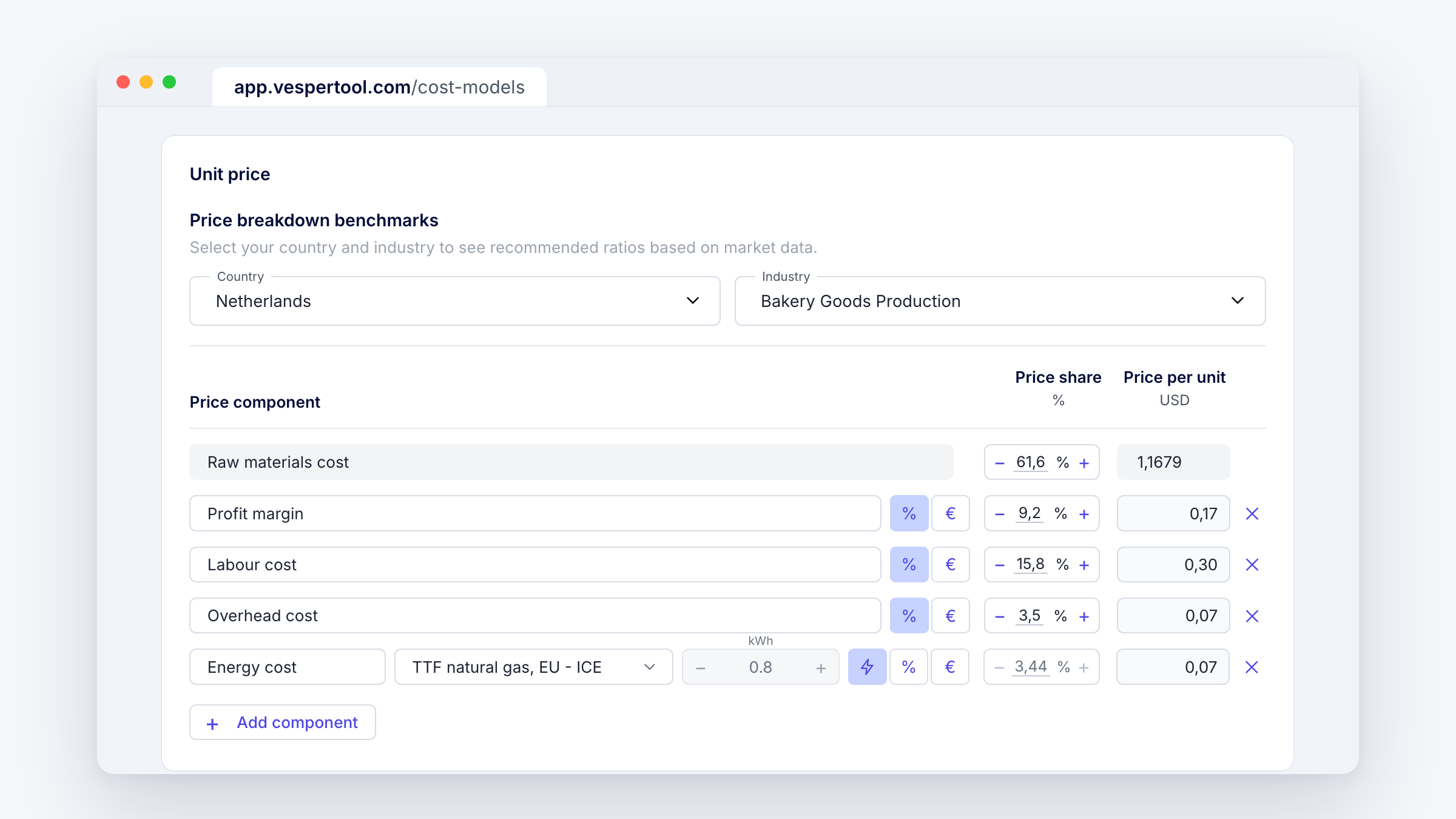
Access industry-standard non-ingredient costs (labor, manufacturing, overhead) specific to your region
-
Choose from our template library for common food products or create custom models
-
Track how each component contributes to your total product cost with automatic updates whenever source prices change
Why It Matters: With record-high volatility across food commodities, understanding how ingredient changes impact finished products is critical for maintaining margins. Cost Models provide complete cost structure visibility for your entire organization: procurement teams can verify supplier price increases, finance can track margin impacts across product portfolios, and sales teams can justify price adjustments to customers with independently verified data. Non-ingredient costs can represent up to 47% of total product costs, a critical component that’s now visible alongside your commodity benchmarks.
How to Use It:
-
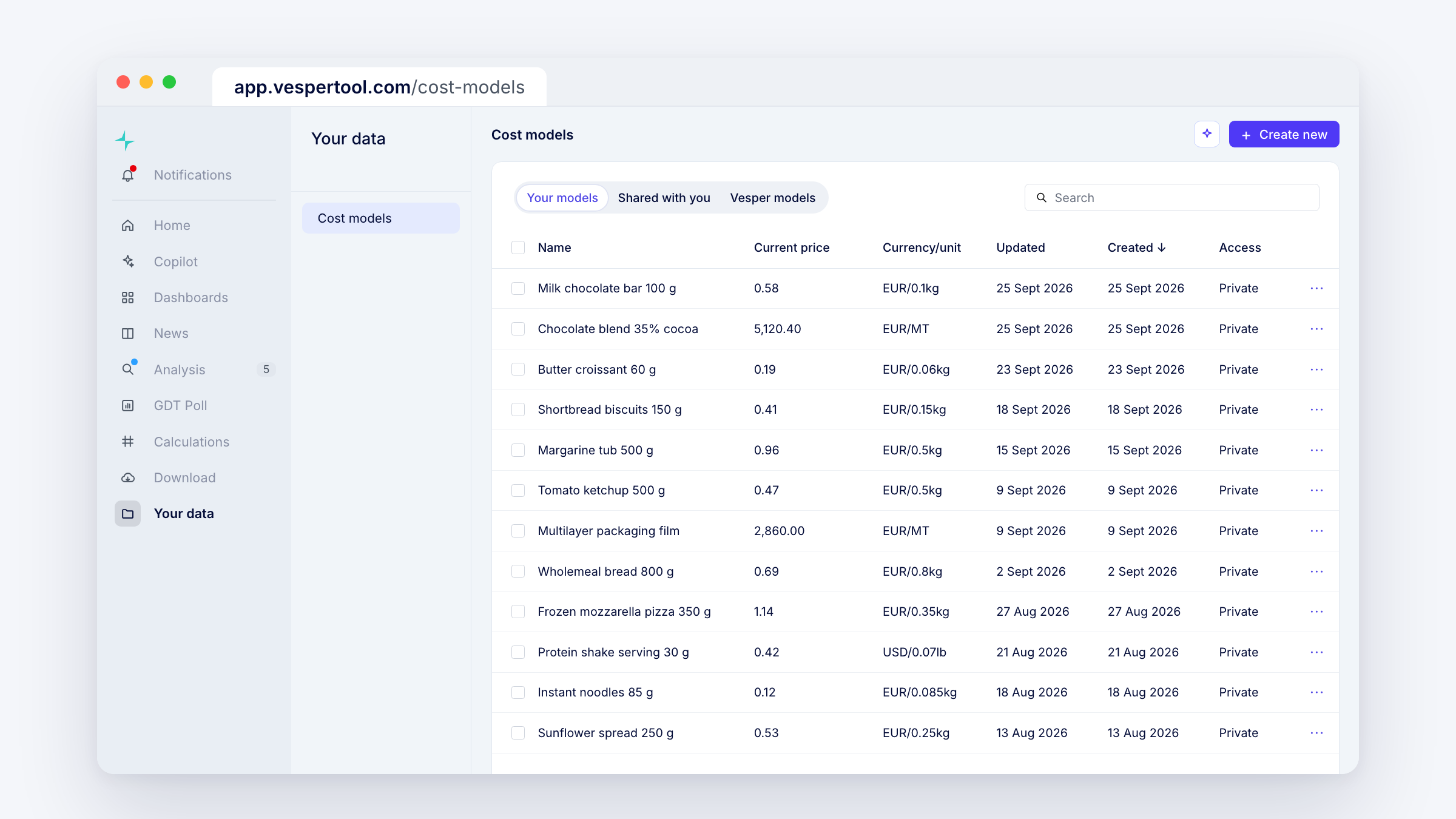
Access Cost Models through the main dashboard menu
-
Choose between starting with a template or building a model from scratch
-
Select ingredients from your available commodities and assign precise weightings
-
Add country-specific non-ingredient costs by selecting your industry and location
-
Save your model to track cost evolution over time as prices update automatically
Related Features: Cost Models integrates seamlessly with Vesper’s existing capabilities:
-
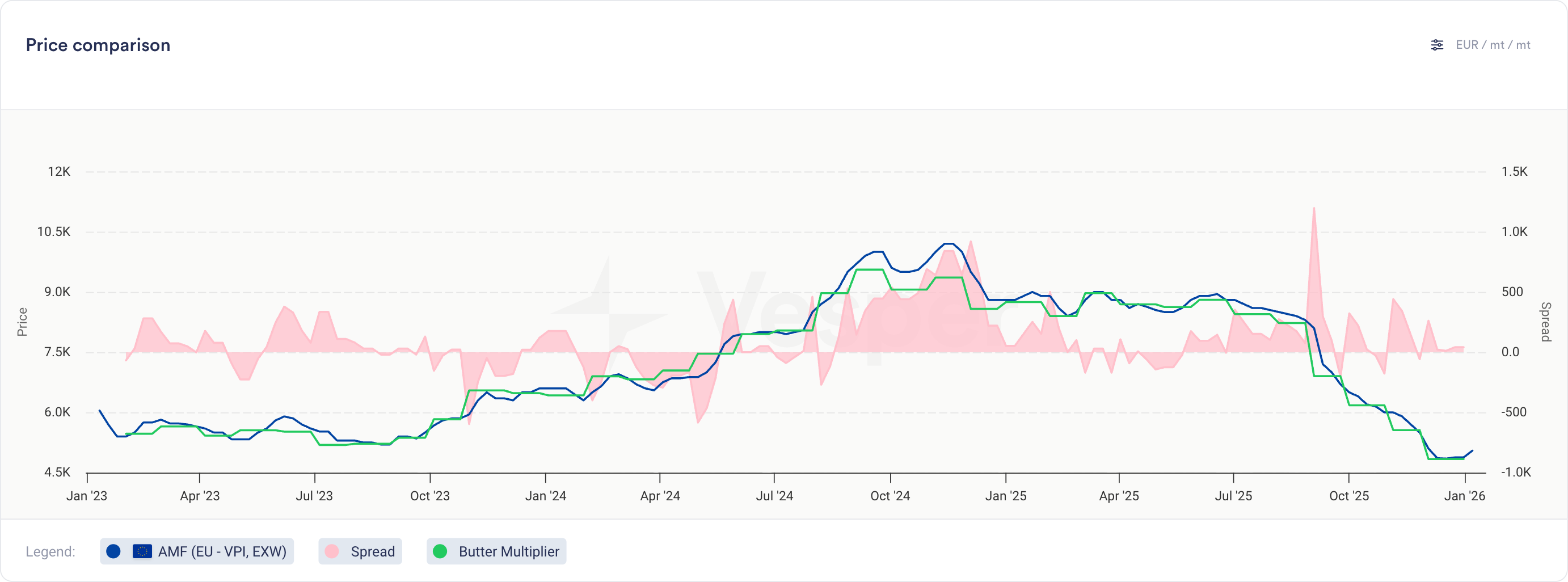
Individual commodity price benchmarks (VPI, Partner prices, and Public benchmarks found in prices widgets)
-
Incorporate into your own custom dashboards
-
Coming in Q3 2025: Forecasting capabilities for your cost models