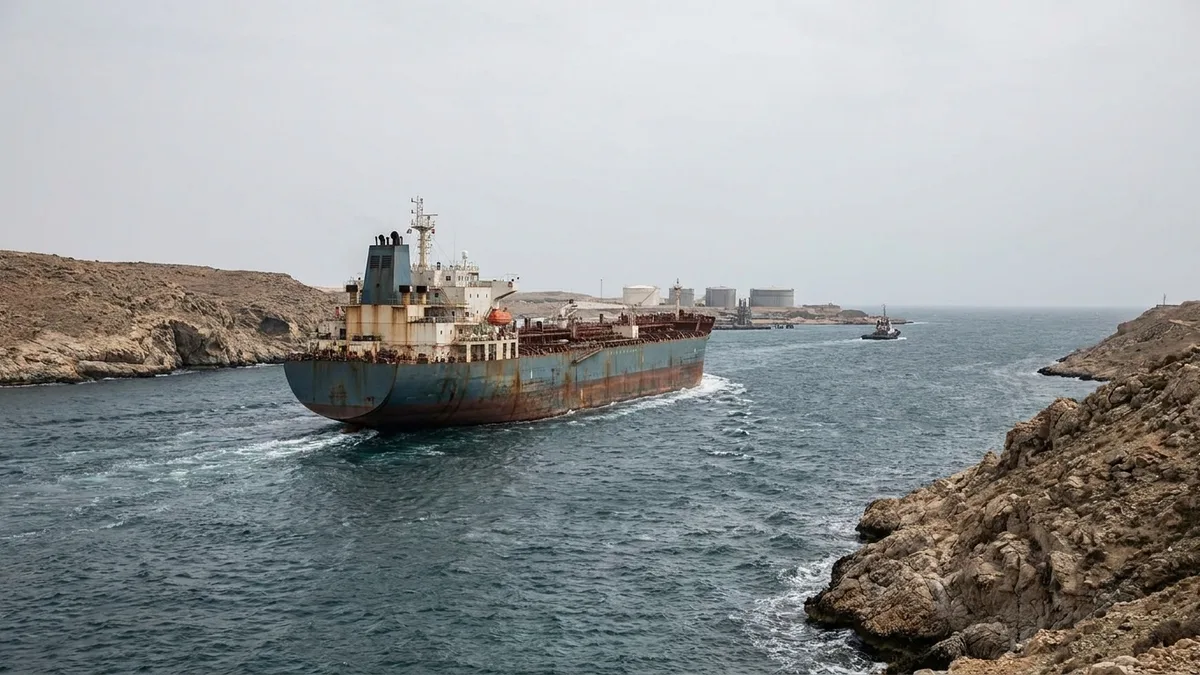
Middle East oil exports excluding Iran are back at pre-war volumes. Moving them is another matter.
Hormuz shipments are still about a third of pre-war levels, so cargoes take alternative routes and the freight is priced accordingly. Bloomberg puts the shipping component at $20 to $25 a barrel against an average of $3 before the conflict, and the IEA puts a large tanker from the Middle East Gulf to Asia at more than $37 a barrel, five times the pre-conflict cost. Refiners in Asia and Europe are absorbing that in their margins, and with inventories thin they cannot hold off buying feedstock for long. That is what keeps Brent crude futures from falling far whenever the conflict looks like cooling.
Europe is tight on gas at the same time. Dutch TTF gas futures are at their highest since December 2022, storage was 74.6% full on 20 October against a five-year average of 89%, and the first withdrawals of the winter have already started. Spot JKM is above November TTF, which points available cargoes toward Asia. The US looks comfortable by comparison, with mild weather, storage above its five-year average and Henry Hub gas prices at multi-week lows.
Central banks are moving. The Fed raised rates for the first time in three years, unanimously, and most officials signalled another by year end; September CPI came in at 3.7%, gasoline up 9.1%. The ECB looks likely to go at least once more in Q4.
Read the full macroeconomics market analysis here.