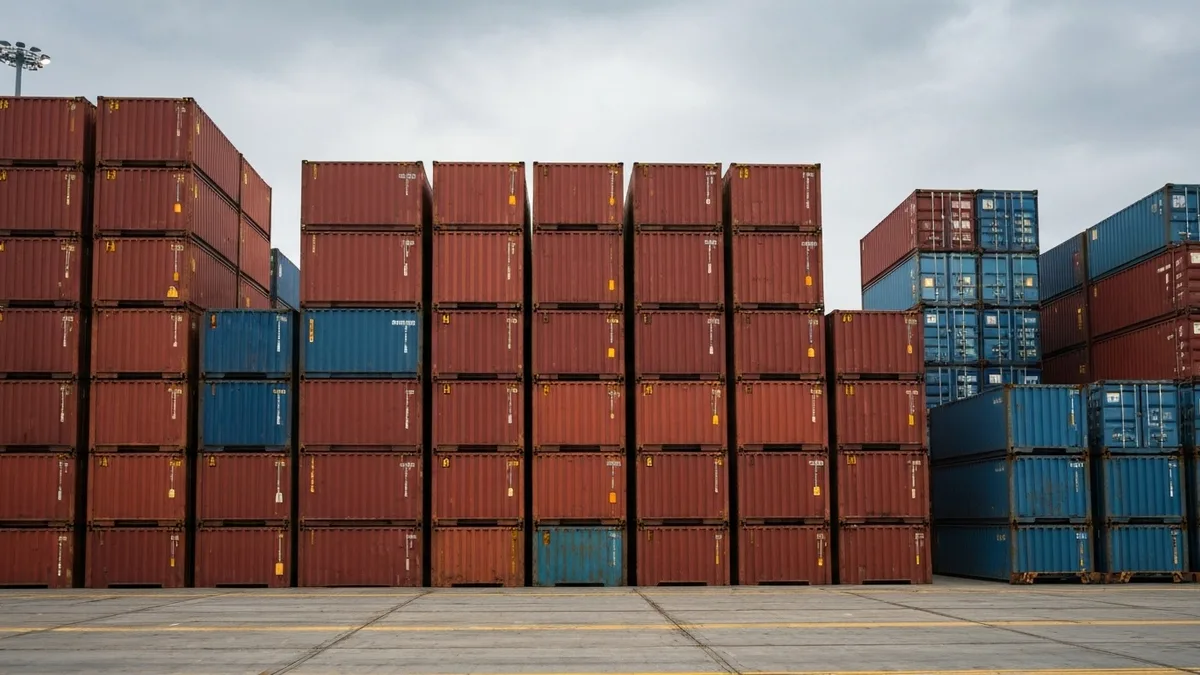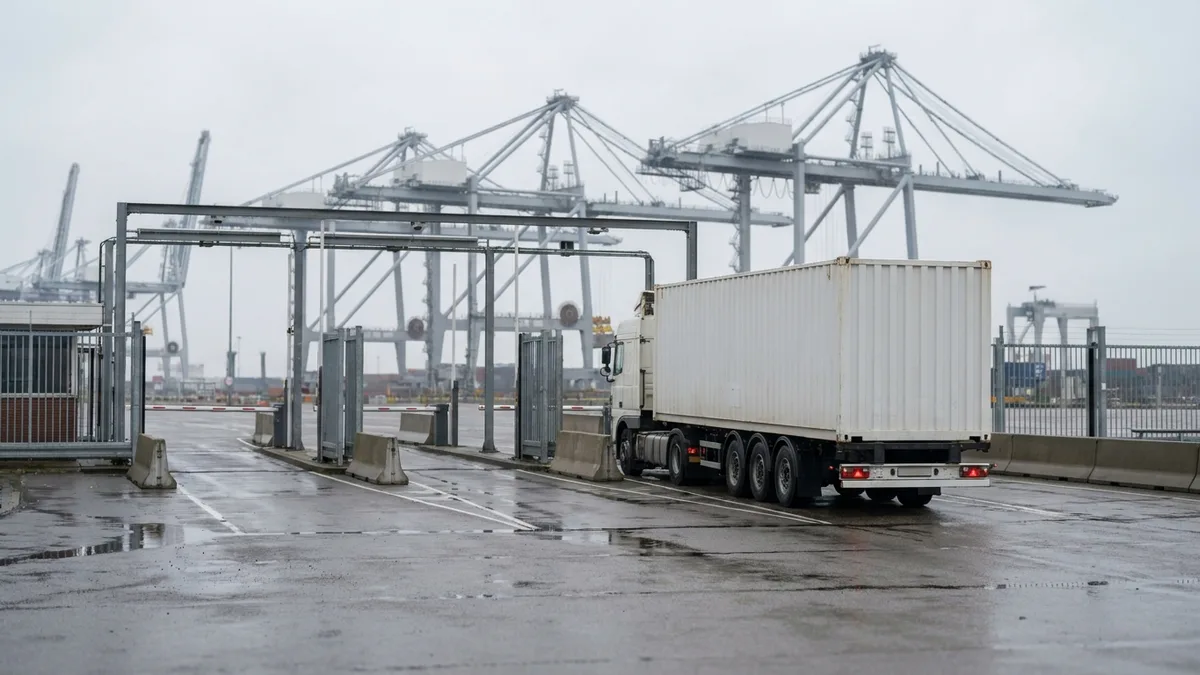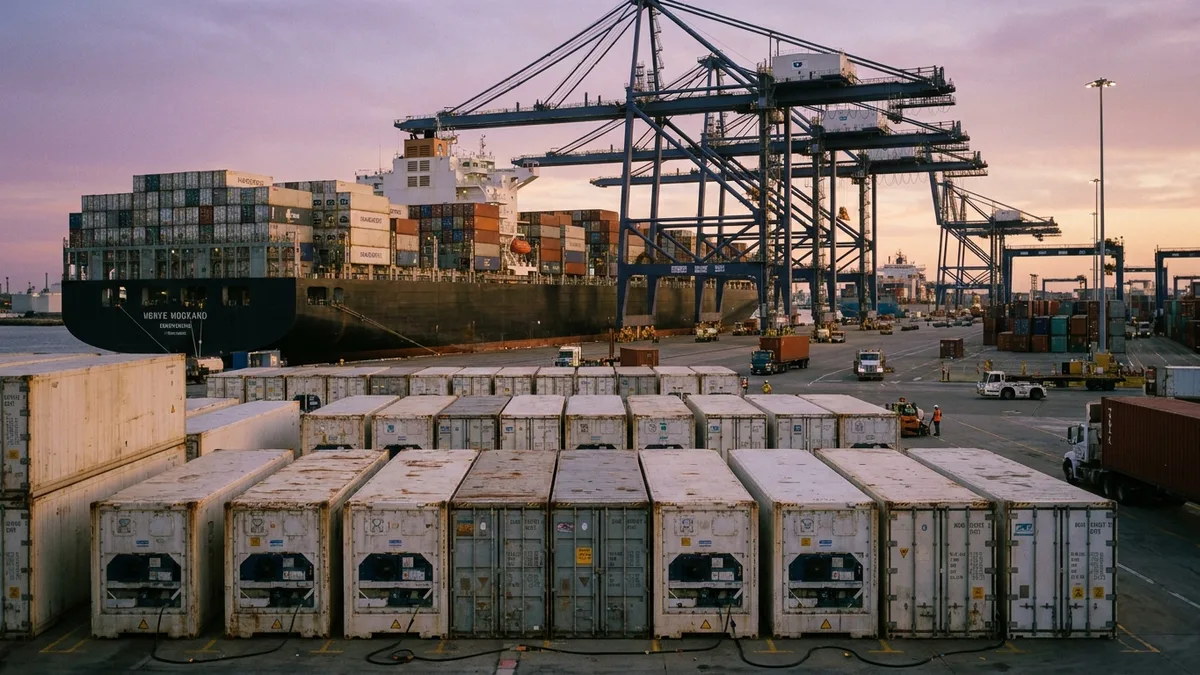


Two of the ways cargo gets into and out of Rotterdam narrowed in the same week, which is what makes this more than a routine disruption.
Rijkswaterstaat closed two lanes of the western Suurhoffbrug on the evening of 16 September after inspectors found cracks in one of the bridge’s main girders. That is the A15 bridge carrying most truck traffic to and from the Maasvlakte, where APM, ECT and the other deep-sea container terminals sit. All traffic now shares the remaining lanes and the hard shoulder, which the port business association Deltalinqs says halves capacity on the main route in. The repair is expected to take four to eight weeks, and Dutch trucking body TLN puts the cost to the sector at €600,000 a day.
The water route is no better. The Rhine’s reference gauge at Kaub read 16 centimeters on the morning of 21 September, down from 23 to 24 centimeters on the Friday and close to the record low of 6 centimeters set on 14 August. Barge operator Optimodal has stopped accepting new container bookings on the Rhine to and from Rotterdam and Antwerp, and cannot move the freight to rail either because no train paths are available. Rijkswaterstaat has warned of possible one-way traffic on the Upper IJssel if the shallowest sounded depth drops below 1.45 meters.
Road cost is rising into the same window. Fuel surcharges for the Netherlands and Belgium have gone to a record 28% this week from 25%, where they had held flat for four weeks, with diesel back to €2.282 a liter after dipping to €2.133. Diesel has now risen two weeks running, so this is re-acceleration rather than a blip.
Further out, the pressure is about timing rather than capacity. The Panama Canal Authority has postponed the draft cut it had planned for 1 October, so ships can keep loading to 14.63 meters, but daily transits have fallen from 36 to 32 with the largest vessels capped at nine slots a day. On Asia to Europe, Shanghai to Rotterdam rates keep falling with ships running under 80% full, and typhoon backlogs are adding berth delays of up to ten days at Shanghai and Ningbo. That reverses quickly: China closes for Golden Week from 1 to 7 October, MSC has blanked several Asia to Europe sailings across weeks 39 to 41, and space in the weeks immediately before the holiday goes first. Shypple’s freight update has the full lane detail.