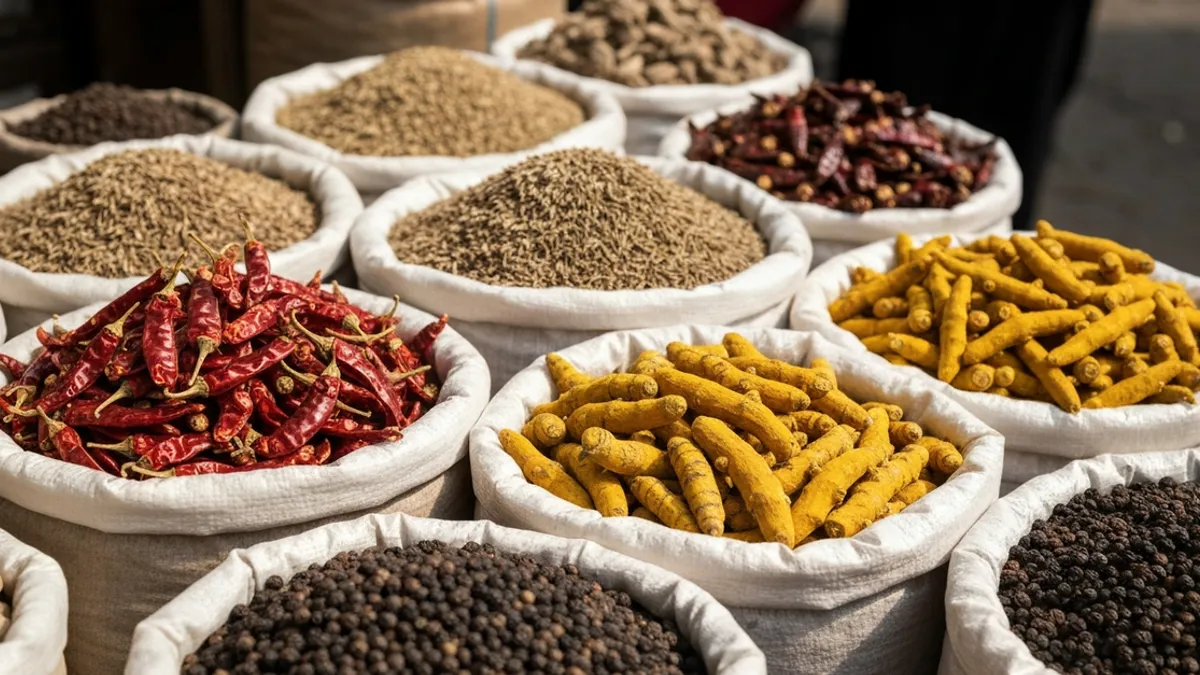


This is a pattern now rather than an event. Turmeric has rallied and corrected in each of the last three fortnights, and it did it again in the second half of August, bigger this time and with the strongest supply case behind it yet. Erode Gatta climbed through the middle two weeks to a peak of $202.93 to $203.97 per quintal on 24 August, then gave almost all of it back, down to $193.51 to $194.56 by 28 August. A full month of trading tested both edges of roughly a $189 to $210 band without breaking either.
The supply arithmetic is tighter than the trade has previously quantified. This season’s crop ran around 27% to 28% below normal sowing on a mix of El Nino disruption and a shift into soyabean and maize. National production is pegged near 90 lakh bags, and old carryover across Erode, Warangal, Duggirala, Cuddapah, Sangli and Nizamabad combined has fallen to barely 5 lakh bags against annual consumption of roughly 140 lakh bags. Some of what is left dates back to 2022/23 and is being held by stockists waiting on higher delivery prices.
What that does not explain is why the correction keeps coming anyway. Millers bought steadily through most of the fortnight and then simply stopped once prices reached the 24 August highs. Profit booking and demand fatigue at the top, rather than any change in the shortage, remains the best reading across three cycles.
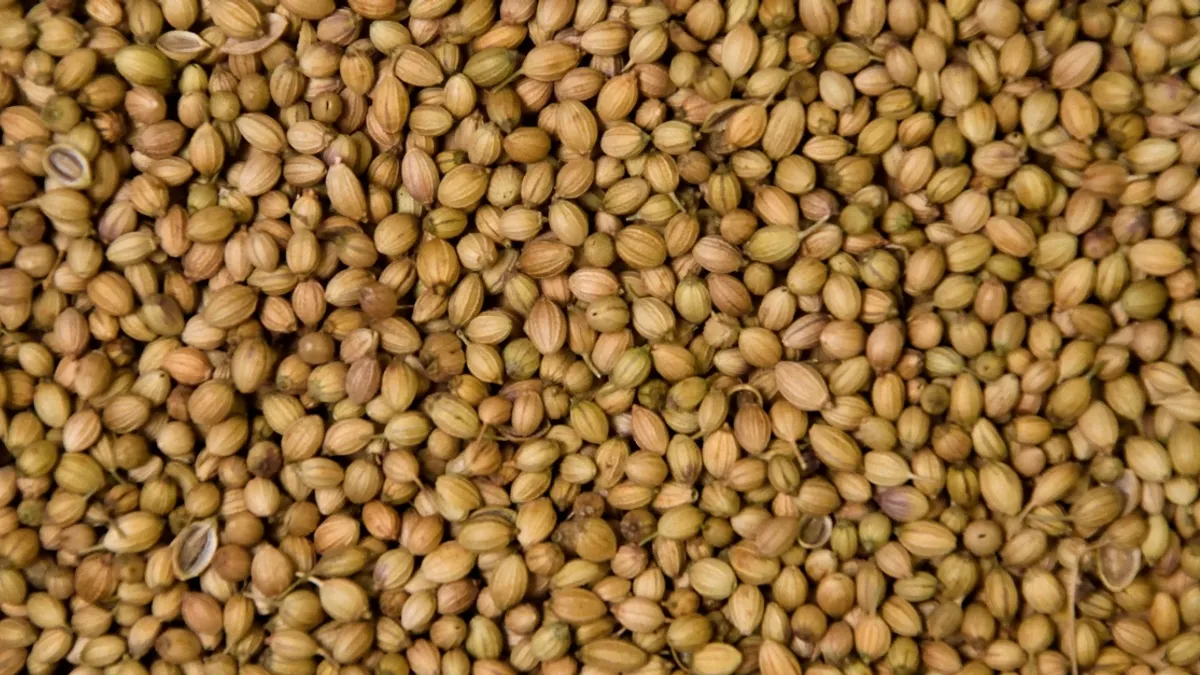
The rest of the complex is quieter and mostly waiting. Cumin sowing came in near 4.08 lakh hectares against a 4.40 lakh norm with production down to 5.14 lakh tonnes from 5.39 lakh, yet Delhi and Unjha spent the last week of August pulling in opposite directions before Delhi settled near $2.40 per kilogram. Coriander kept grinding higher on thin arrivals, with Baran logging just 300 bags on 22 August. Black pepper barely moved at all: Mercura opened the month at $8.01 and closed 26 August at $8.00, with Sri Lankan import material still cited as the reason nobody chases Kerala origin higher and Onam thinning trade further. Small cardamom finally broke, down to $27.20 to $30.33 per kilogram by 28 August as Kumili auction arrivals more than doubled from the fortnight’s opening level while the average price fell.
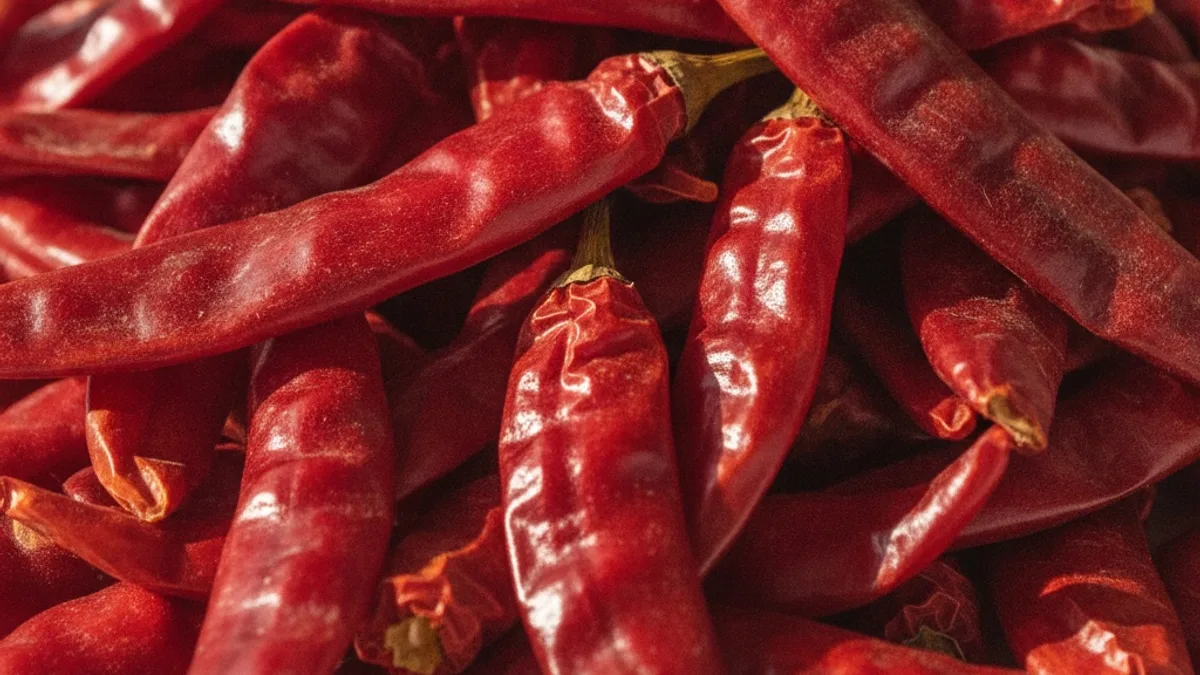
Two things are worth carrying into September. Red chilli has a date attached to it, with Andhra Pradesh’s monsoon weak through the sowing window and the trade’s own framing blunt: no meaningful rain in two weeks and a rally gets likely. And Iran’s parliamentary committee has approved specific Hormuz transit fee provisions inside a broader strait security bill, which still needs a full vote and Guardian Council review but bears directly on shipping costs across the whole trade.