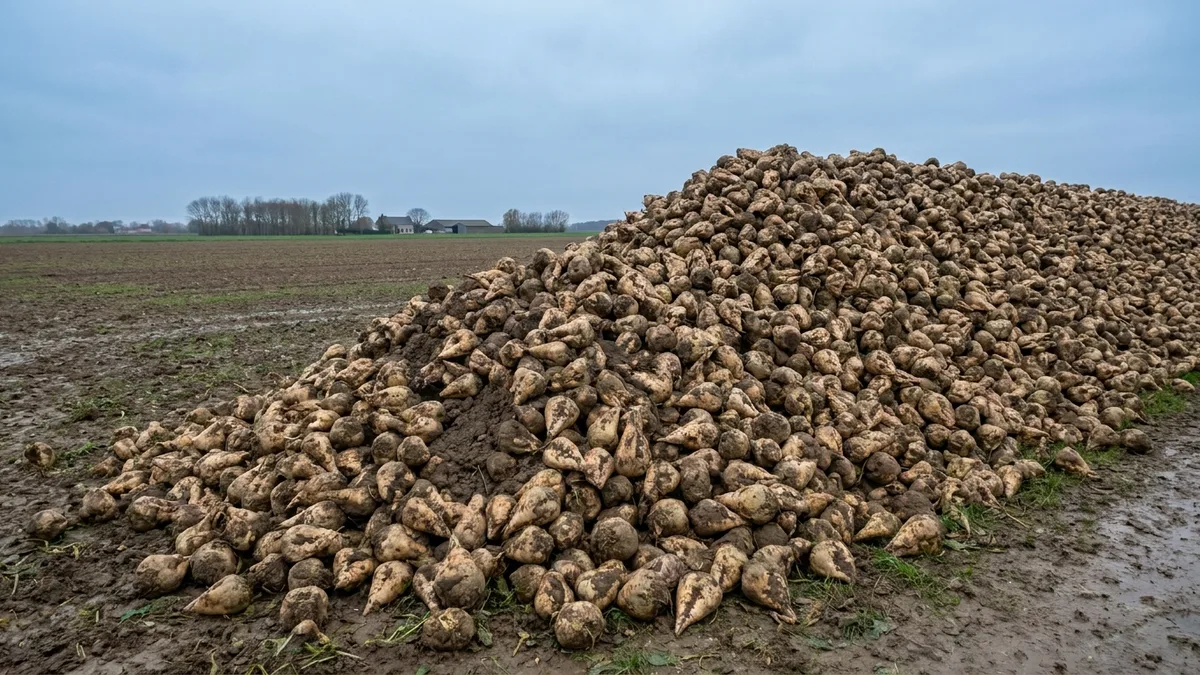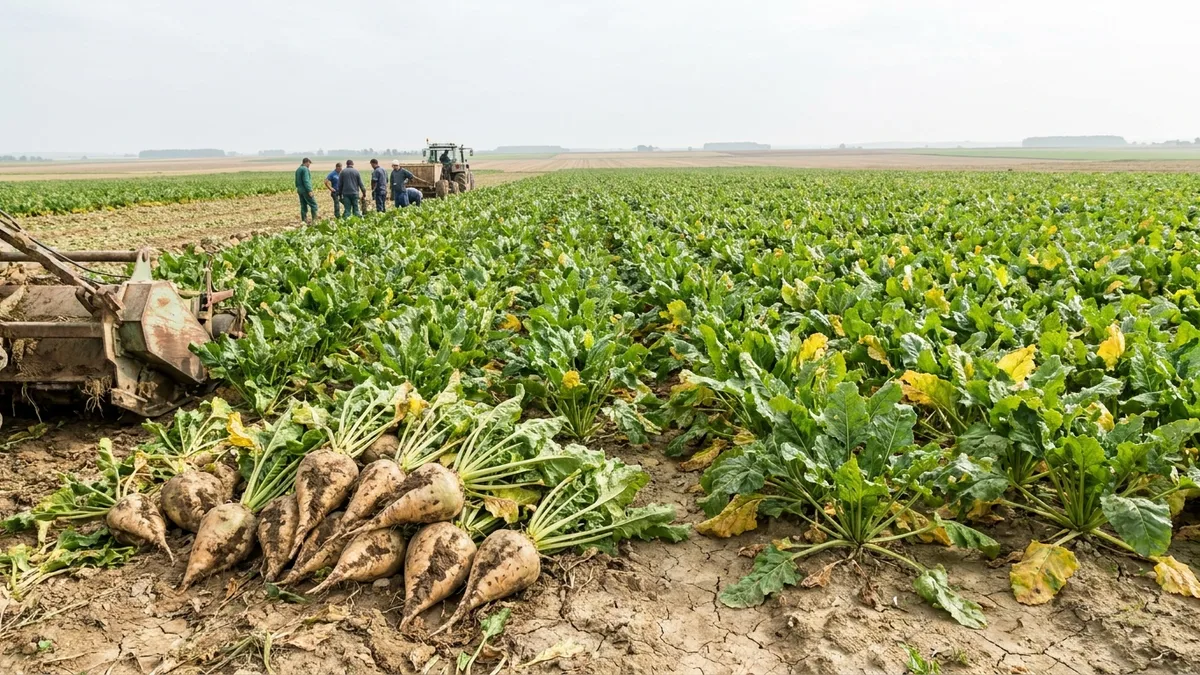


Large parts of the beet-growing area in France, Belgium, the Netherlands, southern Germany and the UK are now beyond any significant recovery in yield, after a prolonged drought and stretch of high temperatures. Little or no rain is forecast for the next ten days, with roughly 28 days left before the campaign starts.
The numbers show why growers are worried. In France, one of the lowest-cost beet-growing areas, the breakeven cash cost is estimated at around €3,000 a hectare. At a beet price of €35 a tonne, that means yields need to reach at least 86 tonnes a hectare. The latest JRC MARS estimate puts French yields at 81.7 tonnes, below that breakeven line, even as Nordzucker’s own public comments still describe the crop as being in good condition, a view increasingly at odds with the data. If current conditions hold, EU sugar output excluding ethanol is on track for around 13.5 million tonnes, or 14.3 million tonnes including the UK.
The pressure isn’t only in the field. Diesel supply disruption tied to the closure of the Strait of Hormuz and Russian capacity limits could push harvest costs higher still. Fertiliser prices are unlikely to correct even if oil prices settle. Südzucker also faces an extra €10 a tonne payment promised to German farmers who agreed to hold back beet planting this season, adding another cost line just as yields disappoint.
Against that backdrop, sugar prices have been moving fast. A rally in New York sugar, triggered by lower Brazilian production estimates, set off fund stop-losses and pushed European spot values to within roughly €30 a tonne of export parity, an opening to clear down some of the extra stock EU processors are still carrying into the new season: EU stocks stood at 8.36 million tonnes as of the end of May, against 7.46 million tonnes a year earlier.
The strain is showing up in company results and plant decisions too. Nordzucker and Tereos both posted further losses last quarter, and British Sugar announced it will close its Cantley factory, the smallest of its UK plants, after this campaign, citing higher energy costs despite an £11 million upgrade to the site’s power system last year.
This news article is part of a broader Vesper market analysis on the European sugar market. For the full market analysis, visit: https://app.vespertool.com/market-analysis/3314