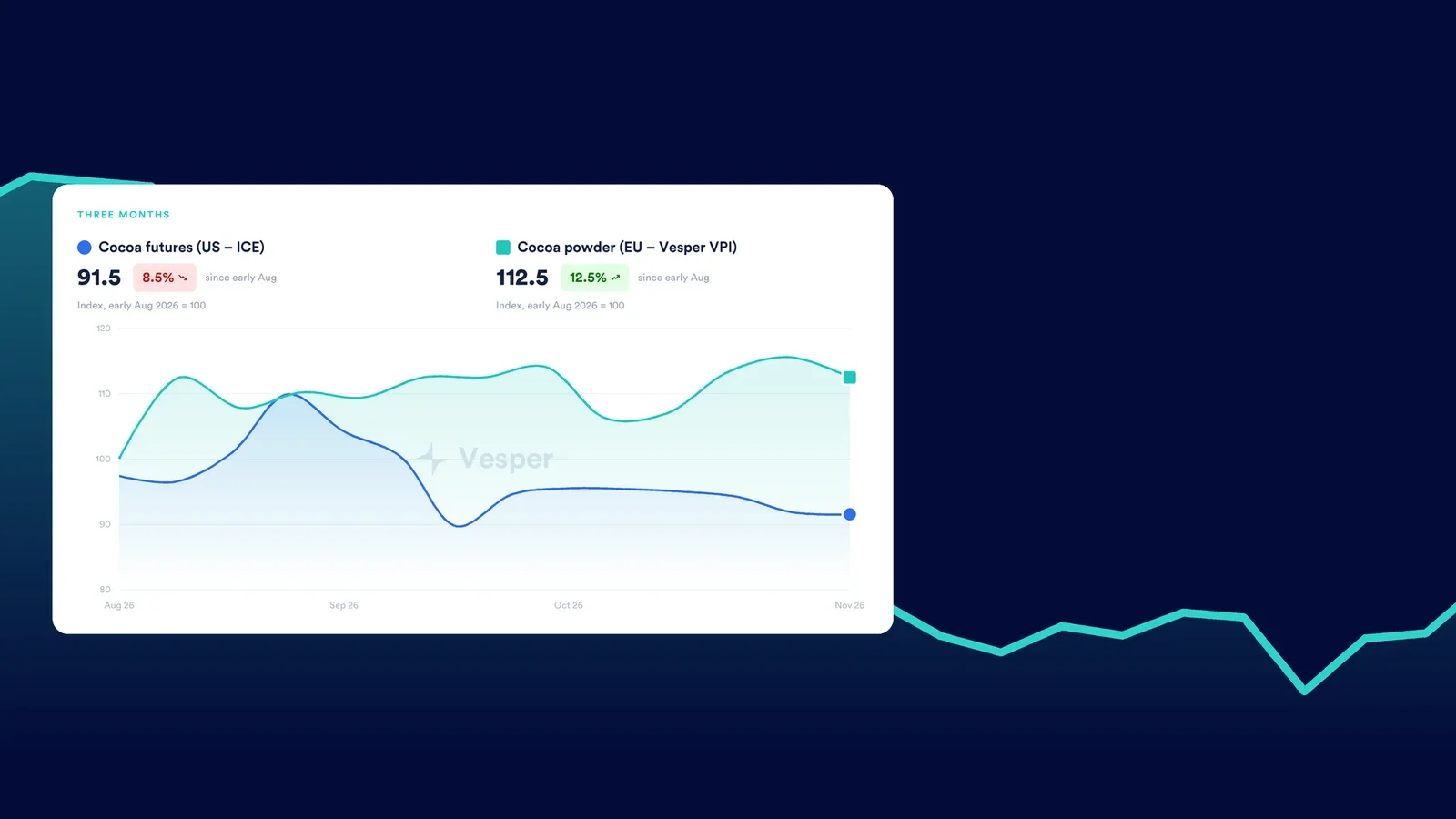
Cocoa was the first market to price the 2026 El Niño. Cocoa futures in New York rose just over 14% on 6 July alone and more than 50% in the month, as traders weighed the risk to the 2026/27 crop in West Africa and Ecuador.
Since the end of August the market has held that repricing in a range, because the weather that would turn El Niño risk into lost supply has not yet reached West Africa.
This post explains how El Niño reaches cocoa, why the July rally stalled, and what the last two strong El Niños did to cocoa supply. It is written for cocoa and chocolate buyers planning cover into 2027.
How does El Niño affect cocoa?
El Niño is the warm phase of the Pacific ENSO cycle. Our guide to how El Niño affects commodity prices covers the science; for cocoa, it works through two regions.
| Origin | Typical El Niño weather | Risk to cocoa |
|---|---|---|
| Ivory Coast and Ghana | Drier and warmer, with a potentially harsher Harmattan | Smaller crops |
| Ecuador | Heavy rain | Crop and export losses; output fell more than 60% in 1997–98 |
Source: Vesper analysis, November 2026.
The Harmattan is the dry, dusty seasonal wind that blows over West Africa from December. In an El Niño year it can be harsher, which is one of the main ways the event reaches the West African crop.
Why did cocoa prices jump in July 2026?
Cocoa repriced fast once El Niño was declared. The market was weighing the risk to the 2026/27 crop in West Africa and Ecuador, and it moved ahead of the weather.
Since the August peak, prices have eased back. They remain well above the lows of early 2026, but below where they stood a year ago.
Why has the cocoa rally stalled?
Three things have held near-term prices in check:
- West Africa has so far avoided El Niño conditions. The main growing region has not yet seen the dry weather the market priced in July.
- Arrivals have been strong. Ivory Coast arrivals ran well ahead of last season through the summer.
- Stocks are rising. Cocoa in ICE warehouses in the US and Europe has kept building, which gives buyers a cushion against a near-term shortfall.
Ecuador is the exception. Record rains continue there, and the event has been compared to 1997–98.
What did past El Niños do to cocoa?
The two most recent strong events show how differently the same kind of weather can land on cocoa.
| Event | What happened in West Africa | What cocoa did |
|---|---|---|
| 2015–16 (about +2.6°C) | West Africa escaped | Prices fell on a surplus |
| 2023–24 (about +2.0°C) | Erratic weather, layered on swollen-shoot disease and aging trees | Helped push cocoa to record highs |
| 2026–27 (+2.1°C in September) | So far avoided El Niño conditions | Repriced in July, then held in a range |
Source: Vesper; NOAA Climate Prediction Center.
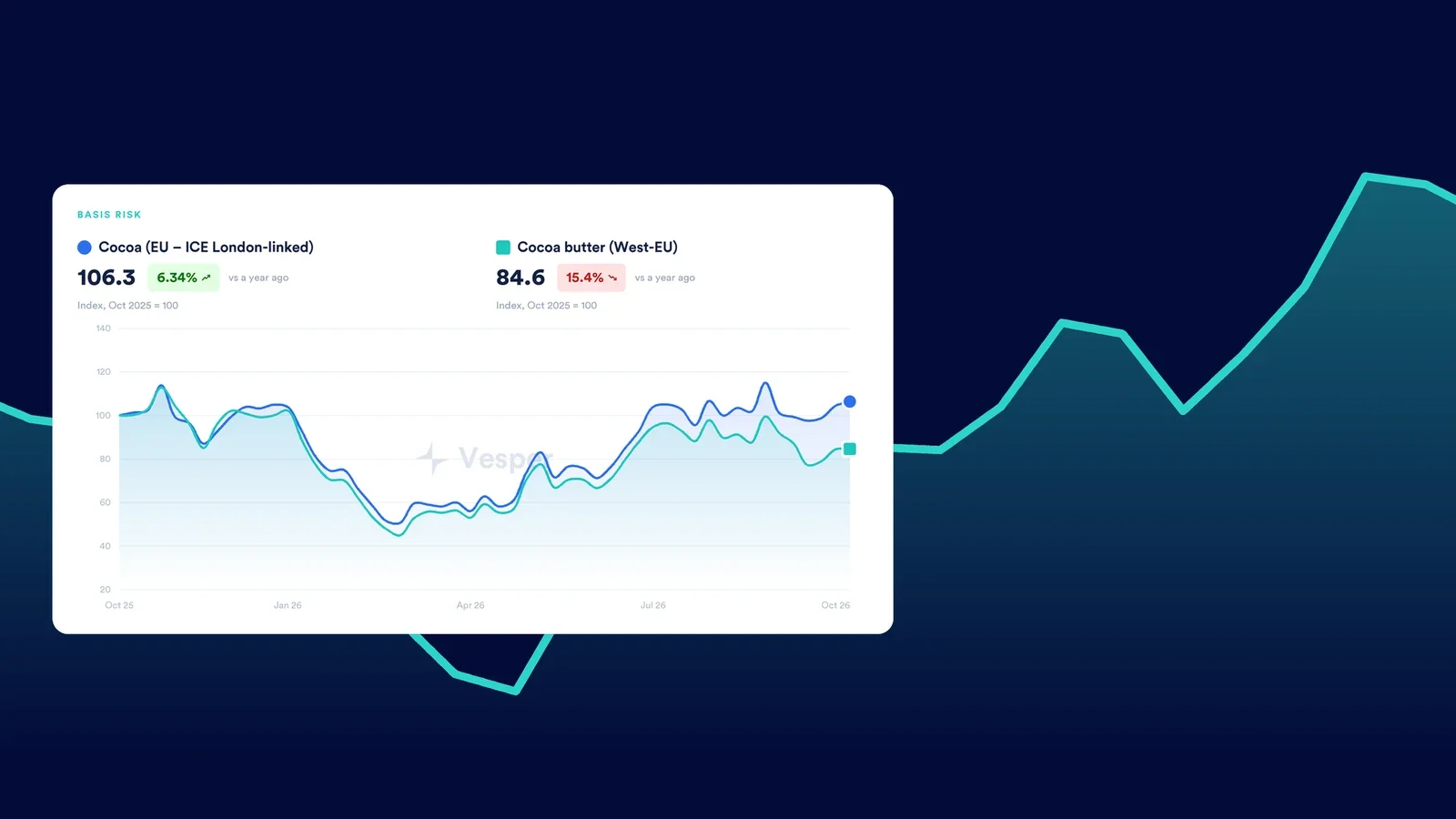
The 2015–16 record is a reminder that an El Niño can spare a crop that a later one hits hard, as happened to cocoa in 2023–24. The 2024–25 price spike was the West African supply crisis; the 2026 leg is the market pricing El Niño risk to the next crop.
Putting it to work
1. Watch West African weather from December
The Harmattan season is the point at which West African weather can turn El Niño risk into lost beans.
2. Track arrivals and exchange stocks
Ivory Coast arrivals and ICE warehouse stocks are the two numbers that have kept the July rally in check. A change in either is the first sign the balance is shifting.
3. Follow Ecuador’s monthly exports
Ecuador is where El Niño weather has already arrived, so its export figures will be the first hard data on what the event does to supply.
Get the full El Niño report
Our report, The 2026 El Niño, sets cocoa alongside seven other markets, from sugar and palm oil to coffee, wheat and corn. For cocoa it answers:
- How big a hit could the Harmattan deal to the 2026/27 main crop and the 2027/28 mid crop?
- When Ecuador’s rain damage is expected to reach exports.
- What our analysts see for the 2026/27 supply balance.
- How long the stock cushion can hold prices in check.
Download The 2026 El Niño report to see how exposed your cocoa and other inputs are, and when.
Frequently asked questions
How does El Niño affect cocoa?
El Niño tends to bring drier, warmer weather to the cocoa belt of West Africa, and can make the Harmattan, the dry, dusty wind that blows from December, harsher. In Ecuador it usually brings heavy rain, which can cut output sharply: in 1997–98 the country's cocoa production fell by more than 60%.
Why did cocoa prices rise in July 2026?
The market priced El Niño risk to the 2026/27 crop in West Africa and Ecuador. New York cocoa futures rose just over 14% on 6 July alone and more than 50% over the month. The rally peaked on 31 August.
Why have cocoa prices not kept rising?
West Africa has so far avoided El Niño conditions, Ivory Coast arrivals ran well ahead of last season through the summer, and stocks in ICE warehouses in the US and Europe have kept rising, which gives buyers a cushion against a near-term shortfall.
Did El Niño cause the 2024 cocoa price spike?
It contributed. The 2023–24 El Niño brought erratic weather to West Africa, and that weather, layered on swollen-shoot disease and aging trees, helped push cocoa to record highs in a wider West African supply crisis. In the stronger 2015–16 event, by contrast, West Africa escaped and cocoa prices fell on a surplus.
What is the Harmattan?
The Harmattan is the dry, dusty seasonal wind that blows over West Africa from December. A harsher Harmattan is one of the main ways El Niño weather can reach the West African crop.