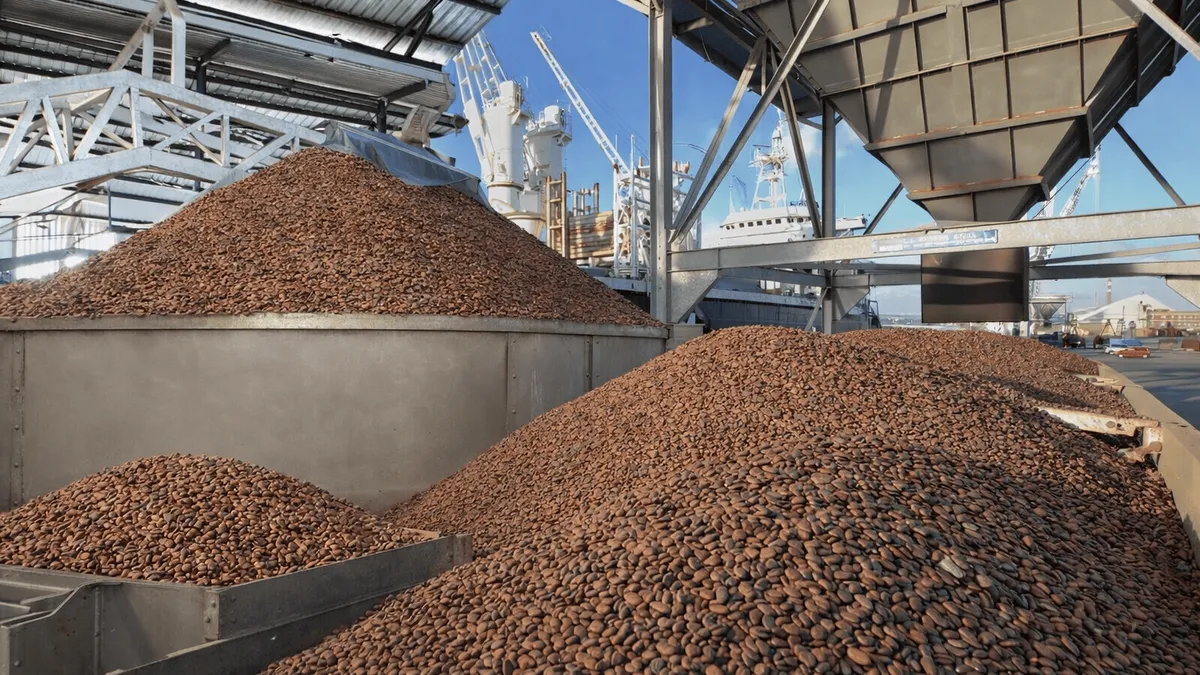
Europe ground 3.2% more cocoa in the third quarter than a year earlier, its first year-on-year gain since 2024 and a possible floor under the long decline that followed the 2023/24 price spikes. Asia went further: the Cocoa Association of Asia reported grindings up 29% year on year, a record. North America went the other way, down 2.5%, with a change in the number of facilities reporting.
Whether Europe’s uptick is restocking at better bean prices or genuine demand growth is hard to tell, and the outlook for chocolate confectionery still looks challenging. Demand is consolidating rather than building for a breakout, and cocoa futures reflected that, rising only marginally on the week and staying inside the range they have held for four months. Fund positioning has been virtually unchanged for several weeks. Without a major fundamental catalyst, and with more compelling moves elsewhere in commodities, fresh participation is staying away.
Supply news was mixed. West African weather was mainly supportive in Ivory Coast and drier in Ghana, and a strengthening El Niño adds risk to the coming Harmattan season. Ivorian arrivals are running below last year but the early start makes comparison difficult. Ecuador exported strongly in September, which eased near-term availability, though the excessive rain there raises disease risk six to eight months out. Spot cocoa powder gained on the week while mass and butter ratios held.
The EUDR deadline for large and medium-sized enterprises falls on 30 December.
Read the full global cocoa market analysis here.