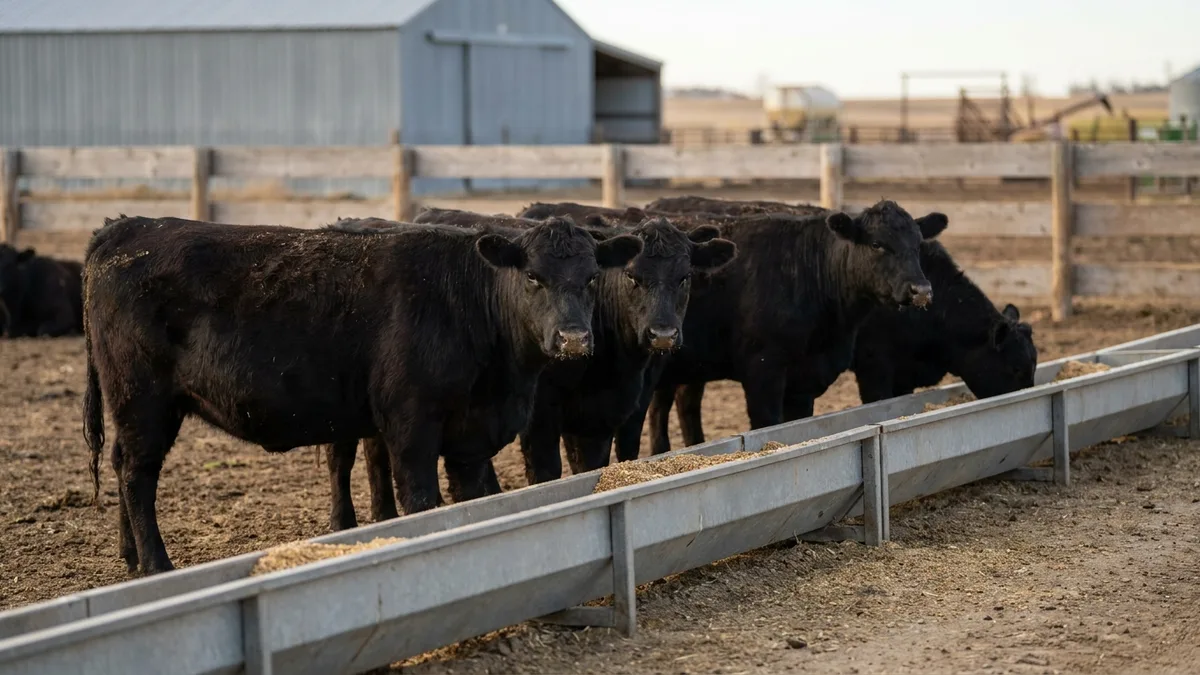


The Cattle on Feed report put July placements at 1.42 million head on feedlots with 1,000 head capacity or more, down 11% on last year. That undershot everything: the average analyst estimate reported by Bloomberg looked for a 6.2% decline, and LEAP Market Analytics had forecast 4.0%. It also left a deficit of 164,000 head against LMA’s model-implied estimate of replacement feeder cattle available during the month, the widest gap since last November.
The financial picture behind that number is the point. Feedyards are already carrying losses of at least $300 to $400 per head on a cash basis, and LMA expects that to stretch to $500 to $600 by year end unless the finished side turns around soon. Cattle feeders have had a few profitable stretches this year, but the trend since last autumn has been negative.
Feed is now adding to it. LMA has flagged corn as a threat to downstream users for a while and says that threat is being realised. Condition ratings have fallen sharply over the past month, weighing on yield prospects. LMA already sat at the conservative end with a projected US average of 178.9 bushels per acre, and Pro Farmer came in lower still at the close of its crop tour with 173.2. That estimate lifted corn futures, with every listed contract now trading above $5. LMA is more circumspect on the fundamentals but is comfortable with a 2026/27 marketing year average approaching or slightly above $5 on a cash US average basis, which implies a seasonal peak of $5.25 to $5.50 late next spring or early summer.
The supply consequence is not what the placements number suggests. Marketings remain very sluggish, with packers only now seeing a little spot margin relief after two of the majors closed slaughter plants. So even with placements falling well short of expectations, total inventories on feed were still 1.8% above last year on 1 August. LMA can see year on year increases reaching 3% to 4% by early 2027 even if the marketing pace recovers steadily.
One policy move cuts the other way. The Trump administration will waive out-of-quota tariffs on imported ground beef for 90 days, with expectations that up to 661 million additional pounds could enter the US duty free in that window, most likely from Brazil and Argentina. LMA calls that a meaningful volume over the period and expects some downside pressure on the 90% lean trimmings complex. Set against how tight fed beef supplies are becoming, it does not change the direction of travel.