

Comparing Commodity Prices to identify trends and market opportunities
Benefits of comparing commodity prices
Identifying Cost-Efficient Supply Sources Comparing prices from different regions helps you find the most economical suppliers. This can lead to significant cost savings and better supplier relationships.
Improving Budgeting and Planning Historical price comparisons help you plan budgets accurately by predicting future costs. This approach minimizes financial surprises and supports better fiscal management.
Start comparing commodity prices: step-by-step
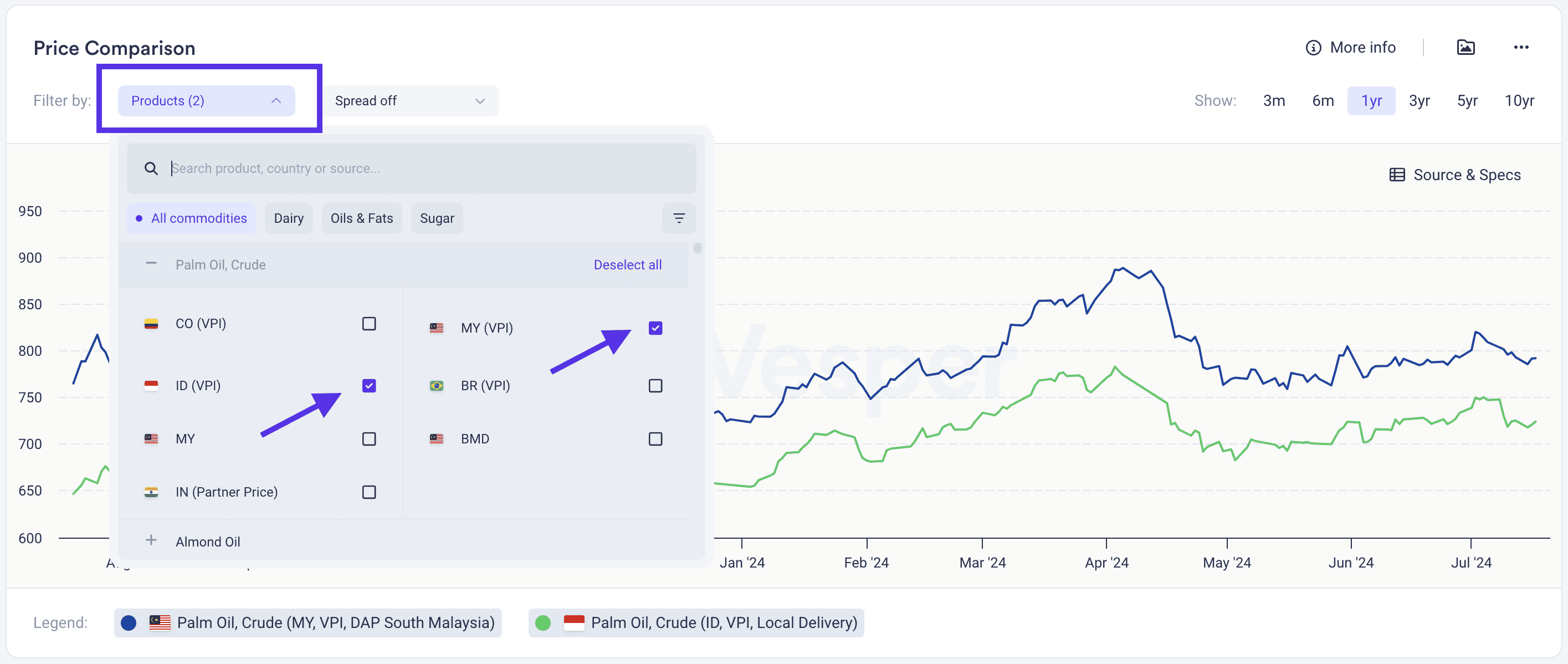
The Price Comparison widget combines both Vesper prices, public sources and partner prices for a comprehensive comparison. It puts all the pricing data you need on one graph so you can clearly assess price relations on the same graph. Use it to compare multiple products, or countries and sources simultaneously.
1. Compare commodity prices between countries or sources
Use the products filter to find a product that is of interest to you.
Select multiple countries or sources. In the screenshot below we have taken the example of comparing the commodity prices of Crude Palm Oil between Malaysia and Indonesia.
Wonder what the VPI means behind the countries in the product filter? Vesper Price Index. Learn more about how to find and use a commodity price index.
2. Check out commodity price differences between products
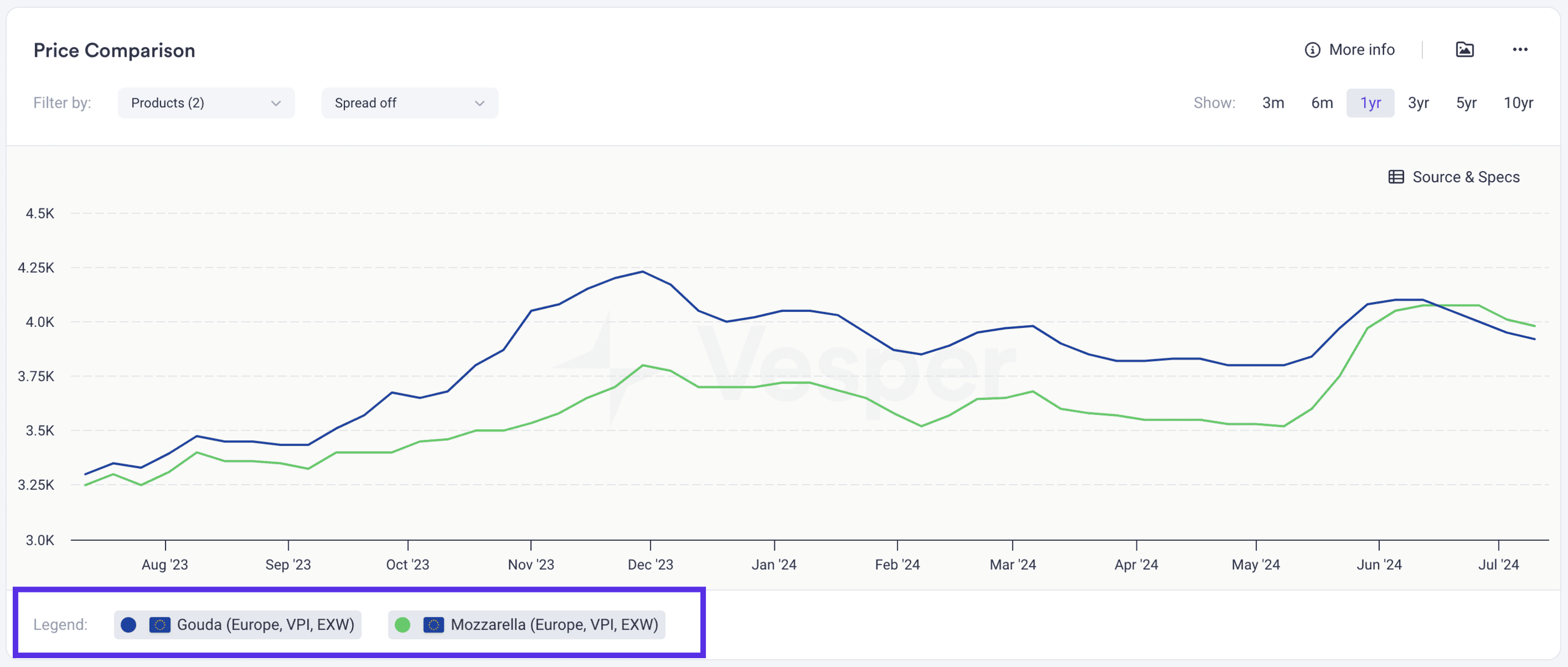
Use the products filter to find two products you are interested in comparing and select the same country data source.
In our example, we are comparing the cost of Gouda versus the cost of Mozzarella in Europe, but feel free to explore any other comparison.
Use cases for comparing prices
Sourcing between two products
Compare two oil products that you can switch out from one anther to optimize ingredient costs. For example, soybean oil and palm oil prices. If soybean oil is cheaper, switch to it to save on production costs. This decision can reduce expenses and improve your product pricing.
Sourcing per geographical region
Compare wheat prices in the US and Russia. If Russian wheat is cheaper, import from there to cut costs. This strategy can enhance your profit margins and offer competitive pricing to customers.
Understanding price relations
Compare the prices of related products like WMP and SMP. Track these prices to identify trends. For example, if WMP prices start to rise and SMP typically follows, you can spot this trend early. This strategy can enhance your profit margins allowing you to time your purchase before prices increase.
Frequently asked questions
What data sources does the Price Comparison widget pull together?
It combines Vesper prices, public sources, and partner prices on a single graph, so you can assess price relationships side by side rather than juggling separate datasets. You can plot multiple products, countries, or sources at once, which makes it easier to spot how different reference points move relative to each other. See Vesper price comparisons for how it works.
How can comparing prices across regions actually lower my sourcing costs?
Comparing the same product across countries or sources reveals which origin is currently more economical. The article gives the example of weighing wheat from the US against Russia: if one origin is cheaper, you can shift purchasing there to cut costs. Applied consistently, this helps you identify cost-efficient supply sources and strengthen margins without sacrificing quality.
Can I use price comparisons to decide between two interchangeable ingredients?
Yes. Where two products can substitute for each other, comparing their prices supports switching to the cheaper option. The article uses soybean oil versus palm oil: if soybean oil is cheaper, moving to it reduces production costs. Plotting both on one chart makes the spread obvious so you can time a substitution before it erodes your product margins.
How does comparing related products like WMP and SMP help with purchase timing?
Some commodities move together, so tracking them side by side surfaces trends early. The article notes that if whole milk powder prices begin rising and skimmed milk powder typically follows, spotting that pattern lets you act before the second product climbs. Watching these price relations helps you time purchases ahead of broader market moves and protect margins.