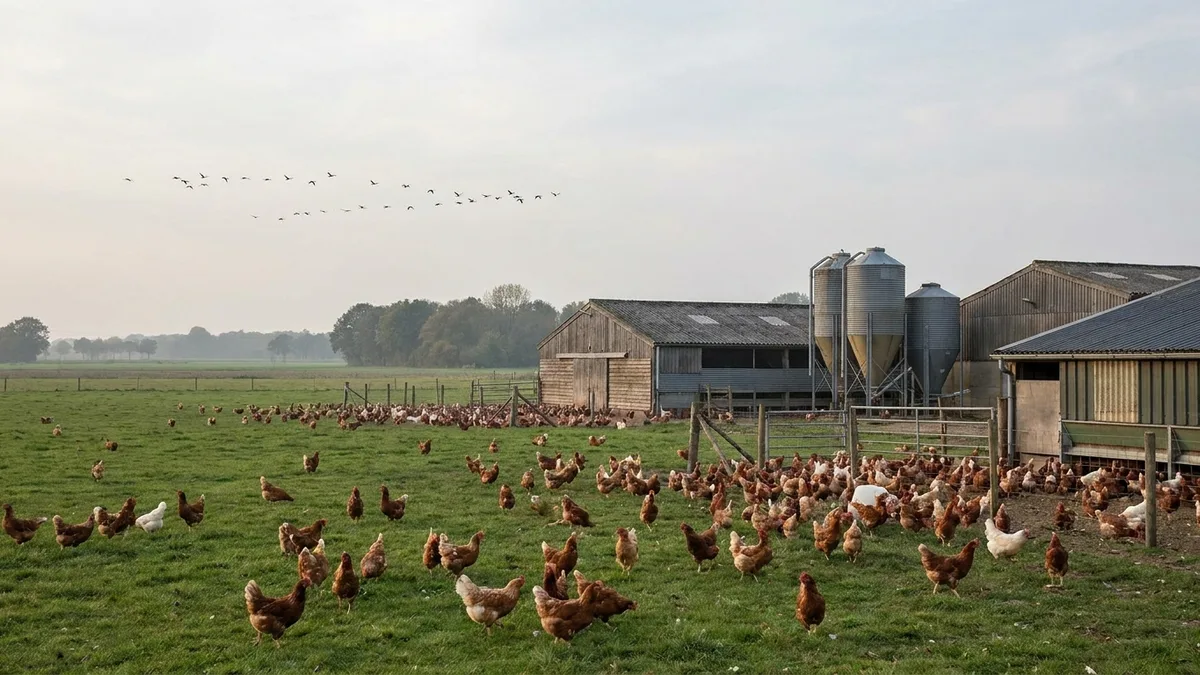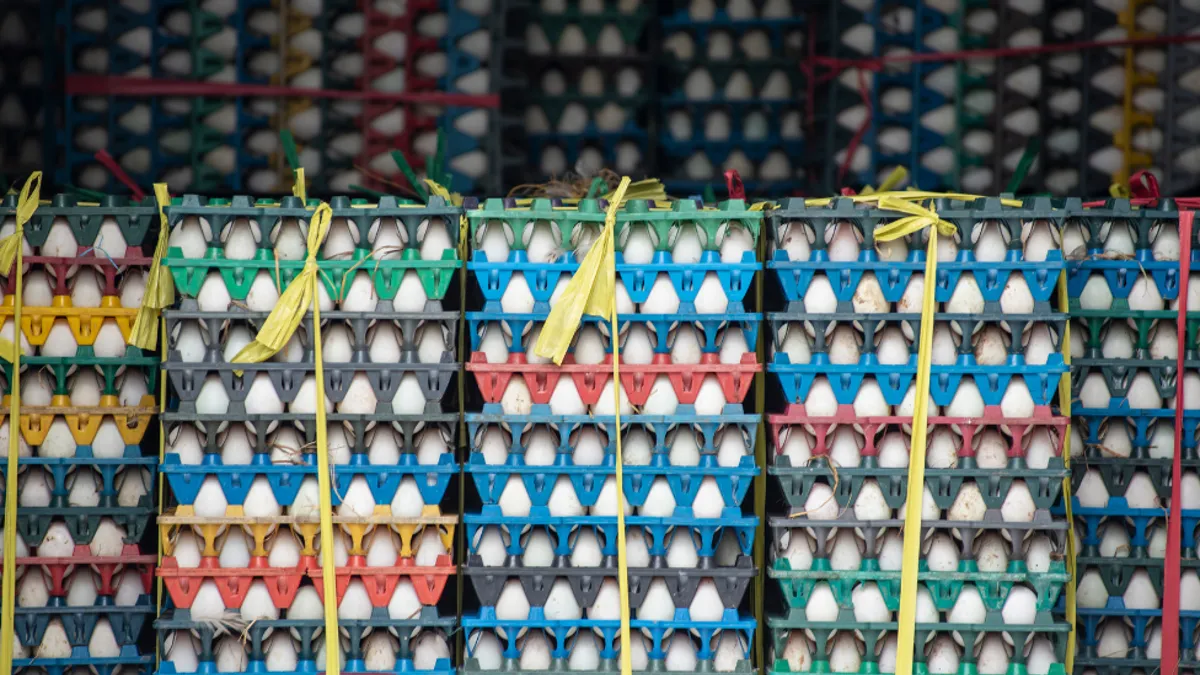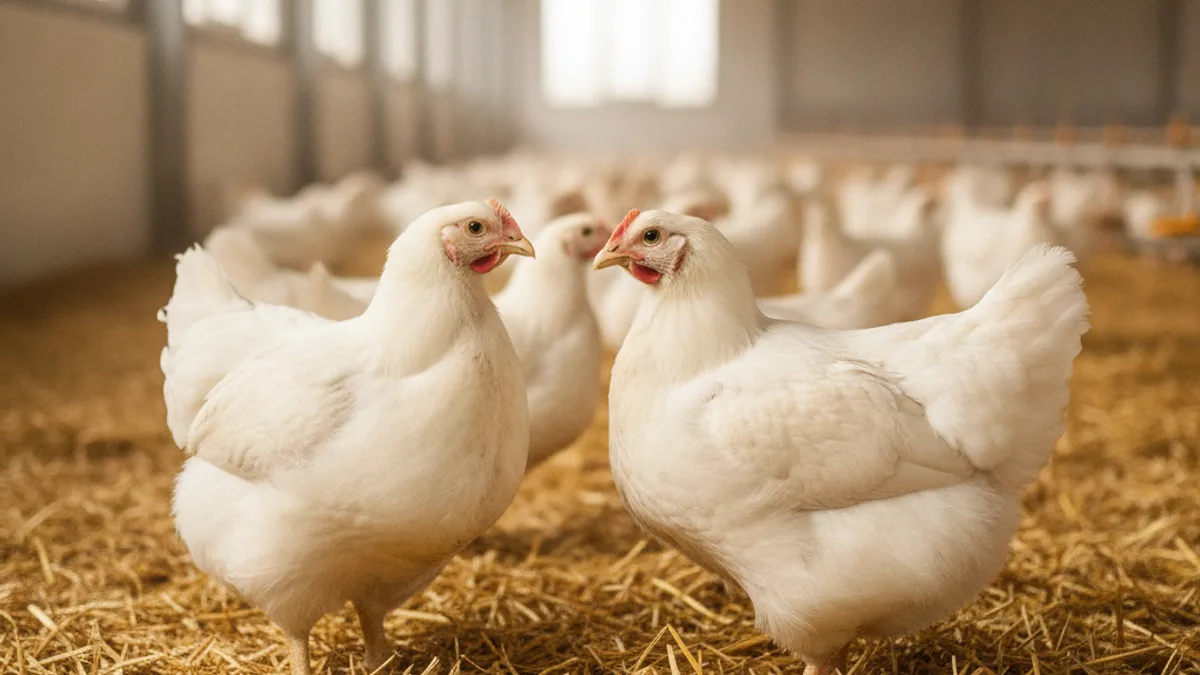


EU chicken production has climbed steadily over the past decade, and the drivers behind that growth remain in place. Inflation pushed buyers toward cheaper sources of protein, with chicken the clear beneficiary, while expansion has concentrated in lower-cost member states such as Poland, Spain and Hungary. What has changed is the stability of that supply. Production through 2025 and 2026 has been markedly more volatile than in 2023 and 2024, shifting poultry price risk away from the long-term trend and toward supply shocks in individual countries.
Poland is the clearest case. Its production has grown on low labor costs, high investment, strong integrators and efficient export logistics into Germany and the Netherlands, but that strength has not brought stability. July production came in at roughly 200,000 tonnes, down from around 250,000 tonnes a year earlier, a drop of about 20%. With a broiler cycle of around six weeks, a gap of that size typically feeds through to higher prices within weeks. Output is now stable, and Vesper’s analysis expects Polish prices to soften further in the near term, though any renewed disruption could quickly reverse that.
Spain shows the other path. Spanish production has grown strongly since 2022 with far less volatility. The swings seen elsewhere in the EU have come from three main sources: Ukrainian imports, Salmonella findings and avian influenza outbreaks. With no changes to Ukrainian import rules announced, avian influenza is the main remaining source of future volatility.
So far the disease picture is calm. Germany reported one outbreak at a commercial turkey farm in Lower Saxony, now closed. France has three unresolved outbreaks, including one on a commercial duck farm in Maine-et-Loire, and with migration routes heading south, an escalation there could carry over into Spanish production. Newcastle disease remains active in Spain’s Castilla y León, with 21 unresolved outbreaks on commercial farms, but it is contained.
Across Europe, prices have firmed in most countries over the past few weeks, though week-on-week prices in the main producing regions have eased, suggesting the rally is losing momentum. As long as the disease situation holds, the market looks set for a calmer fall and winter than last year. The full analysis has the detail by country and by disease.