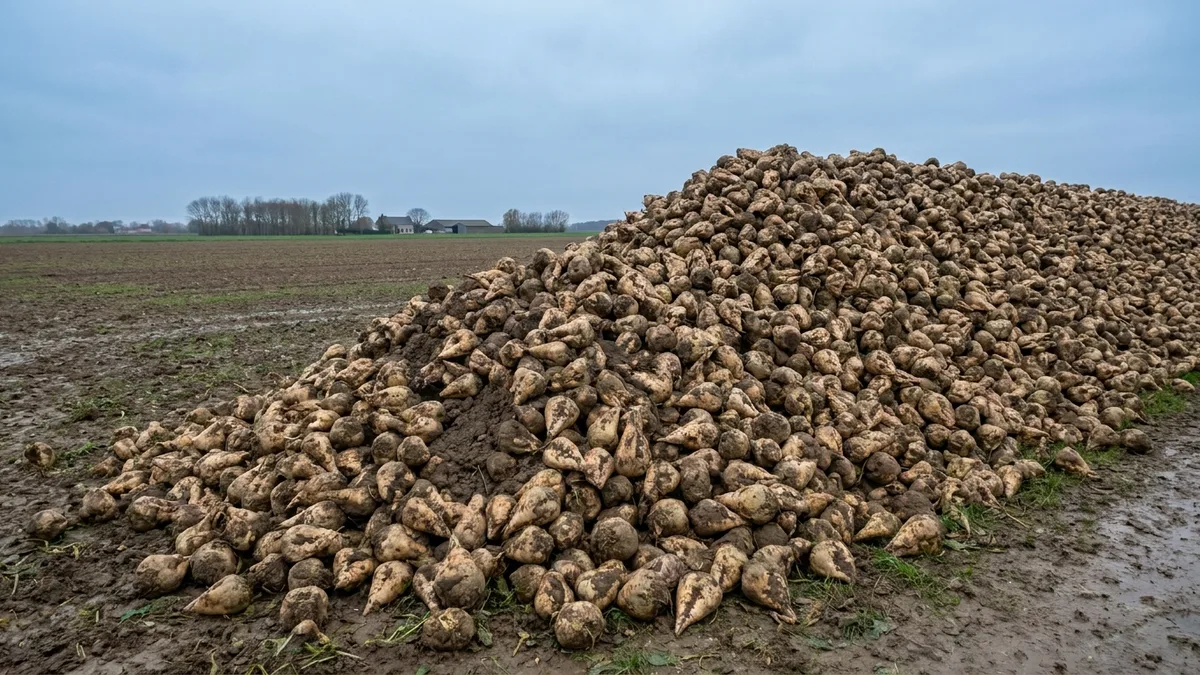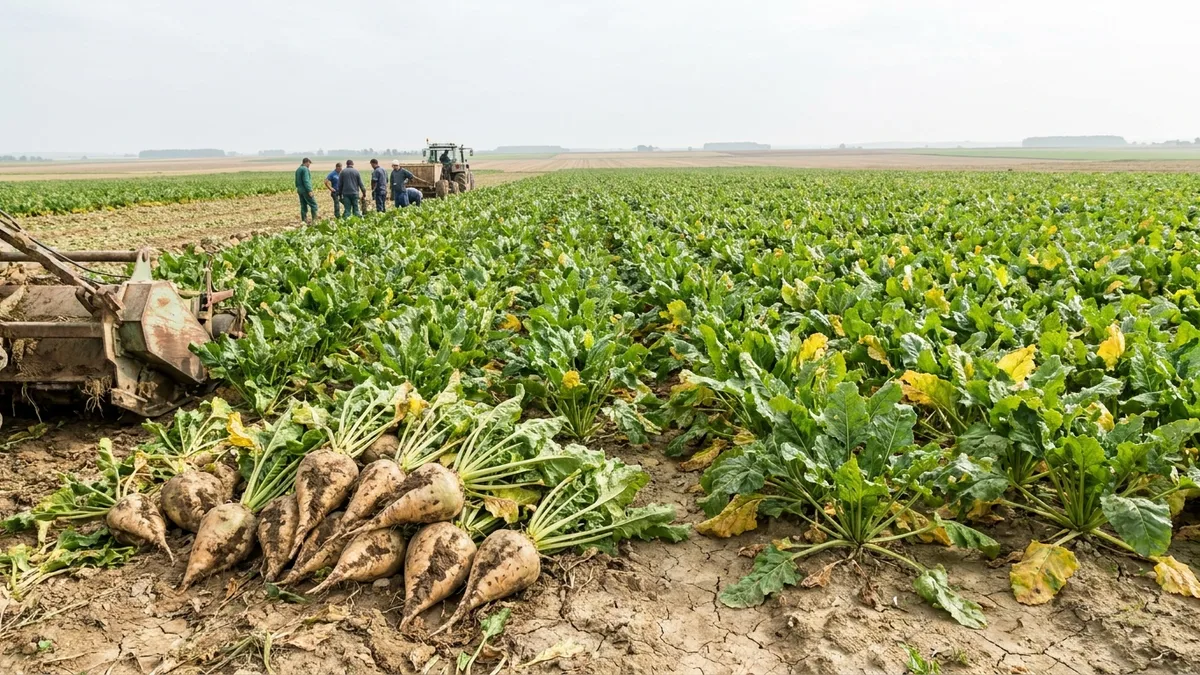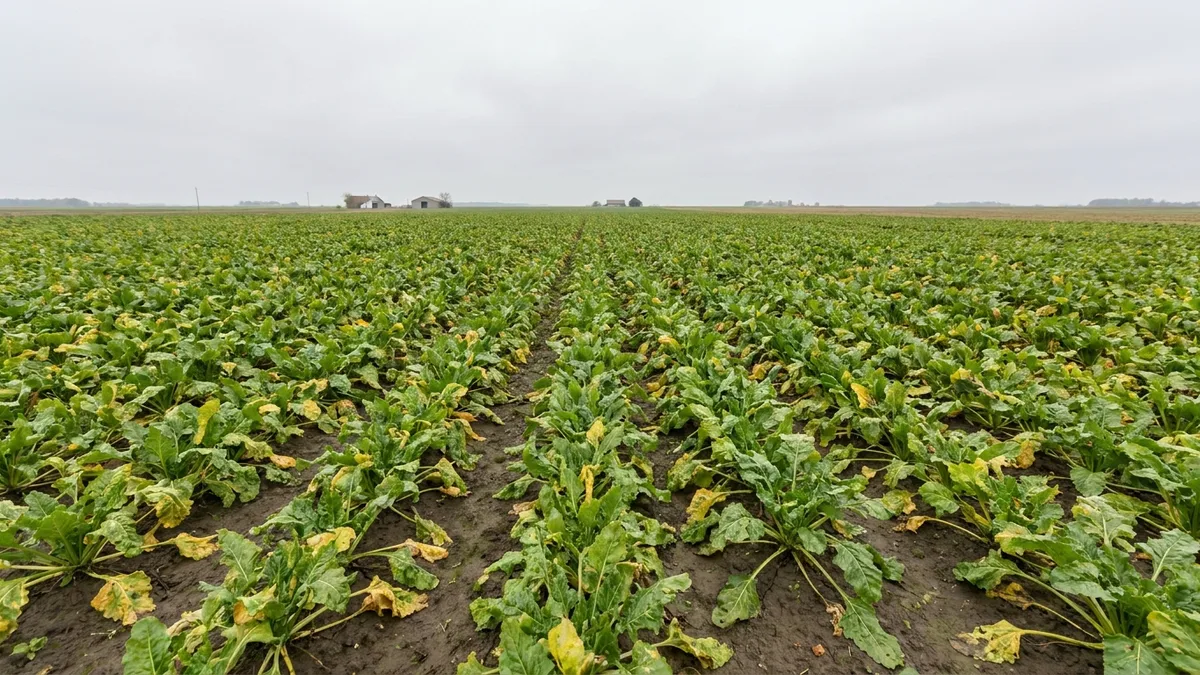


Southern Germany’s beet growers’ association, VSZ, is now expecting a historic crop failure, with some growers facing a total loss. Particularly hard-hit regions including the Rhine-Main area, Baden-Württemberg and Franconia will produce almost no commercial crop. France’s picture is just as dire, and the UK’s is no better: fields visited in Suffolk this month showed low plant density and undersized beets, with the cost of harvesting some plots now outweighing any return. Cosun in the Netherlands has delayed the start of its campaign by a week in the hope of some improvement. Italy has already started at Minerbio, on August 20th.
The scale of the shortfall is pushing the region toward imports it hasn’t needed in years. Assuming an EU and UK beet crop of no more than 14.1 million tonnes, Vesper estimates the region would need around 3.4 million tonnes of imports to meet demand, using Brazilian VHP sugar under the MERCOSUR and CXL trade arrangements as the benchmark replacement value. Ukraine has already begun lobbying for greater access. The UK looks reasonably well placed on paper, with an autonomous tariff quota of 325,000 tonnes plus an unused Australian free-trade allocation of 140,000 tonnes for the rest of 2026 and 160,000 tonnes in 2027, though Australian sugar would carry a premium over other origins on freight and Far East pricing.
Large pan-European buyers are, for now, largely covered near current market levels; mid-sized buyers are only about half covered, which is where most of the fresh import demand is likely to land. It’s also plausible the European Commission loosens its Inward Processing Relief rules when the current suspension comes up for its scheduled six-month review in November, a step that would ease near-term supply pressure but do nothing for the longer-term problem: a region whose growers increasingly need multi-year price certainty to justify investing in irrigation infrastructure that costs roughly €25,000 per hectare to install.
For processors, more imports and higher prices won’t necessarily mean a return to profitability. Sugar is priced on volume, and lower output combined with higher extraction costs from smaller, drought-stressed beets is likely to outweigh the benefit of firmer prices for what’s left of this year’s crop.