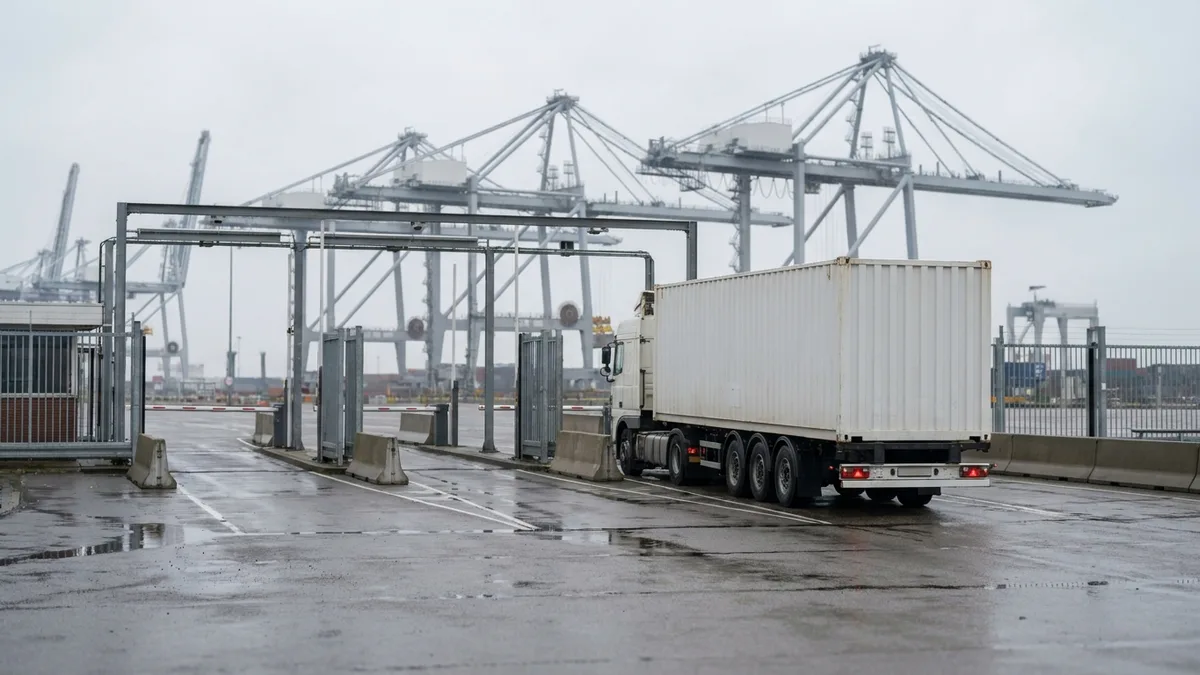


The Dutch government is cutting its road-transport toll by 22% from 1 September through the end of the year, a temporary break for hauliers after a run of higher fuel costs. Shypple will trim its own Truck Toll surcharge from €0.21 to €0.17 per kilometre from the same date. The relief doesn’t last: rates return to their previous level on 1 January 2027, and the 2027 rates will then be indexed for inflation, with the exact figures due in October.
It’s a small offset against a squeeze that’s holding elsewhere. Port congestion worldwide is keeping about 1.7 million TEU of ship capacity out of the market, close to Evergreen’s entire fleet, and schedule reliability sits at 60% to 65%, well below the 70% to 80% carriers hit before the pandemic. A late ship now arrives five to five and a half days behind schedule on average, up from three to four days a few years ago. Rates reflect the split: transpacific lanes keep climbing while rates into Europe are falling faster than the week before.
One carrier is stepping back from an extra charge. Maersk will drop its peak season surcharge on Far East Asia to North Europe and the Mediterranean from 1 September, a fee that had added $250 to $500 per container depending on size. CMA CGM, Hapag-Lloyd, HMM, ONE and MSC haven’t followed: CMA CGM still charges $1,500 per container from India, Pakistan and Sri Lanka to Europe.
Inland, the picture is mixed. Road fuel surcharges into the Netherlands and Belgium hit a record 26% this week on a diesel price of €2.216 a litre, up roughly €0.35 a litre since mid-July. The Rhine told two different stories in ten days: the Kaub gauge, the river’s shallowest bottleneck, fell to 6 centimetres on 14 August, the lowest reading since records began in 1880, then climbed to 45 centimetres by this morning. One good rise isn’t a recovery. A real one likely needs weeks of sustained rain, unlikely before October, so low-water surcharges stay in place until levels hold.
The Panama Canal is tightening further. Draft limits drop twice more this month, to 14.63 metres on 26 August and 14.48 metres on 3 September, as low water in Gatun Lake worsens with a strengthening El Niño and more tankers rerouting through the canal since the Strait of Hormuz became riskier. Around 112 vessels are now waiting to enter, and eastbound transits face delays of up to 10 days. Shippers on Latin America lanes should book earlier, expect less cargo per sailing, and build in a seven to ten day buffer.