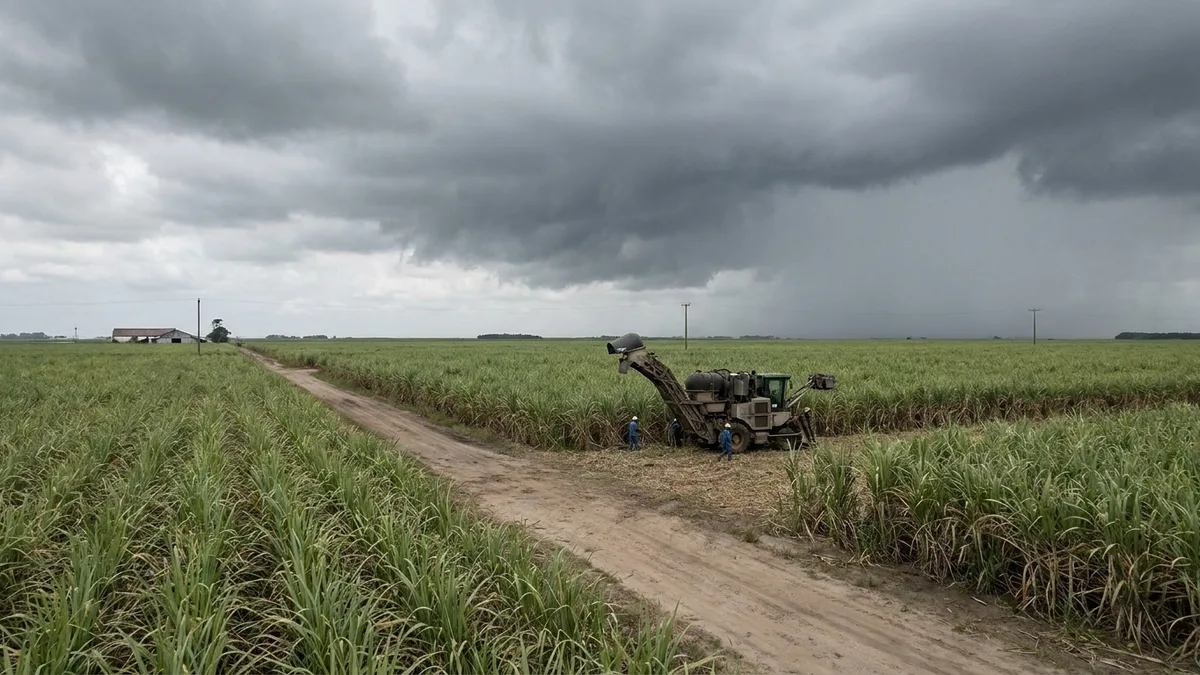


White sugar futures have rallied, with the August No. 5 contract at $475/mt and the July No. 11 raw sugar contract at 14.34 US cents per pound at the end of June. With the geopolitical risk premium withered from energy markets, Vesper’s analysis puts the move down to sugar’s own fundamentals, and those fundamentals are increasingly about weather.
El Niño is the theme. India is the main focus: the monsoon is catching up after a weak start, but 78% of the country is still recording below-normal rainfall, and if deficits persist, Kharif sowing including sugarcane planting may be delayed. Previous El Niño events have been associated with weaker monsoons and reduced sugar output, though not every episode produces disastrous outcomes, and the world market is far less reliant on Indian supply than it used to be after years of cane diversion to ethanol.
Europe adds its own risk. The recent heatwave swept across beet-growing regions already short of rain, and the head of French growers’ association CGB told Reuters that “if it does not rain in the coming two weeks it will be catastrophic.” The European Commission already estimates 2026/27 EU output falling 15% year on year on lower area and yields. Thailand reported too little rainfall for June, while Brazil has had the opposite problem, with rains hampering crushing.
Here is the tension the analysis draws out: futures are pricing 2026/27 risk that remains unrealized, while physical pricing in both the EU and Brazil continues to reflect comfortable current supply and elevated stocks. Funds remain net short, and the July NY11 delivery produced a mildly bearish read. Vesper expects further volatility and an upside bias for futures, with room for the rally to be interrupted by near-term reality.
The full analysis covers the EU, Brazil and US markets in detail, including the Section 301 tariff question hanging over US imports.