
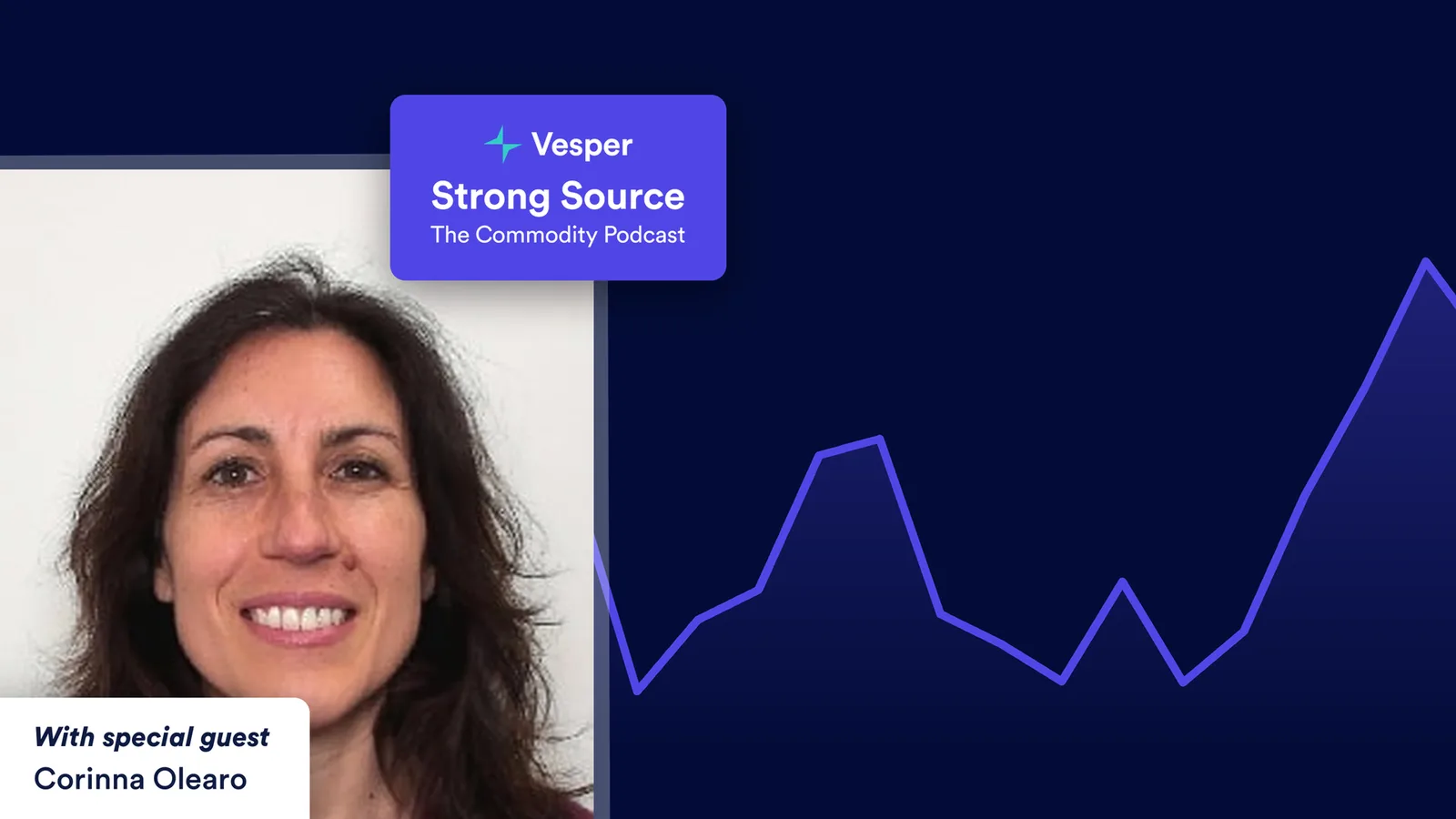
In the latest episode of the Strong Source podcast, we sit down with Corinna Olearo, Head of Commodity Research & Price Risk Management at Nestlé. With more than 17 years in the field, Corinna shares her expert perspective on today’s volatile commodity landscape, from cocoa and coffee shocks to procurement strategy, risk management, and the role of data and AI.
Here are some highlights from the conversation:
1. What’s driving the current cocoa and coffee price spikes, and how should buyers respond?
Corinna explains that while coffee has been impacted mostly by short-term weather events (like frost and drought in Brazil), cocoa faces deeper structural issues: aging trees, disease, and poor farm management practices in key producing countries.
“Coffee might see relief from a supply recovery. But cocoa? That’s different. There are structural problems that high prices alone won’t fix. That means the imbalance could last longer.” Corinna Olearo
2. How does a global giant like Nestlé manage commodity risk at scale?
Nestlé isn’t just a food brand. It’s a major commodities player, purchasing a significant share of the world’s cocoa and coffee. That means volatility hits hard.
“We’re not traders by nature, but risk management is mission-critical. We hedge using futures, options, and we invest in deep market intelligence, combining field data, consultant insight, and analytics.” Corinna Olearo
3. What does a best-in-class procurement analysis process look like?
Nestlé’s commodity team uses a multi-layered approach: proprietary crop intelligence, consultant insights, statistical modeling, and even AI-powered forecasting.
“We run Monte Carlo simulations to model price risk. We blend traditional analysis (like seasonality and mean reversion) with machine learning tools to refine our strategy.” Corinna Olearo
4. What traits define top procurement talent in today’s commodity world?
Corinna says the best analysts and buyers aren’t just number-savvy. They’re adaptable communicators who thrive in uncertainty.
“Being a good forecaster isn’t about guessing the future. It’s about being flexible, adjusting to new data, and communicating clearly, even when there’s no perfect answer.” Corinna Olearo
5. How should FMCG companies future-proof their sourcing strategy?
From cocoa shortages to energy price shocks, Corinna emphasizes the importance of scenario thinking and communication across departments.
“You need a framework to test your assumptions and build contingency plans. It’s not about being right 100% of the time. It’s about preparing the business to respond when markets shift.” Corinna Olearo
Listen to the full episode to hear more about Corinna’s journey and her insights into the complex world of commodity markets and procurement strategy.
What is the Strong Source Podcast?
Our mission with the Strong Source podcast is to educate and inform, by creating a community where experts and guests from the entire commodity industry can share their unique perspectives. Martijn Bron, ex-cacao trader, and Alexander Sterk, ex-dairy trader and founder of Vesper, have a deep-passion for this industry, which inspired them to start this venture: “We’ll be sharing our personal experiences, the valuable lessons we’ve learned along the way, and give you a glimpse of what to expect in our future episodes.” This podcast is powered by Vesper, the leading commodity platform (www.vespertool.com).