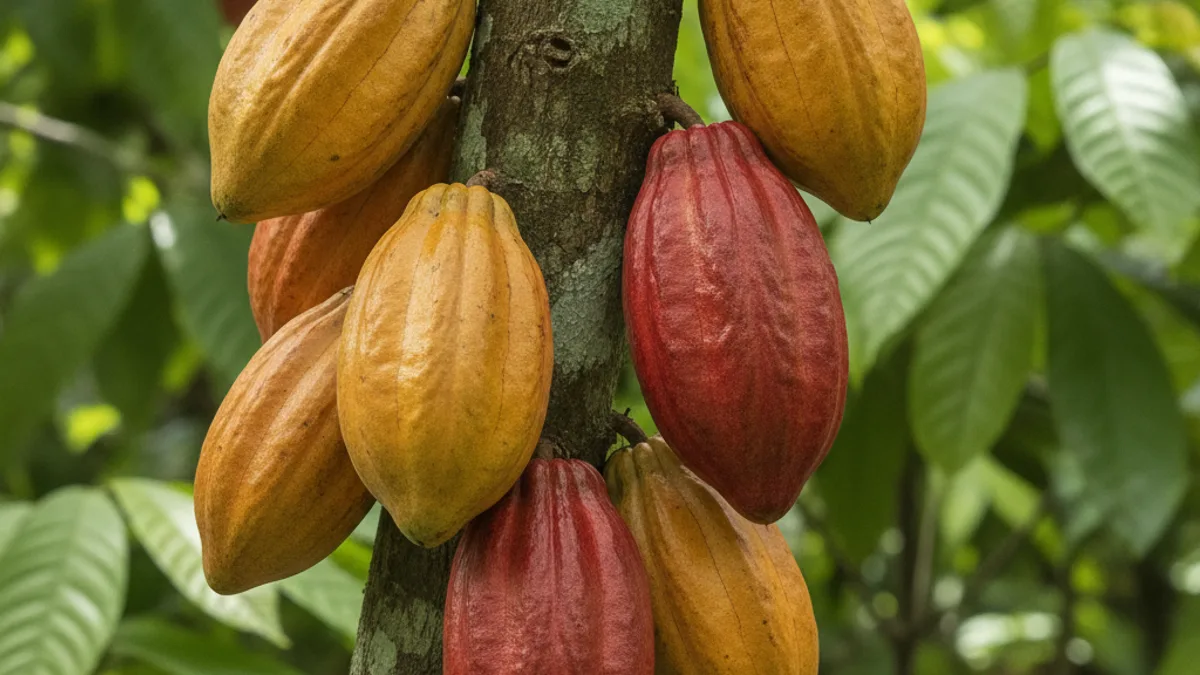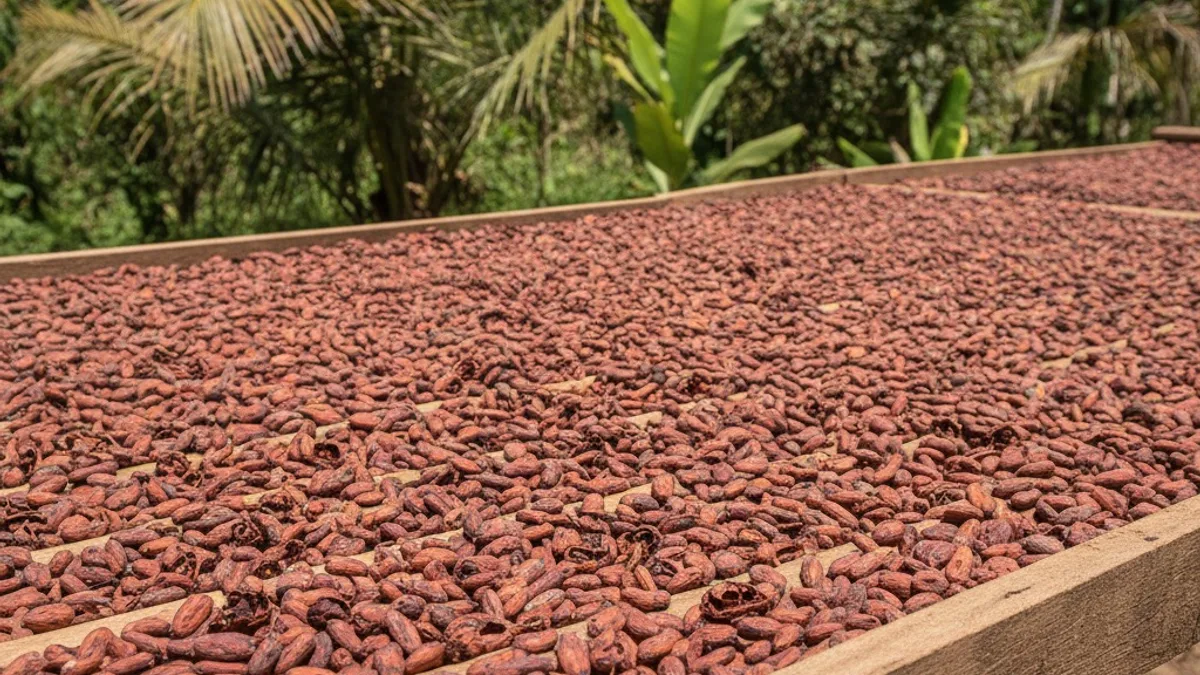


Cocoa futures in London ended last week 19.6% higher than on July 3 and more than 56% above where they stood a month ago. Then came the turn: a sharp decline on Friday, and another drop of almost 7% at Monday’s open. In his latest global cocoa analysis for Vesper, Martijn Bron, former head of cocoa trading at Cargill, puts a number on the swings: 10-day realized volatility near 80%, which works out to roughly 5% price moves every day. At a GBP 4,000 futures price, that is GBP 200 of movement per session, in either direction.
The rally has three drivers: El Niño, worries about pod set, and short covering by speculators, who cut their combined London and New York short position by 17,000 lots in the week to July 7. Crop surveys in Ivory Coast show developing pods at their lowest level in decades. Traders surveyed by Bloomberg put next season’s crop at an average of 1.8 million tonnes, down from about 2.2 million this year, while pod counters cited by Reuters see the main crop at 1.35 to 1.45 million tonnes. Heavy rain between May and June killed more than a fifth of flowers and young pods and encouraged the spread of black pod disease. The weather threat is not going away: the WMO now expects a strong El Niño, and the US CPC puts an 81% chance on a very strong event during October through December.
The current season, meanwhile, still looks comfortable. Ivorian port arrivals are up 18.8% year-on-year at 1.93 million tonnes, exchange stocks in London and New York are rising, and the annual futures spreads trade in carry, reflecting this year’s surplus.
That leaves the chocolate industry with a delicate call. Manufacturers sit on roughly ten months of price cover, but the question is who they buy from ahead of October, when unregulated origins start selling the new harvest. In the full analysis, Bron lays out why he expects most FMCG companies to stay rather safe than sorry and buy the dips.