For years, reformulation in the baking industry has been shaped by a series of shifts that first emerged around sugar reduction, clean label, and calorie awareness, and have since become embedded in how products are developed.
The rapid rise of GLP-1 is now adding a new layer to that direction. What is becoming increasingly clear is a broader change in how consumers eat, with purchasing patterns pointing to smaller baskets, fewer snacking occasions, and more selective choices within calorie-dense and highly processed categories.
As we explored in our analysis of how GLP-1 drugs are shifting food demand, these developments are now visible in purchasing data alongside evolving consumer preferences. In categories like baking, where consumption is closely tied to appetite, habit, and impulse, this shift quickly becomes tangible.
It shows up in product development. And more specifically, in the recipe itself.
From changing consumption to changing recipes
Baked goods occupy a distinct position within the food system. Many of the category’s largest products, cookies, cakes, pastries, and snack bars, are built around sweetness, texture, and repeat consumption. Portion size, flavour, and shelf life are closely linked to ingredients such as sugar, flour, and fat.
As consumption patterns evolve, these products move with them.
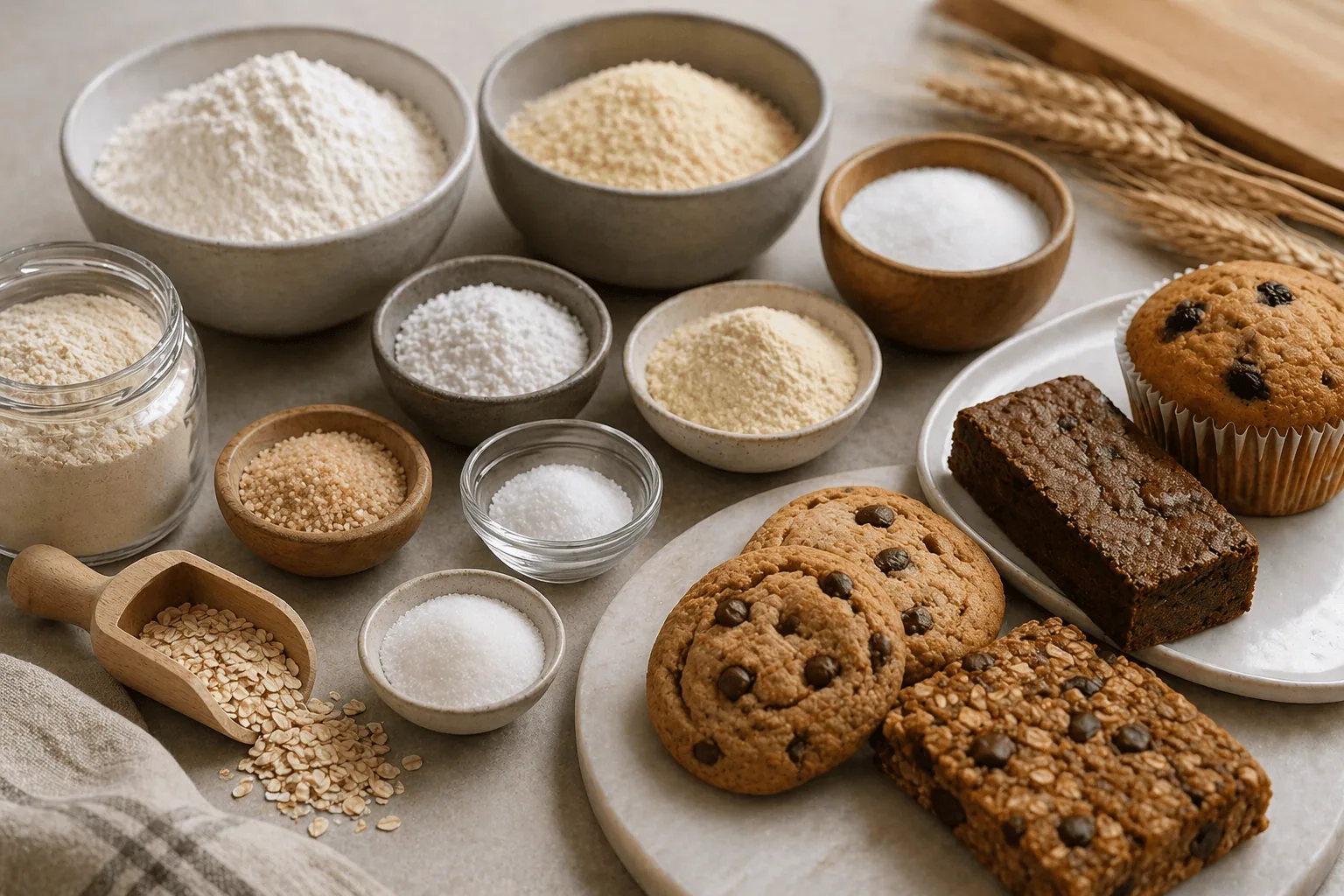
What gives this transition its complexity is the role these ingredients play. Sugar contributes sweetness while also shaping structure, moisture, and colour. Flour determines texture and volume. Fat influences mouthfeel and stability. Each component connects to several parts of the final product at once.
Adjusting a recipe therefore involves more than changing a single ingredient. It involves rebalancing the interaction between them.
Over time, this leads to formulations that become more layered, as each function within the recipe is addressed more precisely.
How formulations are being rebuilt
When manufacturers begin to reduce sugar in baked products, the process unfolds in stages that reflect the different roles sugar performs.
The first step focuses on maintaining sweetness. High-intensity sweeteners such as stevia or monk fruit preserve the overall taste profile while using smaller quantities. These ingredients are efficient in delivering sweetness, yet they contribute very little to the physical structure of the product.
That structural role is then addressed through other ingredients. Fibre systems are increasingly used to rebuild bulk and maintain texture. Ingredients such as inulin, soluble corn fibre, resistant starch, and oat fibre provide body to the dough, support moisture retention, and help recreate the mouthfeel associated with traditional formulations.
Additional ingredients can be introduced to bring the product closer to its original characteristics. Polyols, for example, contribute both sweetness and bulk, supporting texture and consistency throughout the baking process.
The result is a formulation that draws on a broader set of inputs, with each ingredient contributing to a specific aspect of the product.
The growing role of protein
Alongside sugar reduction, another development is gaining momentum.
Changes in consumption patterns are increasingly linked to interest in satiety and nutritional balance. Protein has become one of the most visible expressions of that shift, particularly in categories where consumers are making more deliberate choices.
In baking, this is reflected in the inclusion of whey protein, milk protein concentrates, and plant-based proteins. These ingredients introduce new characteristics to the product, supporting positioning around satiety and nutritional value.
As highlighted in our analysis of how the rise of GLP-1 is reshaping the dairy protein industry, this shift is already influencing demand for protein ingredients, with tighter supply dynamics and growing strategic importance across the food system.
How manufacturers are adapting
This evolution in formulation is already visible across a range of manufacturers and ingredient suppliers.
| Manufacturer | Category | What changed | Formulation shift | Why it matters |
|---|---|---|---|---|
| Voortman Cookies | Cookies | Removed high-fructose corn syrup and artificial ingredients | Cleaner label, adjusted sweetening systems | Reflects movement toward simpler ingredient profiles |
| Nestlé | Confectionery / snacks | Reduced sugar across product lines | Sugar reduction technologies and recipe redesign | Demonstrates large-scale adjustment of sugar intensity |
| Grupo Bimbo | Bread & baked goods | Expanded “better-for-you” offerings | Whole grains, lower sugar, broader portfolio mix | Shows how product mix evolves alongside formulation |
| Hero Bread | Bread | Developed low-carb, high-fibre products | Fibre-based systems replacing refined carbohydrates | Aligns with demand for functional, lower-carb products |
| Tate & Lyle | Ingredients | Expanded sugar-reduction solutions | Fibre and sweetener systems supporting reformulation | Highlights upstream shifts in ingredient demand |
Across these examples, formulations are becoming more deliberate, with a growing emphasis on how ingredients work together within the final product.
From formulation to ingredient demand
Changes in recipes extend beyond product development and flow directly into ingredient demand.
Lower sugar intensity per unit influences overall usage patterns across the category. At the same time, the inclusion of fibre systems, protein ingredients, and specialty sweeteners increases the role of inputs that were previously less prominent.
This leads to a redistribution of demand:
- reduced sugar usage per product
- increased use of fibre-based ingredients
- expanding role for protein inputs in selected categories
- growing importance of specialty ingredient systems
As discussed in our analysis of how GLP-1 is becoming a structural headwind for sugar, even gradual adjustments in formulation can scale across large product categories and influence demand at the market level.
These shifts also introduce a different set of supply dynamics. Traditional baking inputs such as sugar and wheat are traded in large, liquid markets. Fibre ingredients, protein inputs, and specialty systems operate within narrower supply chains, where changes in demand can have a more immediate impact on availability and pricing.
From formulation to cost and procurement decisions
As formulations become more layered, the impact extends into procurement and cost structures.
Each adjustment in a recipe changes the balance of ingredient exposure. Reducing sugar lowers reliance on a widely traded commodity, while adding fibre systems, protein ingredients, and specialty sweeteners increases exposure to inputs with different pricing dynamics and supply characteristics.
This creates a more interconnected cost structure.
A product that once depended on a limited set of core commodities begins to rely on a broader mix of ingredients, each with its own volatility and sourcing considerations. Small changes in formulation can translate into meaningful shifts in cost when scaled across production.
As outlined in our analysis of how GLP-1 reformulation trends can impact your bottom line and how to quantify it with cost models, these adjustments are closely linked to margin development. Ingredient changes influence raw material costs as well as processing, packaging, and overall unit economics.
Cost models play an important role in navigating this complexity. By linking formulation to pricing and forward-looking market data, they allow manufacturers to evaluate how ingredient changes affect margins before products reach scale.
For procurement teams, this provides a clearer view of trade-offs.
Reducing one ingredient shifts exposure toward others. Adding protein strengthens product positioning while increasing sensitivity to a tightening market. Fibre systems support formulation while introducing new sourcing dynamics.
This creates a more integrated approach, where formulation, sourcing, and pricing decisions move together.
A more deliberate approach to product design
The products themselves continue to occupy familiar positions on shelves and within portfolios.
The difference lies in how they are constructed.
Formulations increasingly reflect a balance between functionality, nutrition, and positioning. Ingredient systems become more layered, and decisions around sourcing and product design become more closely connected.
GLP-1 sits within this broader transition as a reinforcing factor, shaping how consumption patterns evolve and how manufacturers respond over time.
As these adjustments continue, the impact extends across the full value chain, from product formulation to ingredient sourcing, and ultimately to the markets that underpin both.
Understand how changing formulations could change your bottom line with Vesper’s costmodels.