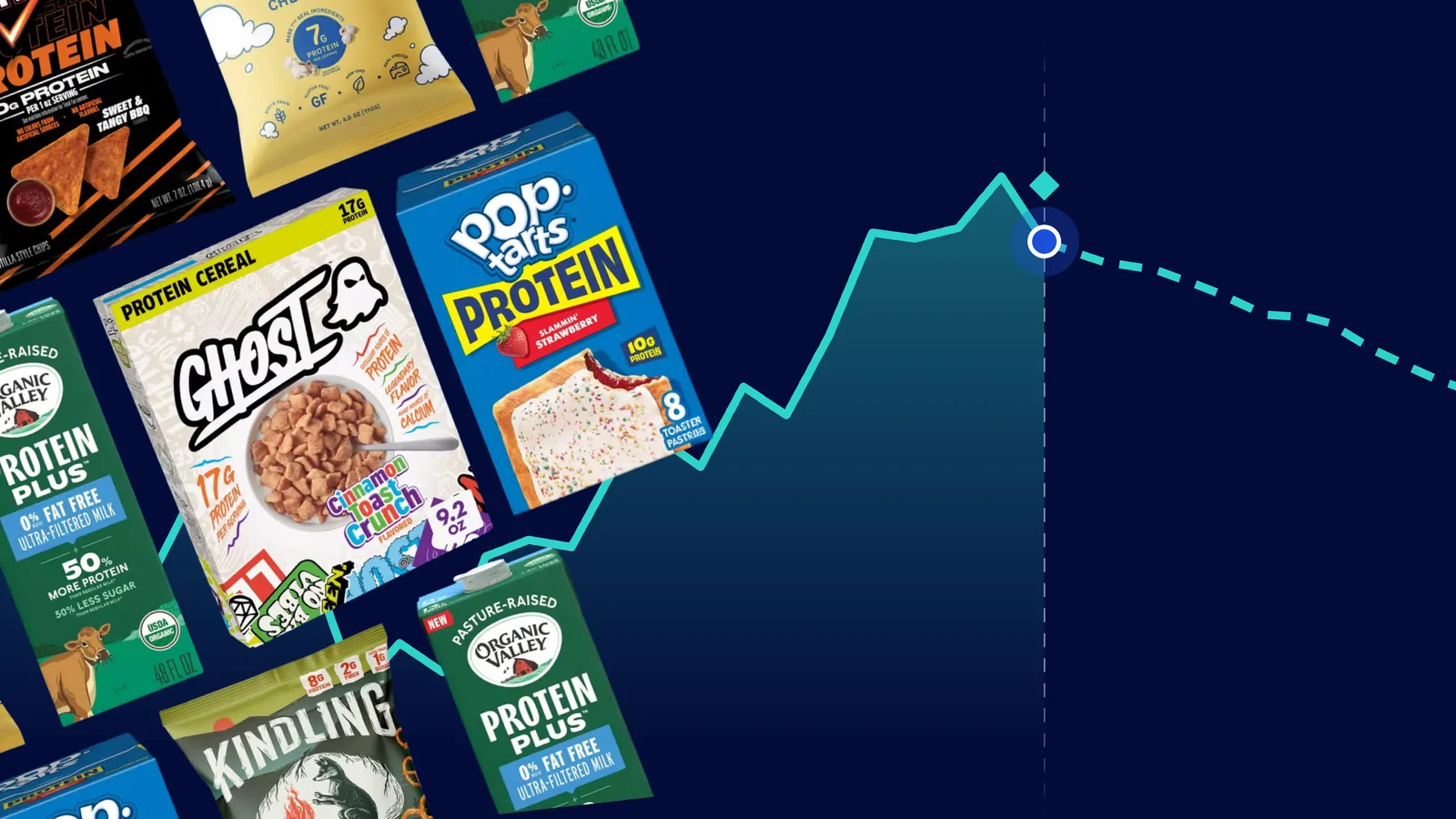



Research has been showing how GLP-1 drugs are changing what consumers eat. Food manufacturers are responding by investing in protein, portion control, and reformulation. Retailers are reflecting these shifts through changes in product ranges, assortment, and how food is presented on shelves.
What is emerging is not a localized trend, but a broader shift in how food is designed, positioned, and sold.
What’s changing on the shelf
The most immediate impact of GLP-1 is visible in product formats and assortment across markets.
Three shifts appear consistently:
- Smaller formats are becoming more common Retailers have introduced smaller portion sizes, particularly in ready meals, reflecting reduced appetites among GLP-1 users
- Protein and fiber are central to product positioning New and existing products increasingly emphasize protein, fiber, and nutrient density, aligning with broader consumer demand for satiety and functional nutrition
- Demand is shifting toward fresh and less processed categories Retailers report increased demand for fresh food, dairy, and lean protein, alongside declines in snacks and more calorie-dense products
These changes are visible both in newly launched products and within existing categories, where products are being positioned and labeled around nutritional attributes.
Online retailers are adapting as well. For example, curated “GLP-1-friendly” groupings allow products to be highlighted within existing assortments.
In-store, retailers report visible shifts across aisles, including more emphasis on smaller sizes, higher-protein options, and less processed foods, as well as products explicitly labeled “GLP-1 friendly” in some cases.
The rise of GLP-1-aligned product ranges
Retailers and manufacturers are both introducing products that align with GLP-1-driven consumption patterns.
In some cases, this takes the form of coordinated product launches, particularly in the UK, where retailers introduced new ranges focused on smaller portions and higher nutrient density.
Examples across retailers
| Retailer | What they did | When | The approach |
|---|---|---|---|
| M&S | Launched “Nutrient Dense” range | Jan 2026 | Focus on nutrient density per calorie |
| Morrisons | “Small & Balanced” meals | Jan 2026 | Smaller, protein-focused meals |
| Asda | “Power Pots” | Jan 2026 | Portion-controlled convenience |
| Co-op | “Good Fuel” mini meals | Jan 2026 | Smaller portions |
| Iceland | Expanded Myprotein/Slimming World | Jan 2026 | Leveraged existing health-focused brands |
| Ocado | Curated GLP-1 aisle | Jan 2026 | Digital grouping |
| Tesco | Expanded fresh and protein ranges | 2026 | Focus on existing categories |
| Sainsbury’s | Reported strong fresh growth | 2025 | Shift toward healthier categories |
| Greggs | Adjusted portions and labeling | 2026 | Smaller sizes, clearer nutrition |
Across markets, similar product characteristics are appearing within existing ranges, particularly in private-label portfolios that already include high-protein, high-fiber, and lower-calorie options.
What’s actually happening to the grocery basket
The changes on shelves reflect a broader shift in purchasing behavior.
Retailers report that customers are:
- buying less overall food
- shifting toward fresh, protein-rich, and fiber-rich products
- reducing purchases of snacks and calorie-dense items
US data shows similar patterns. GLP-1 users are purchasing more fresh produce, yogurt, and protein products, while reducing consumption of snacks and sweets. Other reporting shows declines in calorie intake and reduced consumption of indulgent categories such as desserts and alcohol.
The consistent pattern across markets is that consumers are not leaving grocery stores, they are changing what they buy within them.
A shift in how food is positioned
Alongside product changes, there are shifts in how food is presented and marketed.
In some cases, products are explicitly labeled “GLP-1 friendly.” In others, similar products are positioned using broader nutritional language such as “high protein,” “low sugar,” or “good source of fiber.”
Retailers also report that these changes are visible across categories, with adjustments in product mix and positioning reflecting evolving consumer preferences.
Selling less for more
One consistent feature of this shift is the combination of smaller portions and higher perceived value.
Retailers and manufacturers are introducing:
- smaller portion sizes
- nutrient-dense products
- premium-positioned items
These products are often not cheaper on a per-unit basis, reflecting a shift toward paying for nutritional value rather than volume.
What this means for commodity demand
The retailer response reinforces broader changes in food demand.
- Protein demand remains strong High-protein products are expanding across categories
- Fresh categories are gaining importance in consumer baskets Demand for produce, dairy, and lean protein is increasing
- Snacking and processed categories face pressure Declines in snack consumption and calorie-dense foods are being observed
- Portion size changes affect input demand Smaller meals imply lower ingredient volumes per unit sold.
The key shift is not a collapse in demand, but a reallocation within the basket.
Bottom line
GLP-1 is reshaping grocery shelves worldwide.
Across markets, the same patterns are emerging:
- smaller portions
- greater emphasis on protein and nutrition
- shifting demand toward fresh and less processed foods
These changes are showing up through both new product launches and adjustments within existing categories.
For retailers and manufacturers alike, the implication is clear: food is being redesigned around a consumer who is eating less, but expecting more from every bite.