Studies have been showing a significant impact of GLP-1 drugs on food consumption.
People on these drugs eat less overall, shift toward protein and fresh produce, and move away from sugar, processed snacks, and refined carbs.
Food manufacturers have been paying attention. And over the past 18 months, their responses have gone from “let’s wait and see” to full-scale product launches, reformulations, and multi-million-dollar bets.
Here’s what the biggest players are actually doing.
The response, company by company
Before we get into the details, here’s a summary of how each manufacturer is positioning itself.
| Company | What they did | When | The strategy |
| Nestle | Launched Vital Pursuit, a frozen food brand for GLP-1 users and weight-conscious consumers | May 2024 | First major US brand launch in 30 years. Portion-controlled meals, high in protein and fiber. |
| Conagra Brands | Added “GLP-1 friendly” labels to 26 Healthy Choice frozen meals | Early 2025 | First to use on-pack GLP-1 labeling. Also investing in protein-forward snacks (Slim Jim, Fatty). |
| Danone | Launched Oikos Fusion yogurt drink targeting GLP-1 users | Aug 2025 | Focused on muscle retention: 23g protein, leucine, vitamin D per bottle. Rolled out at Walmart, Target, Kroger. |
| General Mills | Launched Honey Nut Cheerios Protein, Ghost nutrition bars, new granola lines | Late 2025 | CEO called GLP-1 a “lasting influence.” Investing in smaller pack sizes and protein-forward reformulations. |
| PepsiCo | Launched “Simply NKD” reformulation line, removing artificial colors from Lay’s and Gatorade | Feb 2026 | Testing mini-meal options with Sabra and Siete brands. Shorter ingredient lists across portfolio. |
| Coca-Cola | Ramped up Fairlife protein milk production | Late 2025 | Meeting surging demand for protein-rich dairy. Incoming CEO urged faster innovation. |
| Lindt | Published internal study showing GLP-1 users buy more premium chocolate | Mar 2026 | Premium chocolate up 17% among GLP-1 users vs. 6.5% among non-users. “Less is more” strategy. |
| Hershey | Acknowledged “mild impact” from GLP-1s on sales. Now pushing into functional foods, partnered with VitaKey | 2024–2026 | First major snack company to acknowledge an impact. Ice Breakers seeing uptick (nausea management). Building out Fulfil protein bars. |
| Chobani | Expanding dairy empire with protein focus, acquired La Colombe and Daily Harvest | 2025–2026 | $650M fundraising round. Betting big on portable protein and dairy category expansion. |
| Starbucks | Launched protein cold foam and protein-fortified lattes, reshaping food menu toward smaller snacks | 2025–2026 | CEO Brian Niccol directly linked protein push to GLP-1 growth. Drinks packing 15-36g protein per grande. |
| McDonald’s | Testing high-protein, GLP-1-friendly menu items including grilled chicken strips and lettuce-wrapped burgers | Early 2026 | CEO Chris Kempczinski confirmed on earnings call. Seeing less snacking and fewer sugary drink orders from GLP-1 users. |
| Shake Shack | Launched “Good Fit Menu” nationwide with lettuce-wrapped burgers and high-protein options | 2026 | Up to 52g protein per item. One of the most visible fast-casual responses to GLP-1. |
| Kraft Heinz | Announced company split, then paused it. Now investing $500M+ in turnaround toward protein and less sugar | 2025–2026 | GLP-1 + consumer shift away from processed food explicitly cited as driver. Separating sauces/spreads from struggling brands like Oscar Mayer and Lunchables. |
| Mondelez | CEO says impact will be “minimal” on volumes | Feb 2026 | Expects 0.5% to 1% volume impact over a decade. Leaning on Clif and Builders protein bars. |
The protein pivot
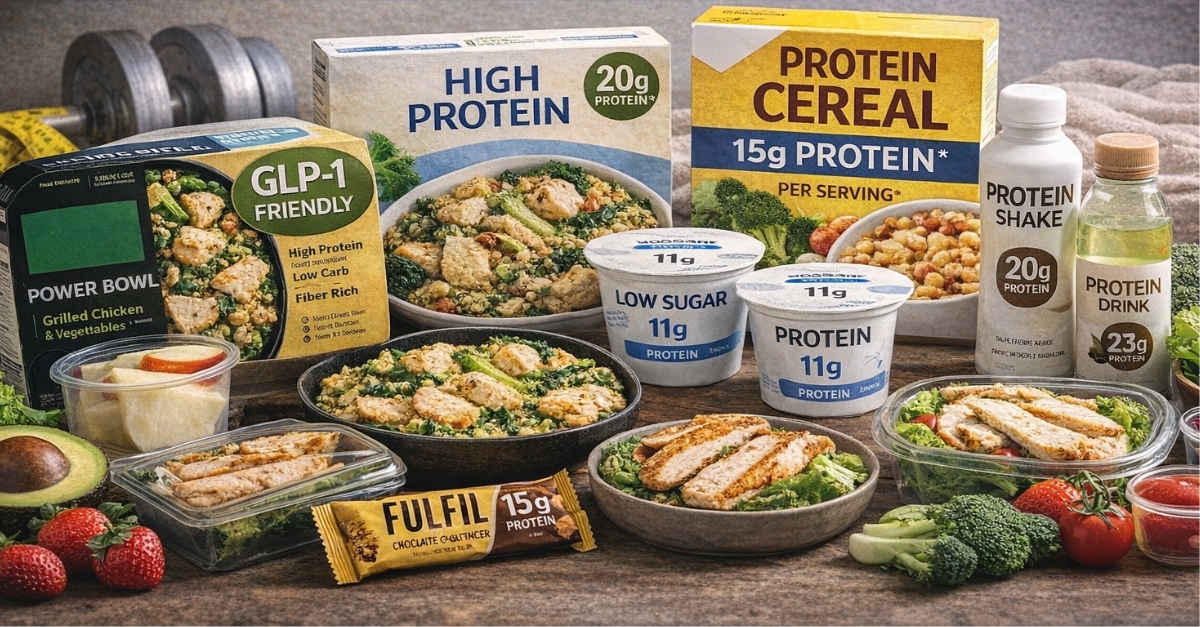
The most visible shift across the industry is the race toward protein.
Danone’s Oikos brand topped $1 billion in annual sales for the first time in 2024, riding a 40% increase in retail sales. In August 2025, the company launched Oikos Fusion: a yogurt drink designed specifically for GLP-1 users, with 23 grams of complete protein, leucine, and vitamin D to support muscle retention.
The reasoning is straightforward. About a fifth of the weight people lose on GLP-1 drugs is muscle, according to the American College of Lifestyle Medicine. That creates a real nutritional gap, and Danone spotted it early.
Chobani is making a similar bet at a larger scale. After raising $650 million and acquiring La Colombe (coffee) and Daily Harvest (frozen foods), the yogurt giant is positioning itself as a protein company first. They’re expanding into beverages, portable nutrition, and shelf-stable categories.
Coca-Cola ramped up production of Fairlife, its protein-infused milk brand, to meet what it described as surging demand. General Mills launched Honey Nut Cheerios Protein and Ghost performance nutrition bars. And Starbucks rolled out protein cold foam and protein-fortified lattes packing up to 36 grams per grande, with CEO Brian Niccol directly linking the push to GLP-1 growth.
For commodity markets, this protein arms race has direct implications. More demand for dairy ingredients, whey protein, and lean poultry. The research already flagged these as growth categories, and now manufacturers are putting real money behind them.
New brands, new labels, new categories
Some companies aren’t just reformulating. They’re building entirely new product lines.
Nestle made the biggest bet when it launched Vital Pursuit in May 2024. It was the company’s first major US brand in nearly three decades. The line includes frozen bowls with whole grains or protein pasta, sandwich melts, and cauliflower crust pizzas. All portion-aligned to GLP-1 appetites.
Conagra took a different route: labeling. It added a “GLP-1 friendly” tag to 26 Healthy Choice frozen meals, making it the first company to use on-pack GLP-1 branding. Worth noting: the USDA has confirmed there’s no regulatory standard for the term “GLP-1 friendly.” It’s a marketing label, not a certified claim.
In the UK, the response has been even more dramatic. Within a single month in early 2026, Morrisons, Asda, Co-op, Iceland, M&S, and Ocado all launched dedicated GLP-1-friendly ready meal ranges. Smaller portions, higher protein, more fiber. M&S went furthest with its “Nutrient Dense” range: 20 products developed in consultation with the British Nutrition Foundation, each delivering at least one of 10 commonly lacking micronutrients (vitamin D, iron, folate, B12). Co-op launched “Good Fuel” mini meals in 250g formats. Morrisons partnered with Applied Nutrition on a “Small & Balanced” line. Iceland rolled out 38 new meals across its Myprotein and Slimming World ranges. And Ocado introduced a curated GLP-1-friendly aisle, including a 100-gram “extra-small steak.”
PepsiCo is approaching it from the ingredient side. Its new “Simply NKD” line strips artificial colors from products like Lay’s and Gatorade, and the company is testing mini-meal formats with its Sabra and Siete brands.
The fast-food sector is making moves too. McDonald’s CEO Chris Kempczinski confirmed on an earnings call that the company is testing high-protein, GLP-1-friendly menu items, including grilled chicken strips and lettuce-wrapped burgers. The chain is also seeing less snacking and fewer sugary drink orders from customers on GLP-1 medications. Shake Shack went further and launched its “Good Fit Menu” nationwide, featuring lettuce-wrapped versions of its classic burgers packing up to 52 grams of protein per item.
The contrarian view: indulgence isn’t going anywhere
Not everyone is in panic mode. And some of the data supports a more optimistic read for indulgent categories.
Lindt published an internal study in March 2026 (based on Circana data) showing that GLP-1 households in the US represent 15% of all households but account for 17.5% of chocolate sales. Premium chocolate grew nearly 17% among GLP-1 users in 2025, compared to just 6.5% among non-users.
Lindt CEO Adalbert Lechner put it simply: consumers cutting back on pasta, pizza, and chips are still looking for small rewards. They’re upgrading to premium. Less volume, but higher value.
Hershey is an interesting case because it sits on both sides of the story. It was the first major snack company to acknowledge a “mild impact” from GLP-1 drugs on its sales, with then-CEO Michele Buck describing the effect as “gradual.” But under new CEO Kirk Tanner, the company is leaning in rather than retreating. Its Ice Breakers mints are experiencing an uptick among GLP-1 users because mints help manage nausea, a common side effect. And Hershey is investing in functional foods, exploring time-released nutrients through a partnership with VitaKey, and expanding its Fulfil protein bar line.
And Mondelez CEO Dirk Van de Put remains openly skeptical about the scale of impact. He expects a 0.5% to 1% volume hit over the next decade, calling it “minimal.” The company is leaning on its Clif and Builders protein bars to ride the health trend without fundamentally changing its core snack business.
The scale of investment
What’s changed in 2026 is the level of commitment. This isn’t just press releases and conference quotes anymore.
Capital expenditure is expected to rise for most major food companies this year. General Mills alone is projecting a 23% increase, according to LSEG data. Nearly three dozen companies outside of healthcare mentioned GLP-1 drugs or weight loss on their earnings calls in early 2026, up from 14 in the same period a year earlier, and just five two years before that.
PwC’s analysis of Numerator data puts the consumer impact in stark terms: GLP-1 users consume 40% fewer calories on average. Dessert consumption drops by 84%. Alcohol by 33%. Fresh produce intake rises by over 70%.
EY-Parthenon estimates that diet changes linked to GLP-1 use could mean up to $12 billion in lost snack sales over the next decade. That’s a number big enough to reshape product portfolios.
Perhaps the most telling signal: Kraft Heinz announced a full company split in September 2025, separating its faster-growing sauces and spreads (Heinz, Philadelphia) from struggling processed brands like Oscar Mayer and Lunchables. GLP-1 adoption and the consumer shift away from processed food were explicitly cited as drivers. New CEO Steve Cahillane paused the split in February 2026, saying the problems are “fixable,” and is now investing more than $500 million in a turnaround that leans into protein and away from sugar. When a company the size of Kraft Heinz considers breaking itself in two over a dietary shift, that tells you how seriously the industry is taking this.
What this tells us about commodity demand
The manufacturer response reinforces what the research has been showing, but it also adds nuance.
The protein story is real. When companies like Danone, Chobani, Coca-Cola, General Mills, Starbucks, McDonald’s, and Shake Shack are all building out protein-forward product lines, that’s sustained demand for dairy ingredients, whey, and poultry.
Sugar and refined carbs face a double hit: consumers are eating less of them, and manufacturers are actively reformulating away from them. PepsiCo stripping artificial ingredients from its snack portfolio is a signal that this goes beyond GLP-1, but the drugs are clearly speeding things up.
The premium chocolate data from Lindt suggests that “indulgence” as a category isn’t disappearing. It’s getting smaller and more expensive. For cocoa and dairy fat buyers, this could mean lower volumes but stronger pricing for premium-grade ingredients.
And the frozen meals boom (both Nestle’s Vital Pursuit and the UK retailer explosion) points to growing demand for vegetables, lean proteins, and whole grains in portion-controlled formats.
The bottom line: manufacturers are voting with their budgets. And where they’re spending tells you where they think demand is going.
Whether you’re tracking dairy, sugar, grains, or oils, the manufacturer response gives you a second data point beyond the research. And right now, both are pointing in the same direction.
Want to stay ahead of how GLP-1 adoption is shaping agricultural prices?
Vesper tracks the commodities most affected with real-time price benchmarks, AI-driven forecasts, and expert analysis.