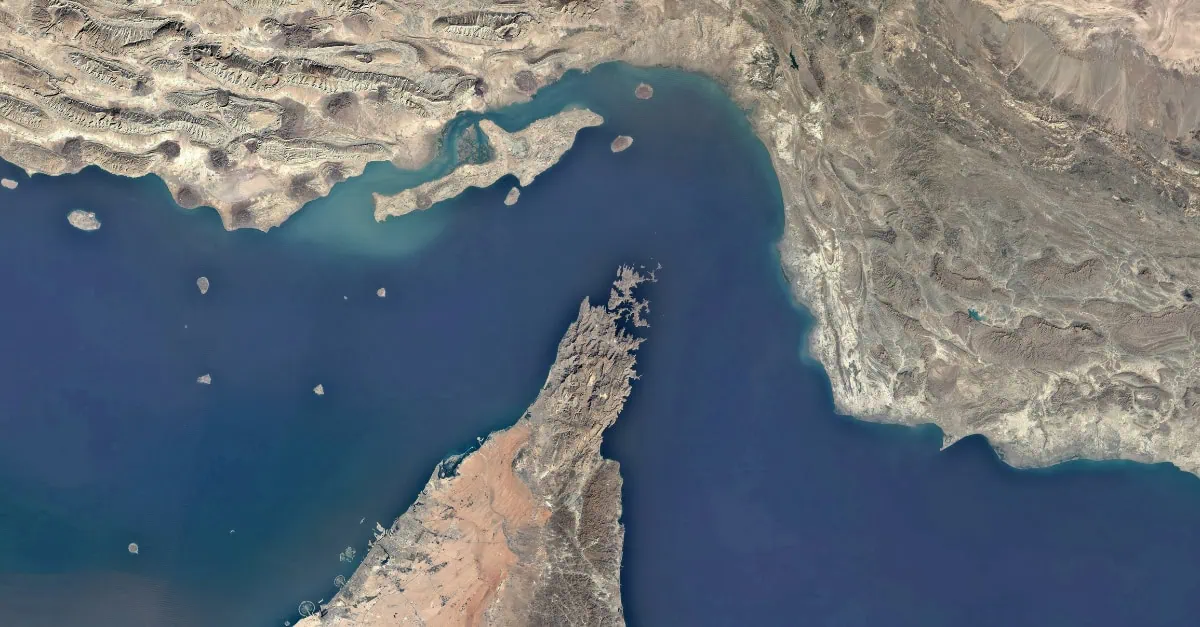
On March 1, 2026, a joint US and Israeli military operation against Iran changed the commodity landscape overnight. Oil prices surged immediately, since roughly 20% of global supply originates from the affected region, and the Strait of Hormuz, through which 20 million barrels of oil transit daily alongside significant volumes of corn, soybean meal, and alfalfa, became a volatility trigger that flipped open and closed within days.
Dairy isn’t oil, but dairy doesn’t exist in isolation. Energy costs feed into fertilizer, logistics, and processing, currency markets shift when geopolitical risk spikes, and when uncertainty peaks, buyers across every commodity market do the same thing: secure supply first, ask questions later. Within weeks, the conflict had reshaped dairy pricing in ways that had nothing to do with how much milk was being produced.
Oil was the transmission mechanism, feeding higher costs into fertilizer, logistics, and processing across the entire dairy chain. But the most revealing outcome was how differently each product responded: NFDM, already the tightest market in dairy, absorbed the shock and kept climbing, while butter and cheese gave back their gains within a week because fundamentals were looser. Currency swings compounded the disruption, buyers paid steep premiums for supply security at GDT, and the Gulf’s own food import dependency added another layer of vulnerability.
Oil as the transmission mechanism
Oil prices moved violently in the weeks following the conflict’s start. Crude briefly touched $118/barrel before pulling back to $98/barrel on hopes that the conflict would end quickly, but those hopes faded as prices climbed back above $110/barrel and stayed there. The European Forties Blend, a spot contract for crude oil in Western Europe, reached an all-time high of $140/barrel as spot availability became extremely tight, and the Strait of Hormuz alternated between open and closed based on ceasefire violations, sending oil prices on multi-billion-dollar swings within single trading sessions.
For dairy, oil prices matter through three channels. Fertilizer follows energy prices, so a sustained increase in oil pushes up the cost of producing the feed that produces the milk that produces the dairy, with a 10% rise in soybean meal prices alone compressing farm margins by 4-6%. Shipping dairy products internationally requires fuel, and maritime insurance costs rise when conflict zones overlap with trade routes while freight rates follow, so the landed cost of dairy ingredients in importing regions climbed even before the product itself became more expensive. And drying milk into powder, churning butter, and running cheese plants all consume energy, meaning higher energy costs raise the floor under dairy processing even when milk is cheap.
Products responded based on how tight they already were
The most revealing outcome of the conflict wasn’t that dairy prices moved. It was that different dairy products responded in completely different ways to the same event, based entirely on where each market stood before the conflict started.
NFDM, which had already been rallying since January on the back of a Q4 production shortfall and a short squeeze, absorbed the additional uncertainty and kept climbing. Production had fallen to a multi-year low, stocks weren’t rebuilding, and processors were sending milk to cheese and whey proteins instead, leaving no buffer to absorb an additional demand shock. When energy prices surged and uncertainty spiked, buyers who had been waiting to buy decided they couldn’t wait any longer, and in a market with few sellers and thin liquidity, that buying pressure moved prices disproportionately. NFDM went from $1.765/lb in early March to $1.9375/lb by late March and past $2/lb by early April, the highest in 12 years. The US Weekly noted that putting SMP and crude oil in the same price comparison chart “only amplifies the fact that commodity markets can react to similar things, no matter the type of commodity.”
Butter and cheese told a different story. Both moved higher in the first week of the conflict as spot and forward purchasing picked up across multiple markets, but within a week both gave back most of their gains because the fundamental picture was different: US milk production was at record highs, cheese production had been running at all-time levels, and while butter stocks were low relative to production, cream was cheap and churns were active. The geopolitical buying created a brief spike before fundamentals reasserted themselves.
The same event, opposite outcomes. Geopolitics doesn’t create tightness from nothing, but it can amplify whatever tightness already exists.
The flight to supply security
The Global Dairy Trade auction held in the first week of March illustrated how quickly buyers reprioritize when conflict erupts. Oceanian SMP rose 10%, surging back to a clear premium over European product, with Middle Eastern buyers staying in New Zealand and Asian buyers following, paying roughly $200/mt for the privilege of supply security.
NZ milk powder generally trades at a premium to European SMP in the first half of the calendar year as part of normal seasonality, but this time the speed and the reason were different. With New Zealand’s 2025/26 milk season winding down and available volumes limited, the premium was driven by supply security rather than seasonal tightness, and buyers paid it without hesitation.
Currency added another layer
The conflict’s impact on dairy prices went beyond energy costs. The US dollar had weakened significantly through late 2025 and into early 2026 with EUR/USD touching 1.20 in January, and that weak dollar had been helping US dairy exports by making American products cheaper for foreign buyers. The conflict changed the dynamic as the dollar strengthened in the weeks following the outbreak while capital moved to safe havens, complicating US dairy exports by making products more expensive for international buyers.
Over the period from mid-2025 through early 2026, the EUR/USD range was about 14.5%, and for commodities traded globally, a swing of that magnitude matters as much as changes in production fundamentals. For European and New Zealand exporters, the weaker euro and NZ dollar made their products more competitive, with European SMP and NZ WMP becoming relatively cheaper on global markets even as US NFDM climbed. The result was a widening gap between US and global dairy prices, with the US NFDM premium to the three-region average hitting $0.31/lb, nearly three times larger than any prior decoupling in 227 weeks of data.
The Gulf’s own vulnerability
The Middle East’s role in dairy markets extends beyond oil. The Gulf region imports up to 90% of its food, and while Saudi Arabia and the UAE have substantial domestic dairy production, both countries remain heavily dependent on imported feed that transits through the same maritime routes now under threat. Higher oil prices don’t just affect dairy through energy costs; they also affect the feed costs for dairy farms within the conflict zone itself, compressing farm margins by 4-6% on a 10% rise in soybean meal prices even for the vertically integrated operations in the Gulf. The region has buffers through vertical integration, strategic feed reserves, and government food security programs, but sustained energy price inflation tests those cushions quickly.
For US dairy exporters, the Gulf had been a growing market, with US butter exports to Saudi Arabia surging more than 5,400% in 2025 and Bahrain up 1,788%. These are small absolute volumes but represent entirely new trade relationships, and conflict in the region doesn’t eliminate them but adds risk and cost to maintaining them.
Inflation: the slow-moving consequence
The Federal Reserve revised its 2026 inflation forecast to 2.7% and the ECB projected 2.6%, with neither number reassuring. The complicating factor was energy: higher oil prices feed through to broader commodity prices over months rather than days as fertilizer costs follow energy, transport costs follow fuel prices, processing costs follow both, and the effects compound. With 2022 still fresh in memory, when inflation peaked at roughly 10%, the fear was real.
Gasoline prices in the US climbed to an average of $4.02 per gallon, a 30%+ increase that hit consumers directly and created a paradox for dairy: input costs rise making dairy more expensive to produce while consumer purchasing power falls making dairy harder to sell at higher prices. The inflation effect doesn’t show up in dairy prices immediately but in margin compression for everyone in the supply chain, from farmers and processors to manufacturers and retailers.
Round two: late April
By late April, the same playbook returned. A second round of Middle East unrest pushed crude briefly above $120/barrel, separate from the March 1 event, but the same theme. Strait of Hormuz volatility, a flight to commodity safety, and energy costs feeding through to fertilizer, logistics, and processing.
The dairy response, however, looked different this time.
NFDM, which had hit a fresh record of $2.26/lb on April 23, paused and then drifted slightly lower in the first week of May. The macro backdrop had shifted underneath the new oil shock: Q1 economic growth came in below expectations across multiple regions, consumer confidence sat at historically low levels, and butter and cheese cold storage stocks came in heavier than seasonal patterns would suggest. Higher input costs without buyer purchasing power create margin compression, not price support, exactly the dynamic that ended the 2022 commodity cycle.
The conflict isn’t the only variable that matters. By the time the second round hit, fundamentals had loosened enough that the geopolitical premium met more resistance than it had in March. Same shock, different absorption, which is the underlying lesson of the original March event told a second time, in reverse.
What this means for procurement teams
The March 2026 conflict revealed how geopolitical events interact with commodity fundamentals in ways that matter for anyone buying dairy ingredients.
Pre-existing tightness determines vulnerability. NFDM held its gains and kept climbing because it was already tight. Butter and cheese gave their gains back within a week because they were well-supplied. The same geopolitical event produced opposite outcomes. Products that are already stretched have no buffer to absorb additional shocks.
Energy costs flow through the entire chain. Fertilizer, logistics, and processing all follow oil prices with a lag, meaning the cost impact of an energy spike arrives after the initial market reaction and persists longer than the headlines suggest.
Supply security commands a premium. Buyers paid $200/mt more for NZ powder in the first GDT event after the conflict, purely for the security of sourcing outside the affected region. When procurement teams evaluate supplier diversification, the cost of concentration risk isn’t theoretical.
Currency moves compound everything. The 14.5% EUR/USD range over the broader period reshaped competitive positioning for every globally traded dairy product, and the US Weekly repeatedly highlighted how exchange rate moves were reshaping dairy export competitiveness alongside commodity-specific factors.
What’s next for dairy and geopolitical risk?
Geopolitical events don’t follow a schedule, but the forces they trigger, including energy price volatility, currency swings, supply chain disruption, and inflation, are predictable in their mechanics even when their timing isn’t.
Our US Weekly covers how these forces play out in real time across dairy markets: NFDM, cheese, butter, whey, milk production, and the global dynamics pulling US dairy prices in every direction. Written by Vesper’s dairy team, delivered to your inbox every Friday.