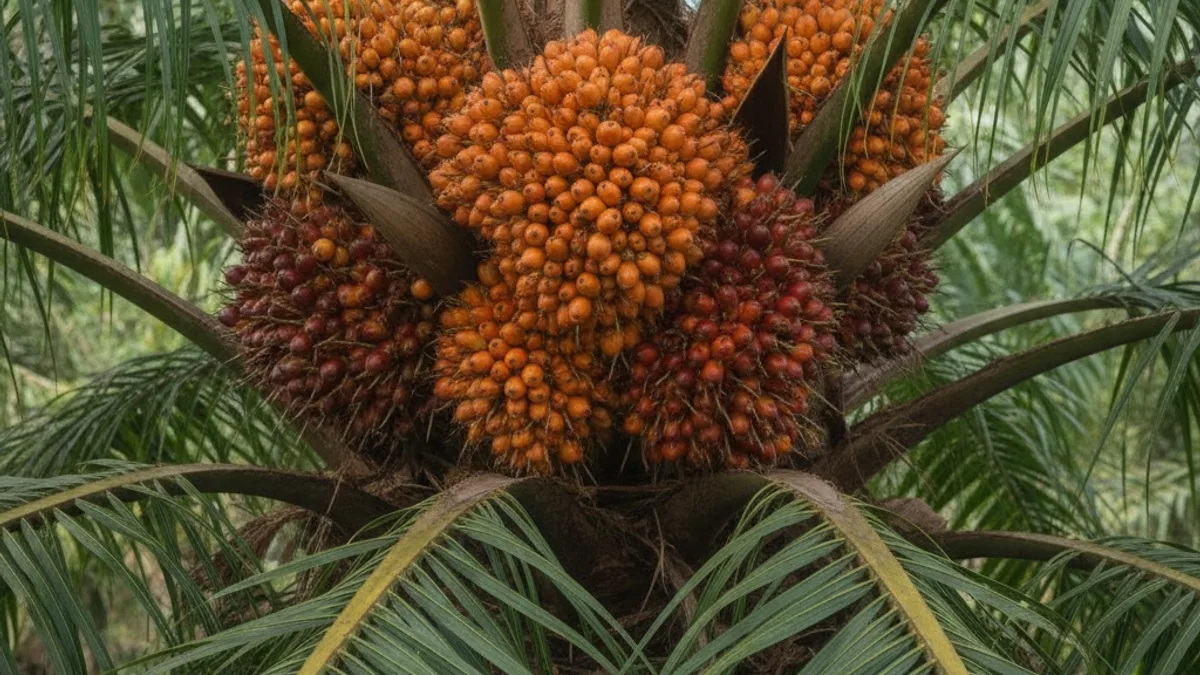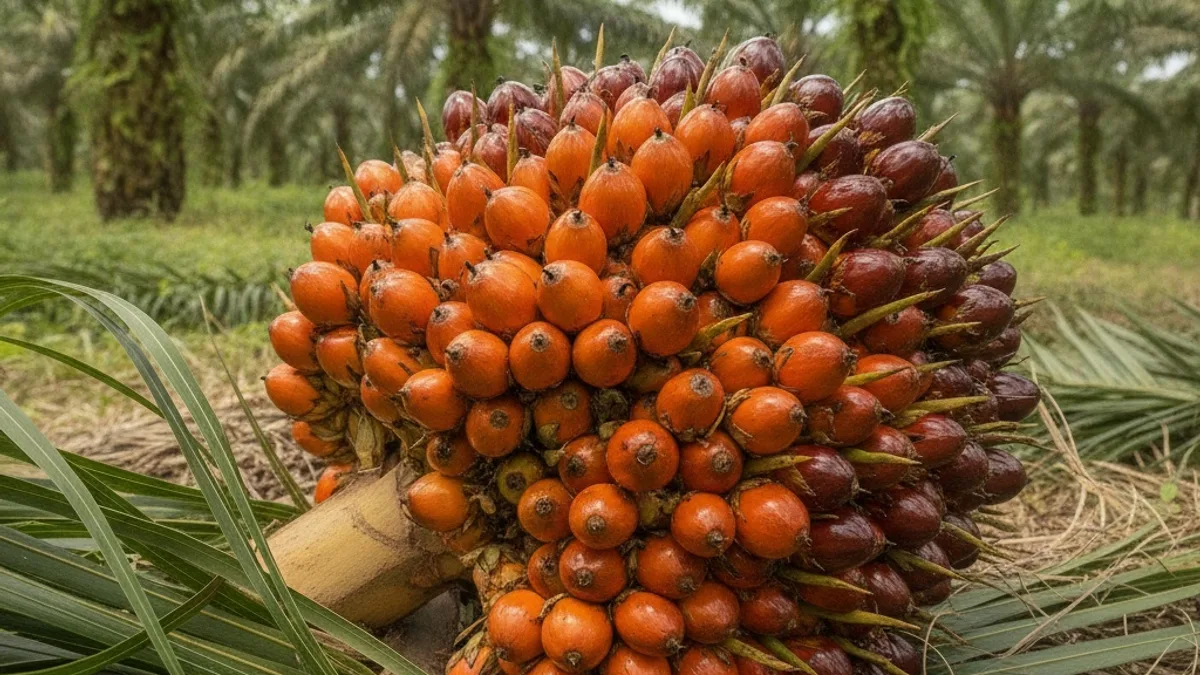


Higher crude oil prices are lending support to palm. September Brent closed yesterday at USD 78.00/barrel, up from USD 71.57 a week ago, and BMD crude palm oil for July firmed to MYR 4,482/mt from MYR 4,445 over the same stretch. When energy trades higher, palm’s pull as a biodiesel feedstock strengthens, and that link is doing some of the work here.
The support isn’t only coming from crude. Concerns over El Niño and expectations of firmer domestic demand in Malaysia and Indonesia are in the mix. Indian festive demand is the other piece: buying ahead of the season has historically kept palm stronger in Q3 than in the first half of the year, and this year looks to be following the pattern.
RKS Global expects Indian vegetable oil prices to move higher into the festive season on stronger demand. Olein could trade at a Rs 5–8/kg premium over soyoil after June’s drop in Indian imports.
On the supply-and-policy side, the picture is more mixed. Indonesian state planter PT Agrinas Palma Nusantara will restart an existing plant by year-end to make palm-based diesel, with capacity expected to reach 600,000 tonnes by 2030. That’s a longer-term demand signal for palm.
But Indonesia’s near-term biofuel story has softened a little. A three-month transition period to clear B40 stocks, a delay in confirming how much palm-based diesel producers must supply to fuel retailers, questions over subsidy funding, and a 90% utilisation requirement that the market sees as steep for full B50 next year have all taken some momentum out of the mandate narrative.
So palm is caught between two forces: firmer energy and festive demand on one side, a wobblier Indonesian biofuel timeline on the other. Vesper’s full analysis breaks down where the balance sits and what it means for the weeks ahead.
For more insights into palm oil market price forecasts, visit Vesper for free.
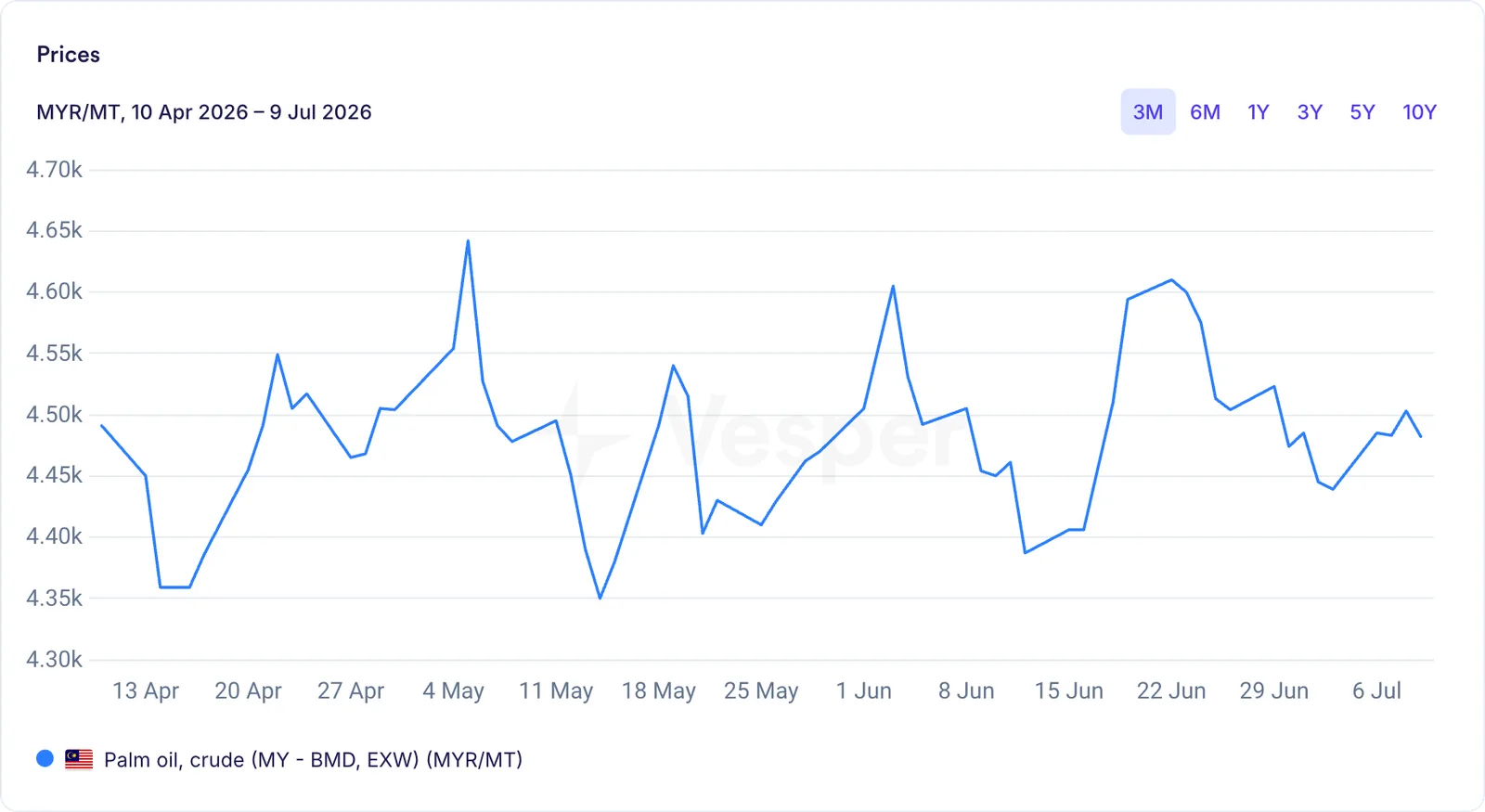
Palm oil, crude (MY – BMD, EXW), MYR/MT, 10 Apr 2026 – 9 Jul 2026. Source: Vesper.