
The outbreak of military conflict in the Middle East has become the defining market event of the week, with Brent crude oil prices rising sharply and logistics costs increasing across key shipping routes. Vegetable oil markets have moved higher in response, though gains remain measured as buyers adopt a wait-and-see approach.
What happened
On 28 February 2026, the United States and Israel launched coordinated military operations against Iran. The conflict escalated quickly, with Iran targeting U.S. military bases across the Gulf region and warning of no safe passage through the Strait of Hormuz, a chokepoint handling around 20% of global oil supply. Major shipping carriers have suspended or limited Suez Canal transits, rerouting around the Cape of Good Hope and adding both time and cost to Asia–Europe trade.
Brent crude closed near $78 per barrel, up roughly $5 from the previous week. Freight rates are rising on higher bunker costs, increased insurance premiums, longer sailing times, and port congestion.
Palm oil
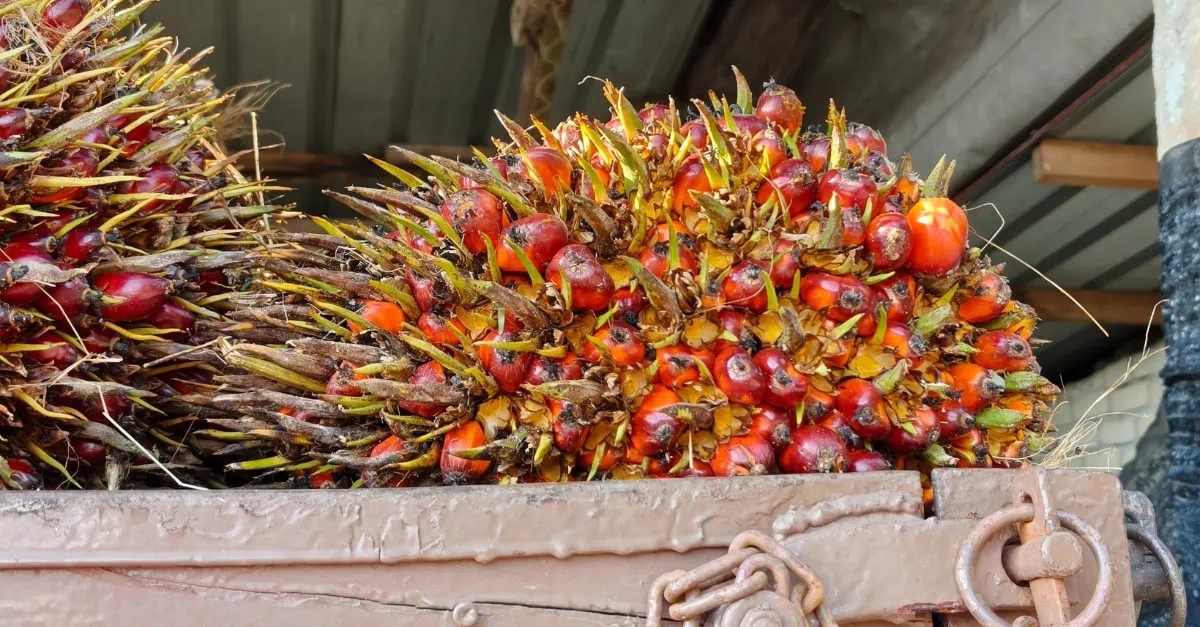
BMD crude palm oil increased to $1,039/mt from $1,026/mt the previous week. Support came from higher Brent prices and an estimated decline in Malaysian stocks. Pre-MPOB estimates point to a 6.5–8.3% decrease in Malaysian February stocks, with production down 16–20% and exports falling around 20%. A Malaysian palm oil exporter noted that vessel rerouting is tightening capacity and increasing freight rates, with delivery delays expected.
Soy oil
CBOT crude soy oil rose to 62.17 US cents/lb from 60.03 US cents/lb. Support came from higher Brent prices and expectations around the imminent finalisation of U.S. biofuel blending volume mandates. The U.S. Environmental Protection Agency sent its proposal for new mandates to the White House, and Reuters reported that the government plans to reallocate at least 50% of exempted biofuel blending obligations to large refiners, which could increase demand for feedstocks including soy oil. Separately, Argentine soy oil production declined to 535,000 mt in January from 576,000 mt a year earlier.
Rapeseed oil
MJJ crude rapeseed oil (FOB Dutch Mill) rose to EUR 1,082/mt from EUR 1,071/mt. Support came from higher rival oil prices and stronger energy markets. One German crusher noted that there is no rush to increase coverage in biofuels, citing the absence of news on German RED III legislation. Ukrainian rapeseed planting areas are also expected to shrink to below 1 million hectares, down from 1.1 million hectares the previous season and 1.4 million hectares the season before that.
Sunflower oil
The AMJ price for crude sunflower oil (FOB 6 ports) edged up to $1,435/mt from $1,430/mt. Buying activity in the Black Sea region remains subdued as market participants wait for lower prices linked to the arrival of Argentine seeds. However, some participants have flagged concern about a potential spread of logistics disruptions to the Suez Canal, though this has not been confirmed. Crush margins in non-EU Black Sea exporting countries remain poor, and some crushing plants in southern Ukraine have halted operations due to energy issues.
Coconut and palm kernel oil
CIF Rotterdam crude coconut oil edged down week-on-week but recovered to $2,175/mt from the previous Friday, supported by the broader bullish tone. Large buyers are described as well-covered through Q3, while mid-sized buyers who were waiting for a dip are now asking questions but not yet covering. CIF Rotterdam palm kernel oil rose slightly to $1,980/mt, supported by higher crude palm oil prices.
Olive oil
Extra virgin olive oil (EXW Spain) is trading at approximately EUR 4,550–4,600/mt, up modestly from EUR 4,500/mt the previous week. The analysis notes no significant direct impact from the Middle East conflict on the olive oil market. Markets are, however, watching U.S. trade policy developments, with the U.S. indicating that import duties on certain countries could increase from 10% to 15%. The U.S. is the largest importer of European olive oil. Spain’s Ministry of Agriculture reported a 7% increase in total exports and domestic consumption between October 2025 and January 2026.
What to watch
The key questions for the weeks ahead are how long the conflict lasts and how significantly it affects energy production and logistics. Analysts suggest that if the conflict continues, Brent could move toward $100 per barrel, which would provide further support to vegetable oil prices through the biofuel channel. For now, most market participants are waiting for greater clarity before making significant coverage decisions.
Access Vesper’s full vegetable oils market analysis here: https://app.vespertool.com/market-analysis/2765