India is preparing to reduce import duties on soybean oil under an interim trade agreement with the United States, a move that could significantly alter the country’s vegetable oil procurement patterns and intensify price competition across the sector.
The duty reduction will improve the competitiveness of US soybean oil supplies against South American origins and is expected to shift demand away from palm oil. This reinforces the price sensitivity already evident across India’s vegetable oil imports, where buyers have demonstrated willingness to switch rapidly between oils based on relative pricing.
The development comes as soybean oil prices strengthened this week, with the CBOT crude soybean oil benchmark settling at 55.33 US cents per pound, up from 54.49 US cents per pound the previous week. Soybean futures posted a strong weekly gain of nearly 5%, providing additional support across the soy complex.
The rally received further momentum from renewed optimism over potential Chinese purchases of US soybeans following political comments, though traders noted that price direction remains dependent on confirmed trade flows amid ample South American supply.
Palm oil under pressure from demand sensitivity
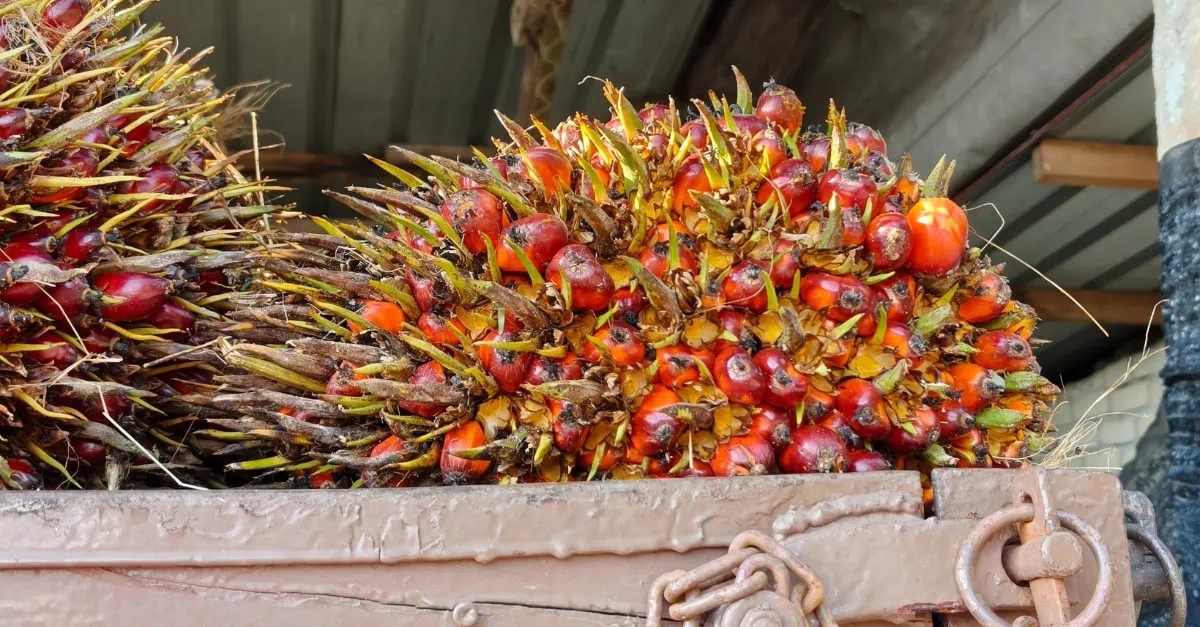
The policy shift adds to existing headwinds for palm oil, which saw prices decline this week despite slightly firmer crude oil. The Malaysian BMD crude palm oil benchmark for February 2026 closed at $1,032 per tonne, down from $1,055 per tonne last week.
Demand for palm oil remains highly price-sensitive, particularly in India, where buyers continue to switch rapidly between palm and soybean oil based on relative pricing. The expected duty cut on soybean oil will likely accelerate this switching behavior.
Malaysian palm oil production is projected to ease to 19.9 million tonnes in 2025-26 from 20.2 million tonnes last year due to slow replanting, which may provide some supply-side support. However, uncertainty persists over Indonesia’s 2026 production outlook as the government continues to confiscate illegally planted land, with approximately 10% of oil palm acreage already under state control.
This week’s ban on palm oil waste exports signals that Indonesia’s interventionist approach is materializing, while a planned increase in export duties from next month could further tighten effective supply and weigh on export competitiveness.
Sunflower oil loses ground in Indian market
India’s price-driven procurement strategy is already affecting other vegetable oils. Sunflower oil imports are expected to fall to a four-year low in 2025-26 as a widening price premium over palm and soybean oil pushes buyers toward cheaper alternatives.
Dealers estimate imports could decline to around 2.65 million tonnes, a shift already visible in January data, when sunflower oil imports fell sharply while palm oil imports surged.
Sunflower oil prices edged lower this week, with the crude sunflower oil price declining to $1,440 per tonne from $1,448 per tonne. On the supply side, Argentina doubled sunflower oil exports in January to around 100,000 tonnes, alongside higher sunflower meal shipments, reflecting a seasonal ramp-up in processing.
However, underlying fundamentals remain constrained, particularly in Ukraine, where sunflower seed output and oil production capacity remain structurally lower than pre-war levels due to reduced planted area and logistical disruptions. This continues to limit export availability and reinforces a tight medium-term supply backdrop despite short-term price softness.
Rapeseed oil strengthens on supply concerns
Rapeseed oil prices moved higher, with crude rapeseed oil rising to €1,076 per tonne from €1,055 per tonne last week. MATIF rapeseed prices also increased to €489 per tonne from €478 per tonne.
Price strength was supported by firmer sentiment across the rapeseed and canola complex, as lower rapeseed oil stocks in China provided additional support to the Asian vegetable oil market.
Agreements between China and Canada to significantly reduce and partially lift canola import duties from March 1, 2026 are expected to allow trade to resume. In the meantime, Canada has redirected volumes, with stronger canola meal exports to the US, EU and other markets partially offsetting reduced shipments to China.
In Europe, supply-side support emerged after Ukraine’s 2026 rapeseed harvest forecast was revised lower to 3.73 million tonnes, with export potential for 2026-27 also reduced. This comes alongside ongoing tightness in the non-GM rapeseed oil market, reflecting limited imports during the current marketing year and recent crusher downtime in the UK, which has tightened spot availability.
Biofuel policy adds long-term uncertainty
The European Commission launched a consultation to phase out palm- and soybean oil-based biofuels by 2030, citing high indirect land use change risk. This reinforces longer-term policy headwinds for crop-based biofuel demand in Europe, though near-term market impact remains limited.
Lauric oils find support
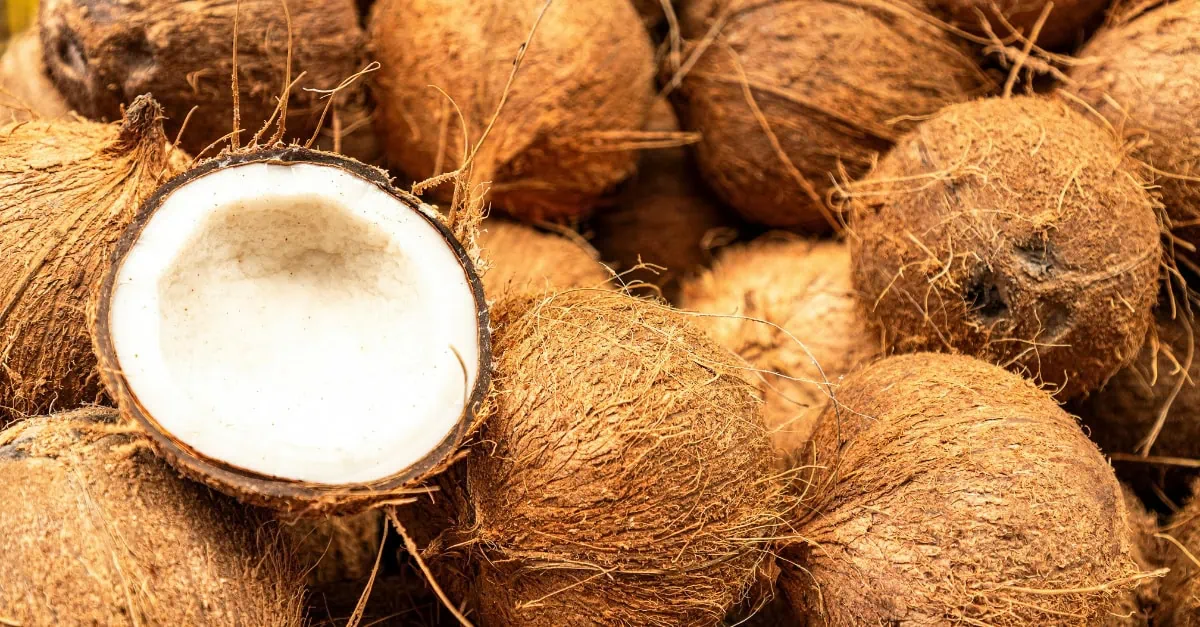
Coconut oil prices rebounded, with CIF Rotterdam prices increasing to $2,300 per tonne from $2,218 per tonne last week, while EXW Manila crude coconut oil rose to $2,264 per tonne from $2,133 per tonne.
Higher copra prices at origin lifted the cost curve, with Philippine copra prices rallying back above ₱7,000 per 100 kg. However, demand-side resistance is emerging, with biofuel manufacturers showing limited willingness to absorb higher prices.
Palm kernel oil prices edged slightly lower, with crude palm kernel oil in Malaysia assessed at $1,851 per tonne versus $1,862 per tonne last week. Despite the marginal pullback, palm kernel oil remains supported by strength across the lauric complex and substitution demand in key markets such as India.
Olive oil continues upward trajectory
Olive oil prices continued to move higher, with extra virgin olive oil in Spain increasing to €4,388 per tonne from €4,288 per tonne last week.
Italian olive oil producers are facing downward price pressure amid a sharp increase in lower-priced imports from Tunisia, which rose around 40% year-on-year in the first ten months of 2025. While imports help cover Italy’s structural production deficit, farmers argue that cheaper foreign supplies are forcing domestic producers to sell below cost.
Weather disruptions in southern Spain have delayed harvesting and raised concerns over quality and final yields, providing near-term price support despite improving medium-term production prospects.
This article is part of a more comprehensive market analysis. For the full analysis visit: https://app.vespertool.com/market-analysis/2698