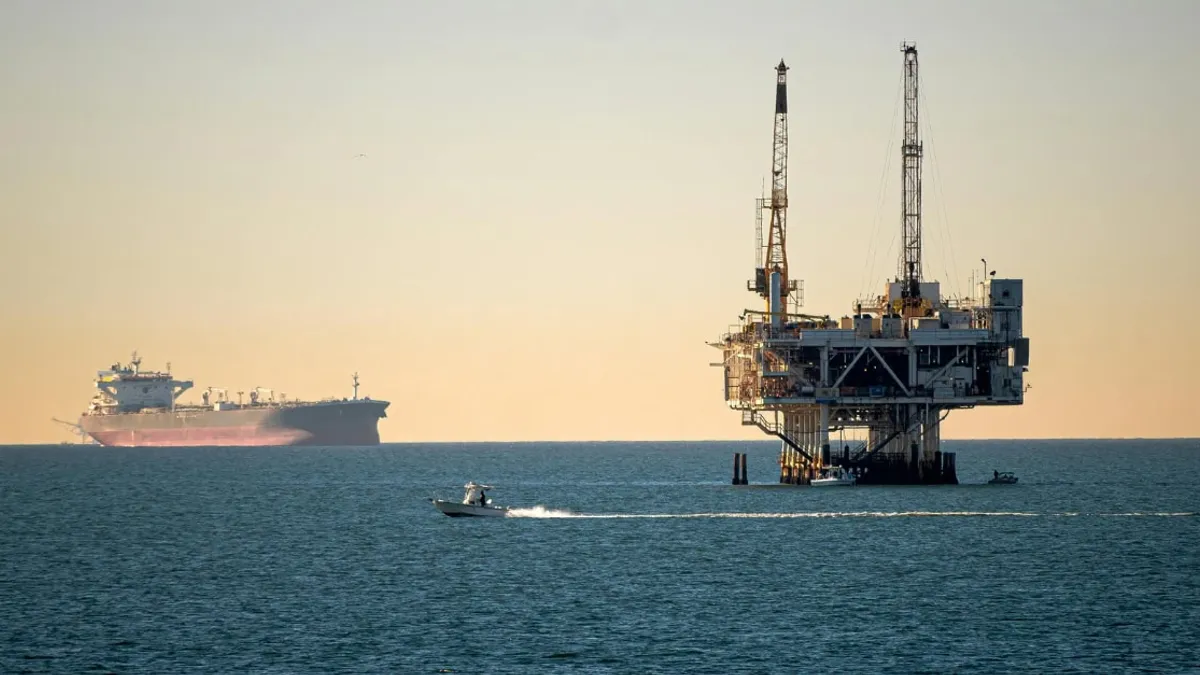


Roughly one-fifth of global oil consumption transits the Strait of Hormuz, the narrow maritime corridor between Iran and Oman that connects Gulf producers to global markets. This chokepoint is critical: oil from Saudi Arabia, the United Arab Emirates, Kuwait, Qatar, and Iraq flows through it, along with significant volumes of liquefied natural gas. About 20% of the world’s oil and similarly large shares of regional energy trade pass through the strait each day.
In early 2026, tensions involving the United States, Israel, and Iran have escalated sharply. At the end of February, coordinated U.S. and Israeli military strikes against Iranian targets, including reported strikes that killed Iran’s Supreme Leader, prompted Iran to retaliate with missiles, drones, and warnings that vessels could not safely transit the Strait of Hormuz. Many shipping firms and majors responded by suspending tanker movements via the strait, and multiple vessels were damaged or stranded as a result.
That has raised the risk premium in global oil markets, even if daily physical supply hasn’t yet been fully curtailed. Futures markets have reacted swiftly: Brent crude approached multi-month highs, and analysts are now evaluating the potential for significantly higher prices in the near term.
Brent forecasts published after 28 February 2026
Across institutions, the message is consistent: if disruption through the Strait persists beyond a brief interruption, Brent could revisit the $100 level in the short term.
The natural follow-through question is what that would mean for agricultural commodity markets.
The 2022 benchmark: when brent last broke $100
The last time Brent decisively moved above $100 was in late February and early March 2022, following Russia’s invasion of Ukraine.
That episode offers a useful reference point for understanding how agricultural markets react when oil breaks into triple-digit territory.
Using the same window as Brent’s surge**, 23 February to 8 March 2022**, and calculating a simple average across nine globally traded non-Brent agricultural benchmarks, the broader agri-commodity basket rose:
+21.4% on average (excluding Brent).
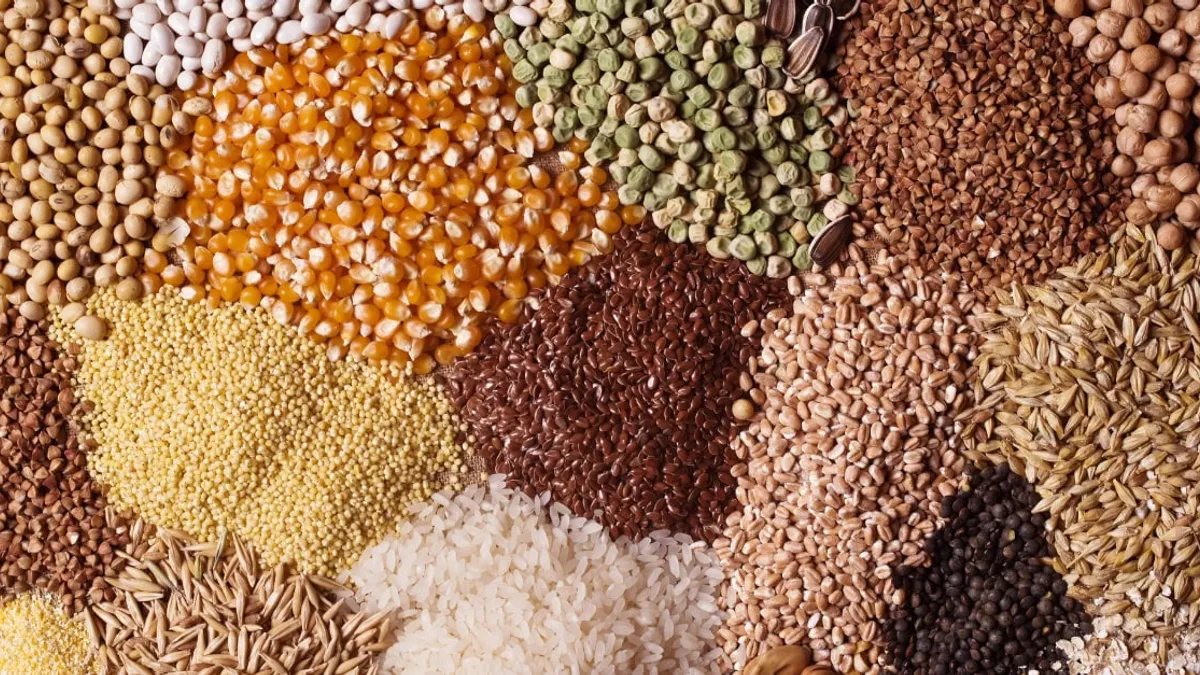
This basket was deliberately constructed to capture the main transmission channels between energy and agriculture: core grains (wheat, corn), vegetable oils (rapeseed, soybean, palm), fertilizer (urea), and sugar (via ethanol linkage).
Within roughly two weeks, these markets repriced sharply:Commodity Moves: 23 Feb → 8 Mar 2022
Within roughly two weeks, these markets repriced more than 20% on average.
A critical caveat: 2022 was not an energy-only shock
The 2022 surge was not driven by oil alone.
It combined:
-
A sharp energy spike, and
-
A direct disruption to Black Sea agricultural exports.
Ukraine and Russia are major exporters of wheat, corn, sunflower oil, and fertilizers. Markets were therefore pricing both higher input costs and the potential loss of physical supply.
That helps explain why feed wheat (+40.0%), milling wheat (+37.6%), and soybean oil (+27.8%) rose far more than corn (+13.1%).
The +21.4% basket increase occurred during a combined energy and supply shock.
What makes the current situation structurally different
Today’s risk is centered on energy transit through the Strait of Hormuz — not on the removal of major grain-exporting countries from global markets.
If Brent revisits $100 due to tanker disruption, agricultural markets would likely feel upward pressure through:
-
Higher diesel and freight costs
-
Increased fertilizer production costs
-
Stronger biofuel blending margins
-
Broader commodity risk premium expansion
However, absent a parallel agricultural supply shock, the magnitude of repricing would likely differ from the near-40% moves seen in early 2022.
The takeaway
When Brent moves decisively above $100, agricultural markets do not remain untouched. History shows a rapid spillover across grains, oils, and inputs.
But the size of that spillover depends on whether the shock is:
-
Energy-only, or
-
Energy plus physical supply disruption.****
In 2022, it was both.
In 2026, if tensions remain concentrated in energy transit routes, the agricultural complex would likely experience inflationary pressure, but without the same supply-driven amplification seen during the Ukraine invasion.
That distinction is what ultimately determines whether $100 oil translates into moderate cost inflation, or another double-digit repricing cycle across food markets.
Track the impact on agricultural commodity prices on: https://app.vespertool.com/.