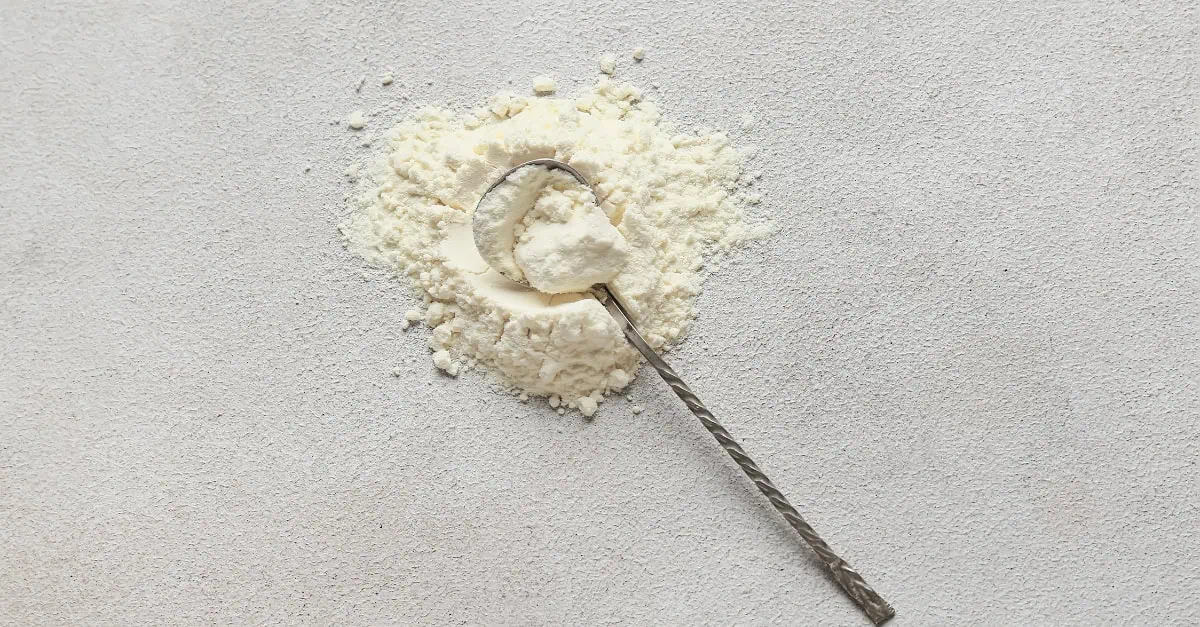

The global whey protein concentrate 80 market has reached a critical tightness level, with producers maintaining full control over pricing and allocation as buyers rush to secure remaining Q2 volumes.
The EU Vesper Price Index for WPC80 instant increased to €15,780 per tonne ($18,791 per tonne, $8.52 per pound) EXW, while the US index rose to €15,736 per tonne ($18,739 per tonne, $8.50 per pound) EXW.
The market situation represents a structural shortage rather than a temporary squeeze. Domestic consumption continues at historically high levels, further constraining available supply, while export demand towards India, China, Japan, South Korea, Mexico and Brazil remains high. Production is insufficient to meet combined export and domestic requirements.
Buyers are showing some hesitancy to commit large volumes at elevated price levels, but face only one alternative: avoid purchasing and rely on existing stocks. For those with immediate needs, paying up remains the only option.
The tightness in US WPC80 is flowing into related markets, affecting US whey protein isolate, EU WPC80, New Zealand WPC80, and ultimately all whey products in the global market.
Q2 pricing signals emerge
This week’s price movements show early indications of where Q2 is expected to trade, with buyers actively working to secure their remaining volumes. Producers are looking to increase prices further for Q2 sales that will take place soon.
Market participants are increasingly discussing whether blenders can limit their safety stocks to the bare minimum, a conversation that reflects the constrained supply situation.
WPI markets follow upward trajectory
Whey protein isolate markets are being pushed higher by the tight WPC80 situation, though conditions are not as acute. The EU Vesper Price Index for WPI instant increased to €23,500 per tonne ($27,984 per tonne, $12.69 per pound) EXW, while the US index rose to €22,771 per tonne ($27,116 per tonne, $12.30 per pound) EXW.
Production continues shifting toward a more made-to-order model, which keeps availability limited but sufficient for current needs. Additional production capacity in Europe is expected to come online around Q2, which should improve availability.
Buyers without urgent requirements are attempting to hold off from buying too far forward, believing the market is unlikely to move up dramatically in the short term. The shift toward made-to-order production provides some flexibility, preventing the acute shortage conditions seen in WPC80.
Sweet whey powder remains stable
Sweet whey powder markets present a contrasting picture. The EU Vesper Price Index for food-grade SWP remained at €1,120 per tonne ($1,333 per tonne, $0.60 per pound) EXW, while the US index decreased to €1,221 per tonne ($1,455 per tonne, $0.66 per pound) EXW.
Whey demand is not keeping pace with the total supply of whey powders in the EU and US. Cheese production continues performing well due to high prices, generating substantial whey volumes and supporting good sweet whey powder availability.
However, higher whey concentrate prices are keeping SWP prices above €1,000 per tonne, as concentrate prices range around €700 to €800 per tonne. Global demand remains steady but not exceptional, maintaining prices at current levels without significant upward pressure.
Permeate oversupply persists
Whey permeate markets show minimal movement, with prices stable at low levels for an extended period. The EU Vesper Price Index for food-grade whey permeate remained at €740 per tonne ($881 per tonne, $0.40 per pound) EXW, while the US index decreased to €499 per tonne ($595 per tonne, $0.27 per pound) EXW.
High WPC80 and WPI production is generating substantial permeate volumes as a by-product. Limited capacity for converting permeate to lactose means significant volumes will need to be sold as is, particularly towards China. The cheaper prices are supporting steady movement and stable pricing.
Lactose prices moderate after recent increases
Lactose markets have moved higher, driven by strong demand for milk powder standardization applications. The EU Vesper Price Index for 100 mesh food grade lactose increased to €1,300 per tonne ($1,548 per tonne, $0.70 per pound) EXW, while the US index rose to €1,036 per tonne ($1,234 per tonne, $0.56 per pound) EXW.
The market appears to have passed through the period of most aggressive price increases, with upward momentum moderating as the market adjusts to a new supply-demand balance. Infant formula sector disruptions have not yet created significant additional demand disruption.
The price outlook is stabilizing at current elevated levels without expectation of major further increases. Demand for milk powder standardization will continue supporting prices at current levels.
This article is part of a more comprehensive market analysis. For the full analysis visit: https://app.vespertool.com/market-analysis/2706