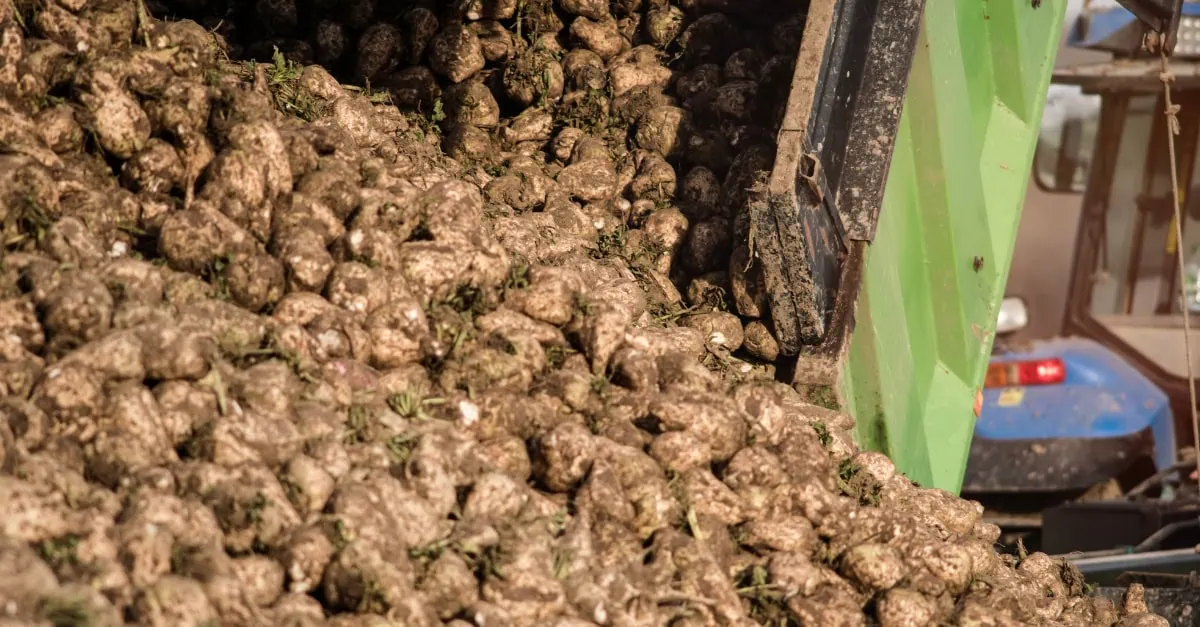

Sugar markets reached five-year lows this week, with NY Sugar No. 11 touching levels last seen in October 2020. The front-month raw sugar price declined to $13.86/lb, while white sugar fell to $403/mt.
The oversupply picture is broad-based. Analysts are projecting a 2025/26 global surplus of 1–5 million metric tons. Brazil’s Center-South region processed 600.4 million metric tons of cane through December, down 2.3% year-on-year, while sugar production reached 40.2 mmt on an elevated allocation of 50.8% versus 48.2% last season. Full season production is forecast at 40.5 mmt. Early February export momentum has been strong, with shipments in the first five days of the month running 67% above the same period last year.
In India, output for the full season is estimated at 28.5 mmt, a 2.5 mmt year-on-year increase. However, the domestic surplus remains thin at just 0.2–0.3 mmt against consumption, keeping export activity capped near 500,000 tonnes, well below the authorised 2.0 mmt quota.
European stocks reached 9.3 mmt at end-November, up from 8.6 mmt a year earlier, reinforcing near-term downward pressure. In response, processors are targeting a 5–10% reduction in 2026/27 acreage, to approximately 1.3 million hectares, through monetary incentives, contract relaxations, and price signals encouraging shifts to alternative crops. The European Commission is also advancing toward IPR suspension under Article 195, citing market disturbance from low EU prices and accelerating inward processing volumes, following data showing October–November 2025 raw imports of 220,000 tonnes and white imports of 40,000 tonnes.
Soil moisture across the EU beet belt remains 29% below the long-term average despite relatively wet conditions so far this year, creating potential establishment challenges if deficits persist into the March–April planting window.
Despite the bearish near-term picture, some demand response is emerging: post-Ramadan restocking signals are being noted as a developing factor. The medium-term outlook is more balanced, with anticipated acreage reductions and potential IPR suspension pointing toward tighter supply in 2026/27, though execution uncertainty remains.
European processors are also reportedly considering price increases of €40–50/tonne in select markets to address sustained loss-making positions, though buyer resistance, underpinned by high stocks, demand headwinds including GLP-1 effects, and unfavourable export parity, makes implementation uncertain.
This article is part of a more comprehensive market analysis. For the full analysis, visit: https://app.vespertool.com/market-analysis/2726