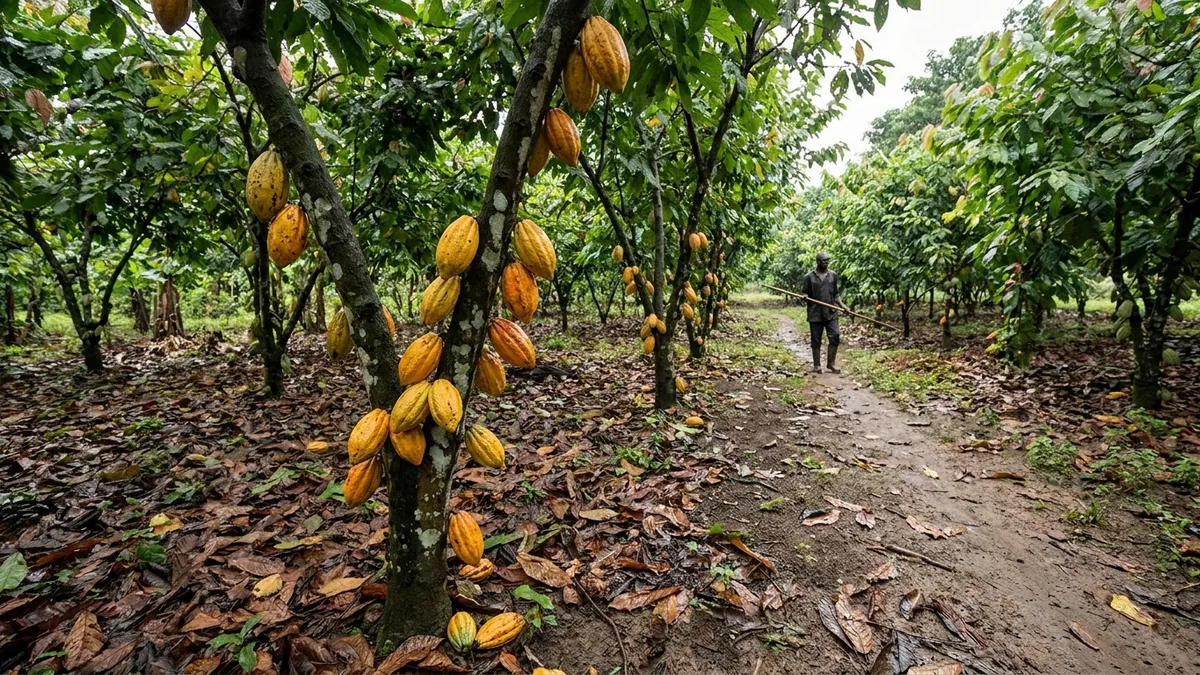
Cocoa futures fell about 5% in both London and New York in the week to 6 November, caught up in a broad market sell-off after the US midterm elections. In Ivory Coast, the physical market is pulling the other way. After a sluggish start to the main crop, some exporters are paying as much as 20% above the government-set farmgate price for beans, a premium demanded by the middlemen who buy from farmers. The industry regulator prohibits paying above the official price and has warned exporters against it before.
The arrivals data points the same way. Exporters estimated port arrivals at 51,000 tonnes in the week to 1 November, 43.3% lower than a year earlier, although the season opened a month early this year, so the comparison is not like for like. Reuters now puts the 2026/27 Ivorian crop at 1.5 to 1.6 million tonnes, against 2.15 million tonnes last season, and more than half the country is already in drought.
StoneX has also turned its 2026/27 global balance from a small surplus into a 64,000 tonne deficit, with world cocoa bean production forecast to fall 9.6% under a very strong El Niño. Speculators are still net short in both London and New York, a position Martijn Bron finds curious with weather risks building in West Africa and Ecuador.
Read the full cocoa market analysis here.