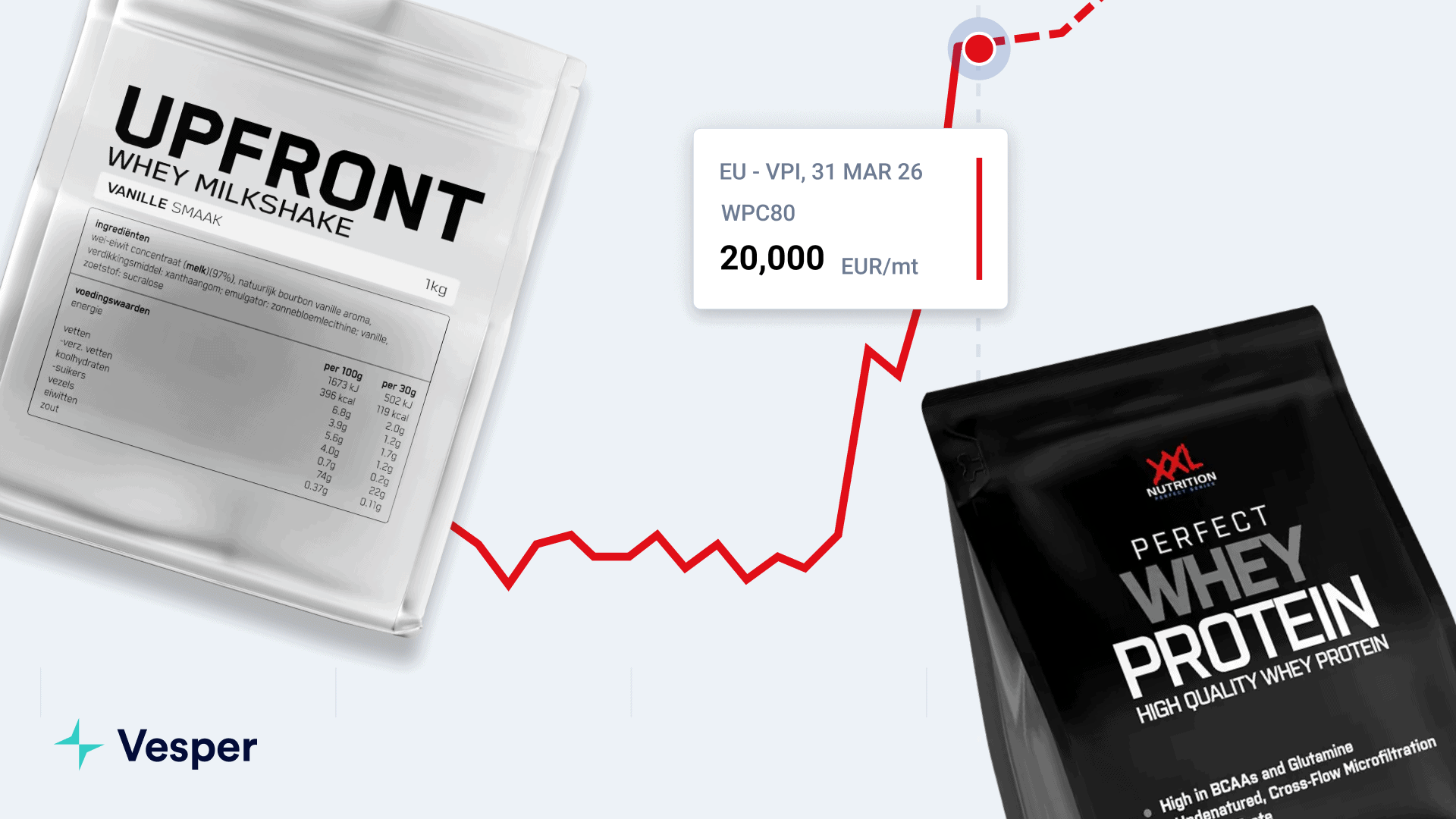
Three years ago, WPC80 cost around €5,000 per metric ton.
Today, it’s approaching €20,000.
That’s not a temporary spike. That’s a structural shift in one of sports nutrition’s most critical ingredients, and it’s been building steadily since mid-2023.
What’s driving WPC80 prices in 2026?
Demand is the main story.
Whey is being added to more product categories globally, pushing baseline demand up year over year. But a newer signal has added real acceleration.
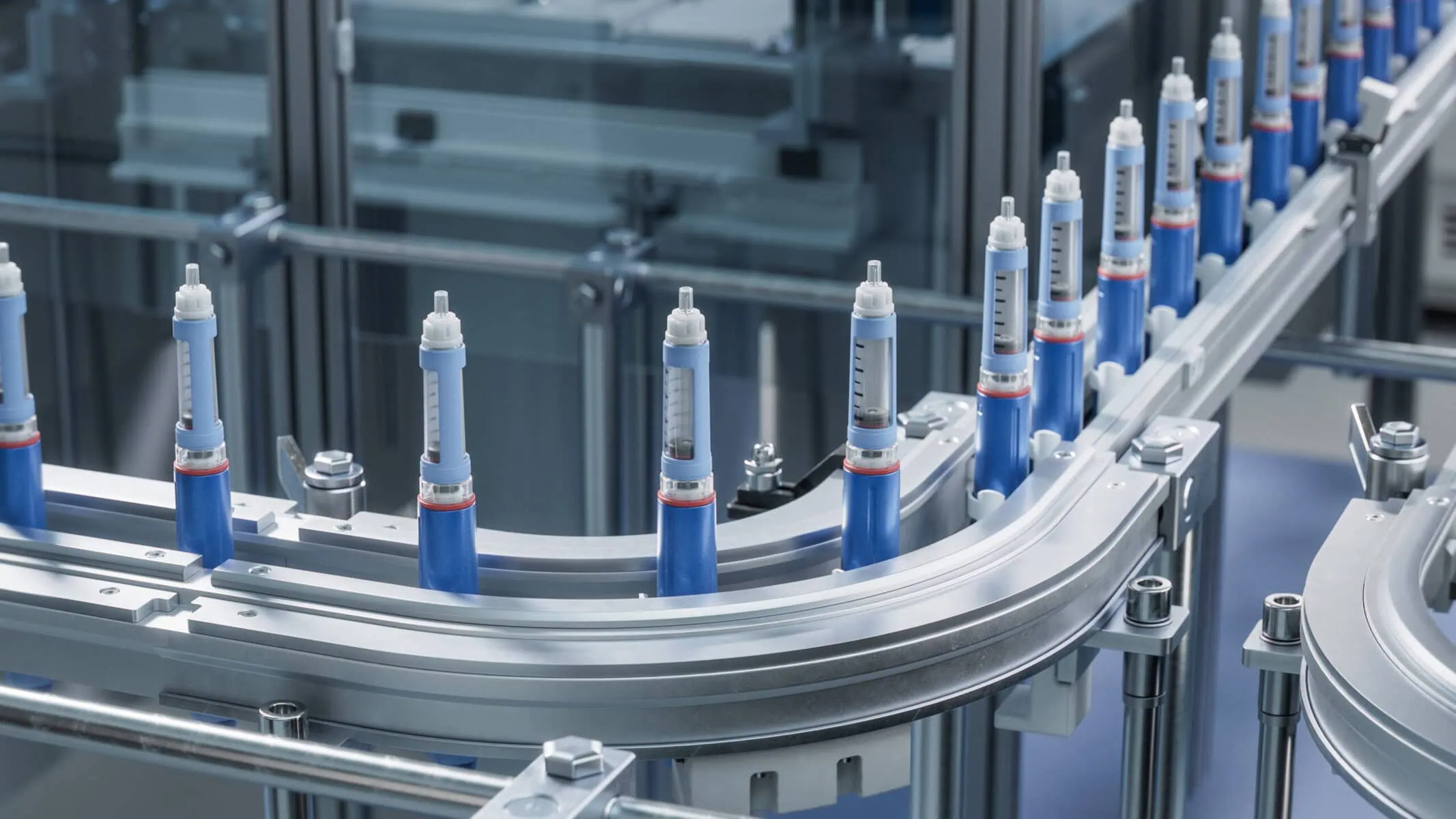
GLP-1 adoption (the class of drugs that includes Ozempic) has created a significant new demand pool, particularly out of the US. Doctors are routinely recommending whey protein shakes to patients on these medications to prevent muscle loss. At US scale, that’s meaningful volume.
Production capacity hasn’t kept pace with either of these drivers.
And in the Netherlands, a new excise tax of €1.04/kg is adding further pressure on top of an already stretched market.
As Jasper Endlich, Dairy Analyst at Vesper, put it: “This isn’t a spike you can wait out. The demand drivers are structural, and the curve reflects that.”
Two sports nutrition brands explain the whey price increase
This week, two Dutch sports nutrition brands made their price increases public. Both backed their announcements with Vesper Price Index data.
XXL Nutrition CEO and Founder Rene van der Zel shared a detailed market update explaining the forces at play. He referenced Vesper’s WPC price chart and was direct: “WPC prices have never risen to this extent.” He also flagged little expectation of relief in the near term, and introduced plant-based alternatives his team has been developing in response.
Upfront was more direct. As of April 1st, their whey prices are going from €29 to €33/kg. The raw material cost alone jumped €5/kg, a 42% increase in just six months. They had absorbed the increases for as long as they could.
Neither brand is raising prices because it wants to. The market left them no choice.
Why this isn’t just a sports nutrition problem
Whey touches more categories than most buyers realize. Infant nutrition, functional foods, sports supplements: when WPC prices move this hard and this fast, the pressure reaches across the supply chain.
A price that quadruples in three years stops being an internal conversation. Eventually, it reaches the shelf.
If you buy protein ingredients, now is the time to understand where prices are heading. Not after your next supplier quote lands.
Stay ahead of the WPC market
Vesper’s Sports Nutrition H2 2026 Market Outlook covers the full protein ingredient stack, WPC80 Regular & Instant, WPI, MPC, MPI, Caseinates, Creatine, and key sweeteners like Maltodextrin and Dextrose. With WPI prices approaching €25,000/mt and Q2 WPC80 volumes already close to sold out, the report gives procurement teams a forward view on what the second half of 2026 looks like, before supply gets tighter.