
Indian spice markets are showing a consistent pattern across the complex this fortnight. Supply is tight, sometimes severely so, but demand-side pressures are capping or reversing rallies.
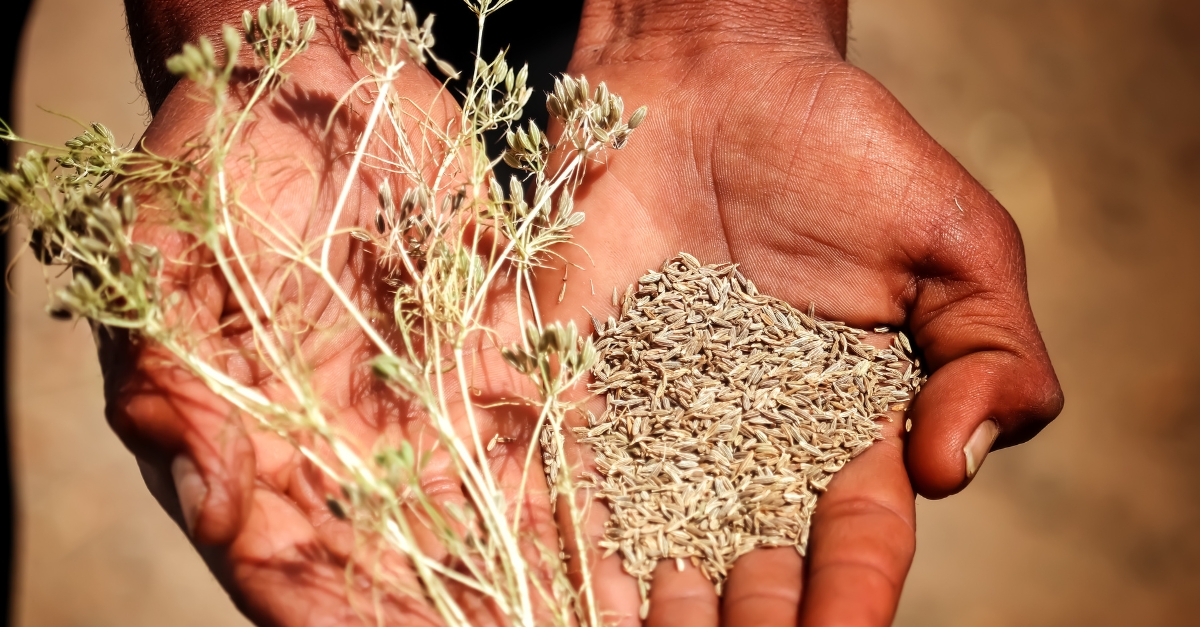
Cumin offers the clearest example. Arrivals at Unjha, India’s largest cumin trading hub, fell by over 61% from a record 65,000 bags to 25,000 bags. Production for the season is estimated 20–25% below last year’s 539,000 tonnes, and carryover stock has fallen to roughly 550,000 bags from 3.3 million bags a year ago. By any conventional reading, prices should have firmed. They did the opposite. Delhi wholesale slipped from $2.65/kg to $2.54/kg, while machine clean fell from $2.75/kg to $2.67/kg. Domestic stockist buying dried up, China was absent, and the Iran-Israel-America conflict disrupted Gulf trade flows. FY2025–26 exports for the first ten months are down 15% in volume and 28% in value at 166,878 tonnes.
Coriander followed a different but related arc. The Rajasthan trade shutdown and below-expectation new crop arrivals lifted Delhi Badami from $1.52/kg to $1.58/kg, with Green Malong reaching $1.89/kg by April 22. The rally stopped once end-buyer margins became unworkable, and Badami softened to $1.56–1.57/kg by April 28. Exports rose 5% in volume and 10% in value, preventing a deeper correction.
Red chilli prices held through most of April before falling sharply at month-end. Production is down 25–30% and arrivals have halved from historical levels, but exporters pulled back due to poor quality in late-season material.
The cardamom complex split. Big cardamom declined to $17.80–17.91/kg as speculative positioning unwound. Small cardamom prices rose despite higher arrivals, supported by strong demand and rainfall concerns in Kerala.
Black pepper has remained sideways. Production is down 20–25% and farmers are refusing to sell at current levels, but demand has lacked urgency, particularly with Gulf trade disrupted. Vietnamese supply continued to reach buyers.
Turmeric prices held a floor around $1.68/kg through April, supported by a roughly 4.5 million bag shortfall. Without stronger demand, prices remain capped.
The common thread across all six spices is clear. Floors look real, but ceilings are demand-driven. Until export flows normalise and Chinese buying returns, the complex appears stuck between deep deficits and quiet markets.
For more real-time spice prices, visit: app.vespertool.com