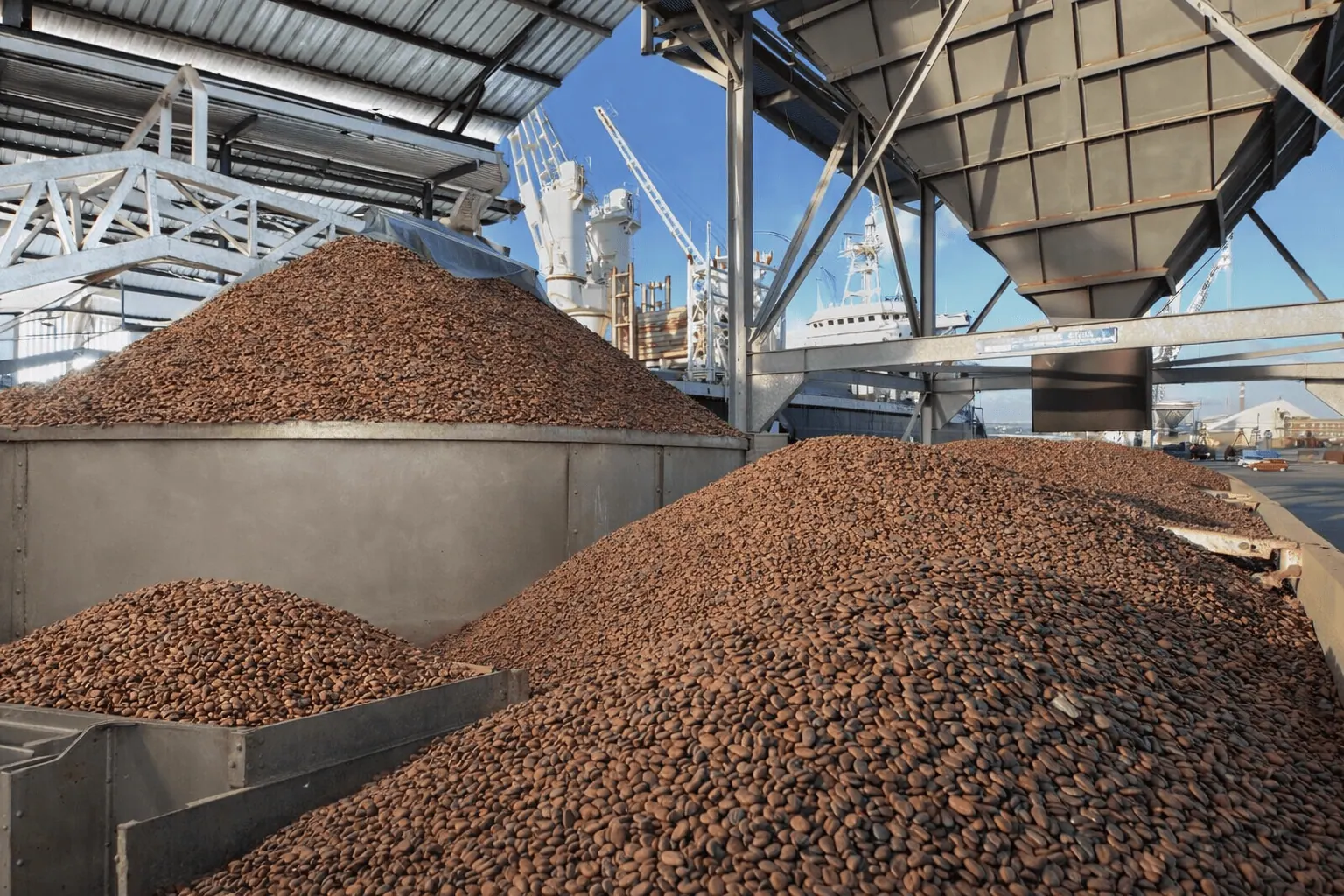

London cocoa futures dropped over 12% week-on-week to close at 3,347 GBP/t on January 20th, marking a two-year low as the disconnect between regulated farmgate prices and global market values creates a supply bottleneck in West Africa.
The price collapse reflects mounting pressure from multiple bearish factors: weaker-than-expected demand, improved weather supporting next season’s crop, and a growing crisis at origin where fixed pricing mechanisms are failing to keep pace with market volatility.
African farmgate prices stuck above market rates
In Ivory Coast, the October farmgate price increase intended to benefit farmers has instead created an unusual market distortion. Export licenses are not keeping pace with increased bean volumes at ports, with cooperatives reporting licensing backlogs from the Coffee and Cocoa Council (CCC).
Synapci, the main Ivorian cocoa farmers’ union, estimated that 700,000 tonnes of cocoa beans remain unsold. The CCC announced plans to purchase 100,000 tonnes, less than market participants expected.
Exporters are reluctant to buy at current farmgate prices, which now sit far above world market levels. Prices are scheduled for reset in April, with expectations of a dramatic reduction to align with global market developments.
Ghana faces similar challenges under its new bean purchasing model. COCOBOD is reportedly seeking prices that international traders are unwilling to advance payment for, as the levels would incur losses. The farmgate price there also exceeds global market rates. Some farmers have reportedly gone unpaid for months, limiting their ability to invest in next season’s output during the critical January planting period.
Demand remains weak across major markets
The latest quarterly grindings surveys confirmed that demand recovery has not yet materialized. European grindings fell 8.3% in Q4 versus last year to 304,470 tonnes of beans processed, bringing the annual total to 1.327 million tonnes, the smallest volume since 2015. Germany, a major processor, reported a 10.1% drop in full-year volumes according to the national confectionery association (BDSI).
Asian grindings declined 4.8% in Q4 overall, though Malaysia showed signs of potential recovery with Q4 volumes 33% higher than Q3, despite being 6.8% below last year.
North America reported a slight 0.35% increase, largely attributed to changes in reporting methodology rather than genuine demand improvement.
Ecuador expands supply position
Ecuador shipped 63,019 tonnes of cocoa beans and semi-processed products in December, up over 15% year-on-year. Cumulative exports for the 2025/26 October-September season reached 210,667 tonnes, a 19% increase versus the same period in 2024/25. The country is forecast to reach output of 650,000 tonnes by 2026/27.
Technical indicators point to further downside
Funds increased their net short position based on CFTC data for the week ending January 13th, anticipating poor grindings figures. The net short is now the largest since the second week of December. The ICE Europe net short position also increased, with short positions likely having grown further since these updates.
Cocoa product prices moved lower across the board in Europe. Cocoa butter fell 12.9% week-on-week to 7,305 EUR/MT EXW, while cocoa mass declined 10.6% to 5,634 EUR/MT. Cocoa powder decreased 2.4% to 5,659 EUR/MT.
Market outlook
Major fundamentals remain short-term bearish. Current difficulties at origin may impact next season’s output at a time when demand starts to recover, potentially setting up the market for a reversal. For now, stocks accumulate at ports while pricing remains under pressure. Farmgate prices in both Ghana and Ivory Coast are expected to be reduced later this year to realign with global market realities.
This article is part of a more comprehensive market analysis. For the full analysis, visit: https://app.vespertool.com/market-analysis/2613