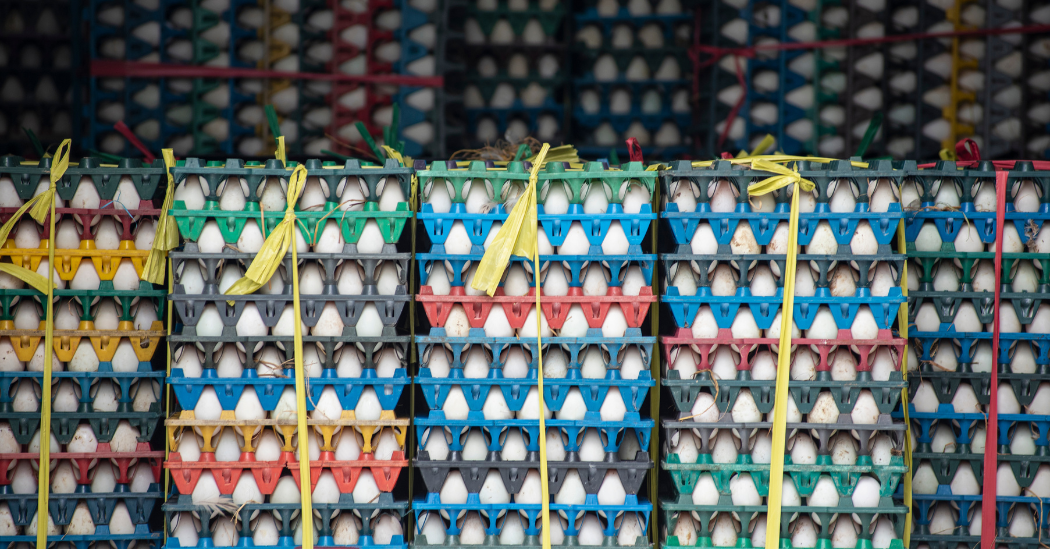

The European egg market is starting to ease from its post-Easter highs, but the correction is uneven. Caged and standard eggs are softening as Eastern European and Turkish supply fills gaps in the processing channel, while free-range and certified eggs remain tight on Newcastle Disease in Germany and an escalating HPAI crisis in Poland. Prices have declined for five consecutive weeks in both Germany and the Netherlands.
In France, caged industrial eggs are now trading below €2/kg in some transactions, with aggressive offers from Poland and Spain feeding into the processing channel. Total April retail egg volume rose 3.5% year-on-year, with growth concentrated in standard caged and barn eggs (+12%), while free-range and organic flatlined. Premium pull-through during the supply crunch is fading as cheaper options return to shelves.
The structural pressure points haven’t gone away. KAT-certified eggs in Germany remain in very tight supply, with packing stations absorbing virtually all available product to serve existing customers. Newcastle Disease vaccine availability has been described as alarmingly poor. In Poland, HPAI outbreaks have already surpassed last year’s full-year total, with over 12.9 million birds culled this season and at least one major supermarket chain temporarily reinstating caged egg sales in response to free-range shortfalls.
Sharp whey protein price increases are pushing blenders to consider albumen powder as a substitute, particularly in sports nutrition and protein-fortified products. So far the additional demand has not moved albumen prices, with stocks remaining comfortable.
The US: scarcity to surplus
Across the Atlantic, the picture is the mirror image. The US has gone five consecutive weeks without a new HPAI outbreak, the longest disease-free stretch since early 2026, and the market has flipped from scarcity to surplus. Stocks are past comfortable for the season, wholesale interest is underwhelming, and retail feature activity is slowing.
The processing sector is working through previously contracted supply, but new demand is weak. The flock is approaching recovery from earlier losses, and the broader picture mirrors last year’s record highs in reverse: too many eggs, not enough buyers.
What’s next
Europe’s near-term direction for caged prices is cautiously lower, but Newcastle Disease in Germany and HPAI in Poland sit on either side of any forecast as live wildcards. The US is set for continued downward pressure unless a new supply shock arrives. Buyers control the market on both sides of the Atlantic for very different reasons, but neither region has the equilibrium it’s been looking for.
For the full egg market analysis, visit: https://app.vespertool.com/market-analysis/2985