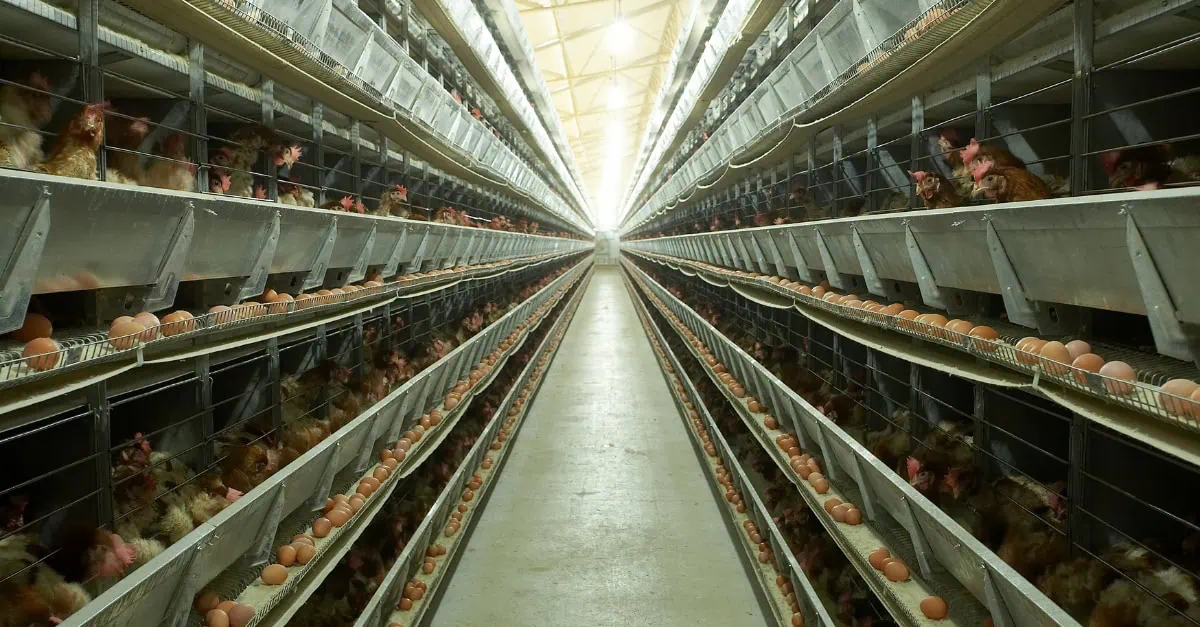

Europe’s egg market is under severe pressure with Easter just 15 days away. A combination of HPAI and Newcastle Disease outbreaks across key producing countries has led to the culling of millions of laying hens, with no meaningful supply recovery possible before the holiday.
Disease outbreaks drive structural supply losses
Newcastle Disease, confirmed in Germany and Poland for the first time in decades, has led to the culling of over one million laying hens in Germany alone. The outbreak originated at a turkey farm in Oder-Spree on February 20th and has since spread to multiple large-scale laying hen operations. The daily shortfall in the German market alone is estimated at three to four million eggs, with all available supply being directed to regular customers and the free market practically empty.
Poland’s situation is similarly severe, with six new HPAI outbreaks on commercial farms in the last two weeks. The national laying hen population has declined by approximately 7.5 million birds, around 15% of the total flock. New laying hens take 16 to 18 weeks to reach laying readiness, making a pre-Easter recovery impossible.
The Netherlands and Czech Republic are each reporting three new commercial farm outbreaks in the same period. Intra-EU movement restrictions are compounding the problem, creating a situation where eggs are piling up in restricted zones in the Netherlands while German shelves run empty.
Structural demand shifts amplify the pressure
The supply crisis is being amplified by a structural shift in retail demand. Retailers across Europe have phased out caged eggs, redirecting demand toward barn, free-range and organic categories without a corresponding increase in supply. KAT-certified eggs are described as virtually unobtainable for processing needs.
Prices are expected to rise further across all categories, with free-range and organic segments most exposed. Any post-Easter stabilisation will depend largely on whether warmer temperatures slow HPAI transmission. A more meaningful normalisation of supply is most likely from summer onwards.
US market: holiday lift, but demand structurally weak
In the US, wholesale shell egg prices have risen modestly ahead of Easter and Passover on seasonal demand and tightening inventories. However, underlying demand remains structurally weak, with foodservice buyers having switched to liquid and processed egg products during the high-price environment of 2024 and 2025 and not switching back. Over 1.7 million birds have been lost to HPAI in March across Indiana, Pennsylvania and Wisconsin, though losses are modest compared to earlier outbreak waves. The US market is expected to remain range-bound after the seasonal Easter boost fades.
For the full egg market analysis, visit: https://app.vespertool.com/market-analysis/2811