When markets are calm, anyone can look smart. But in today’s volatile landscape, where a tweet can move prices, companies need a different kind of edge.
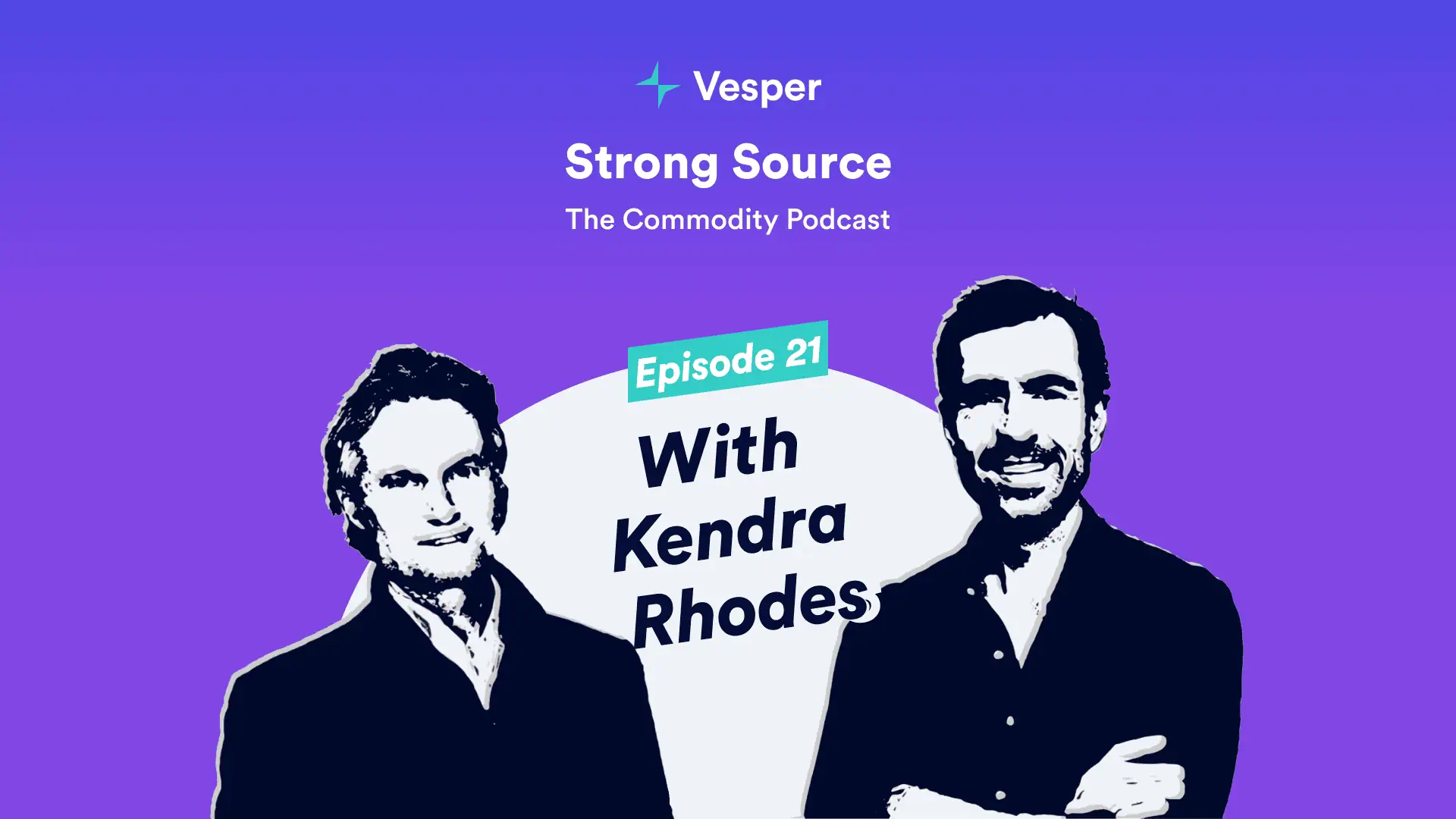
In our latest episode of The Strong Source, we sat down with Kendra Rose, who leads commodity risk management, market insights, and communications at General Mills. With over a decade of experience across wheat, sugar, dairy, and more, Kendra knows what it takes to steer one of the world’s biggest FMCG brands through price swings, supply disruptions, and unexpected global events.
Managing risk in a world that won’t sit still
Commodity markets aren’t what they used to be, and that’s exactly the point. Where once you could lean on seasonal patterns, historical norms, or a few macro indicators, today’s markets demand something more: agility.
“Markets are humbling,” Kendra said. “You can go from high to low to high again in a single day. A few years ago, you could model a decent range of outcomes. Now? You have to prepare for the unthinkable.”
At General Mills, managing risk starts with market intelligence. Kendra leads a team of analysts covering everything from grains, oils, and softs to packaging and freight. Each analyst is tasked not only with monitoring their category but with combining data, conversations, and intuition to build a dynamic view of what’s ahead.
That includes staying close to real market participants, traders, brokers, and suppliers who have boots on the ground and ears to the trade.
“You can’t just rely on a report or a price feed,” she explained. “We’re constantly gathering intelligence from multiple sources to make sense of the noise and find the signal.”
But it doesn’t stop at insights. Kendra’s team uses those insights to actively support sourcing and procurement. They co-develop coverage strategies, challenge assumptions, and help buyers navigate futures, physicals, and everything in between.
And perhaps most importantly, they prepare for what could go wrong.
Volatility is no longer the exception; it’s the baseline. That’s why Kendra emphasizes scenario planning and stress-testing strategies regularly. Whether it’s drought in Argentina, policy shifts in Indonesia, or a geopolitical flare-up in a key cocoa origin, her team is expected to think around corners.
“We don’t manage risk by trying to predict the market,” Kendra said. “We manage risk by staying ready for a range of outcomes, and knowing how to respond when the unexpected happens.”
In other words: don’t try to outsmart volatility. Build systems and strategies that can handle it. world-famous Häagen-Dazs.
Options, not just options trading
Before leading commodity risk at General Mills, Kendra cut her teeth in OTC derivatives at Cargill, a world where complex option structures were used to manage price risk in highly sophisticated ways. It was a steep learning curve, but one she credits for shaping her deep understanding of market mechanics and risk exposure.
“There’s nowhere else that gives you that level of immersion in financial markets and options,” she said. “It was confusing, complex, and absolutely invaluable.”
But times have changed.
In the wake of the global financial crisis, the appetite for intricate financial instruments has cooled. Companies now favor simpler, more transparent tools, and a more grounded approach to risk.
“The structures have become more vanilla, and I think that’s a good thing,” Kendra noted. “You still need optionality, but the focus has shifted to how you apply it thoughtfully, not just how creative you can get.”
Optionality, in Kendra’s world, isn’t just about instruments. It’s a mindset. It’s about scenario planning, agility, and asking the hard questions: What if I’m wrong? What other levers can I pull? Do I have enough liquidity?
This shift also reflects a broader cultural change in risk management—moving away from chasing the “perfect hedge” to building strategies that balance protection, participation, and flexibility.
“There’s no silver bullet,” she said. “The danger comes when these tools are sold as no-cost or fail-proof. If you don’t fully understand the trade-offs, you’re setting yourself up for surprises.”
Kendra’s approach today is rooted in realism: know your exposures, know your tools, and know your limits. Use optionality not to outsmart the market, but to stay resilient in it.
Communication is a competitive advantage
In volatile markets, decisions are made fast, and often under pressure. That’s why communication isn’t just a soft skill at General Mills. It’s a core part of how Kendra and her team manage risk.
Their job isn’t only to track commodity markets. It’s to translate what’s happening, and what might happen next—into actionable insights that can be understood by a wide range of stakeholders. Whether it’s the snacks team needing to plan promotions, finance leaders watching hedge performance, or marketers managing P&Ls, everyone gets a message tailored to their world.
“Talking to someone on the trading floor is not the same as talking to the head of a business unit,” Kendra said. “You have to simplify the complex, and do it fast.”
To make this work, her team builds narratives around market shifts: what changed, why it matters, and what to do about it. They clearly outline assumptions, align on strategies, and revisit decisions when the context changes.
That clarity does more than reduce confusion. It creates trust. And that trust allows the team to act with speed and confidence, even when markets move in unexpected ways.
“We overcommunicate our assumptions,” she explained. “So when something hits the fan, people aren’t surprised, they understand the rationale behind the decision and why we may need to pivot.”
It’s not just about explaining losses or gains, it’s about building resilience into the decision-making process. In Kendra’s words, “Markets are humbling. You won’t always be right. But if you’ve brought people along for the ride, you can course-correct together.”
At a time when volatility is the norm, this kind of internal alignment might just be the most underrated edge a procurement team can have.
Lessons for the next generation
Kendra’s advice to young professionals entering commodities?
- Be genuinely curious about markets, not just because they’re “cool,” but because you love making sense of chaos.
- Build your network early. Relationships are just as important as research.
- And for women especially: show up, take up space, and know that you belong.
🎧 Listen to the full episode for more on:
- How General Mills manages commodities without listed derivatives (hello, broccoli)
- Why psychological resilience matters as much as strategy
- And how fun still matters—even in high-stakes roles
Want to future-proof your procurement team? Start with better insights.
👉 Try Vesper free for 7 days: https://app.vespertool.com/create-account